US lowers 2031 fuel economy target to 34.5 mpg
The US government is significantly easing the CAFE requirements. For buyers, that could mean more choice among pick-ups and SUVs, but also slower efficiency progress.
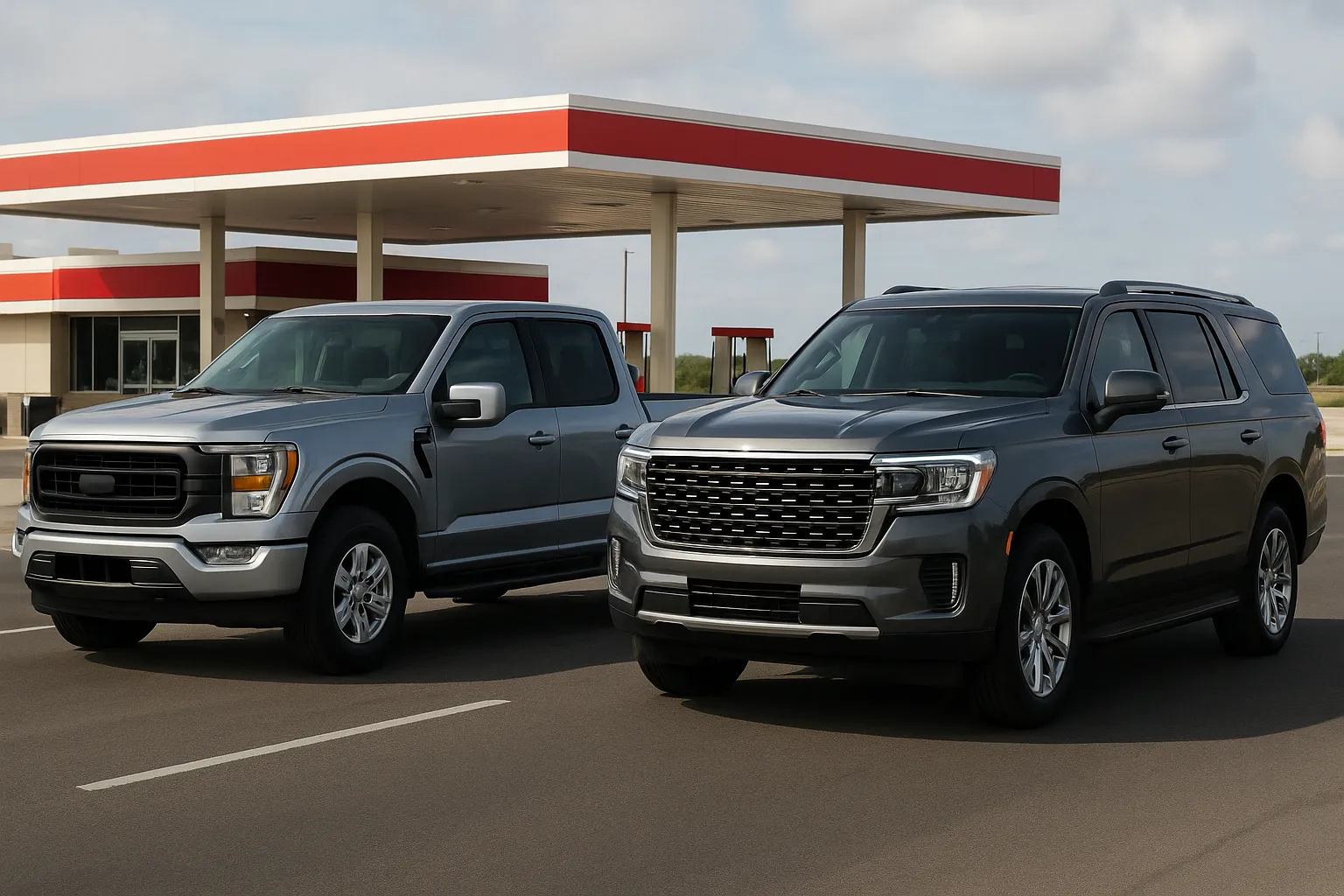
The US is lowering its fuel economy target for new passenger cars and light commercial vehicles in model year 2031 to 34.5 miles per gallon. Converted, that corresponds to about 6.8 liters per 100 kilometers, although this figure is not directly comparable with the fuel economy figures on US window stickers or European WLTP values. It is a fleet value under the CAFE rules, meaning a calculated requirement for manufacturers across their entire model range.
The move is more than a technical correction in a regulatory framework. It changes the planning basis for automakers in the world’s largest high-margin market. Less stringent requirements reduce the pressure for rapid electrification and for efficiency gains in large vehicles. At the same time, they could help ensure that traditional pick-ups, large SUVs and powerful combustion-engine models retain a central role in sales programs for longer.
What CAFE actually measures
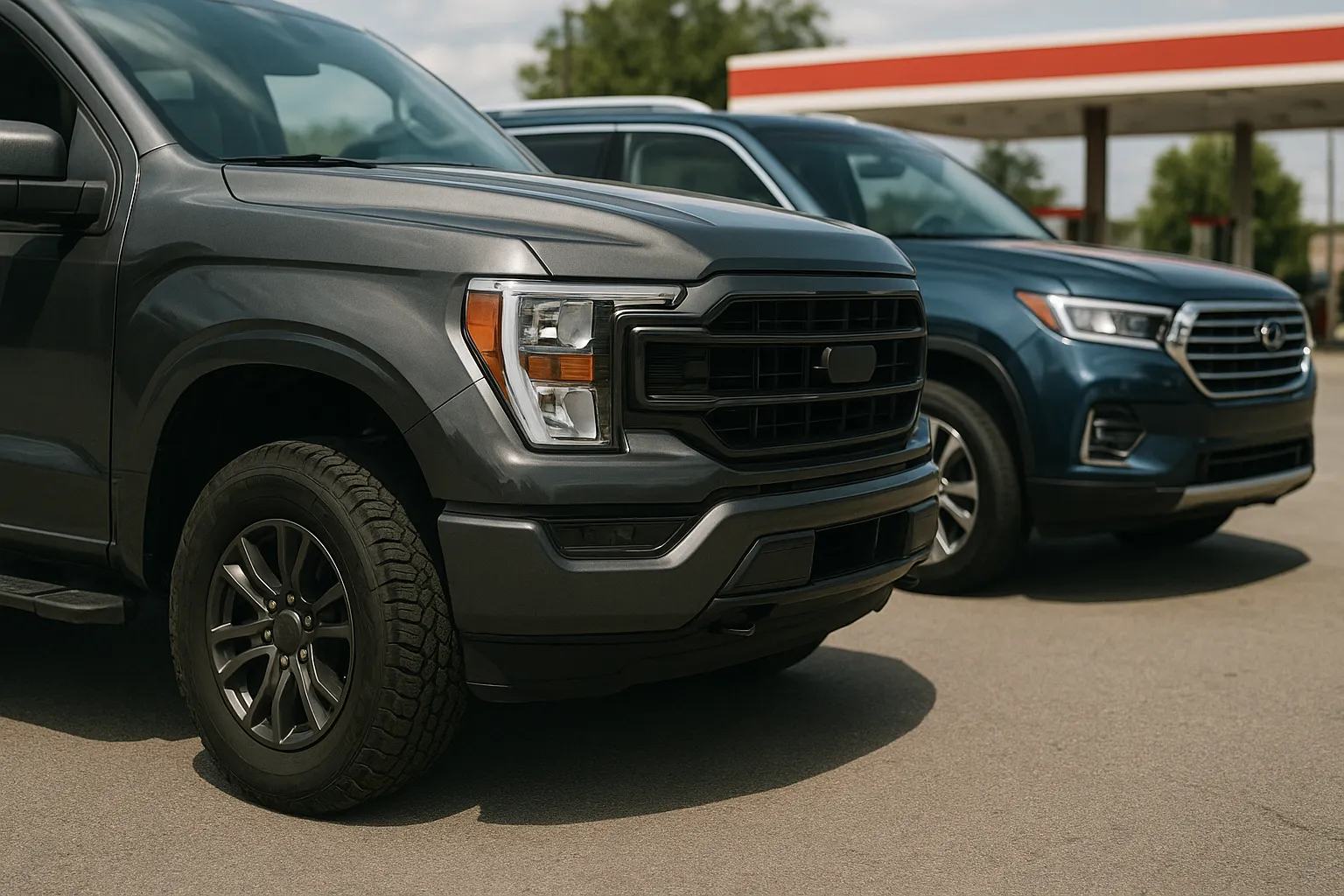
CAFE stands for “Corporate Average Fuel Economy”. The system does not assess each individual car in isolation, but the average of a manufacturer’s fleet. In addition, different targets apply depending on vehicle class and vehicle footprint. A large pick-up is therefore assessed differently from a compact passenger car. Manufacturers can also work with credits, allowances and penalties. That is why a CAFE target of 34.5 mpg does not mean that every new car has to achieve 34.5 mpg.
Important for buyers: The CAFE figure is also not identical to the consumption a driver sees in everyday use. US fuel economy figures for customers are adjusted according to other procedures and are generally lower than pure CAFE calculation values. So anyone buying a large SUV should still pay attention to the specific EPA fuel economy figures for the respective model, not just to political targets.
Why the target is so important
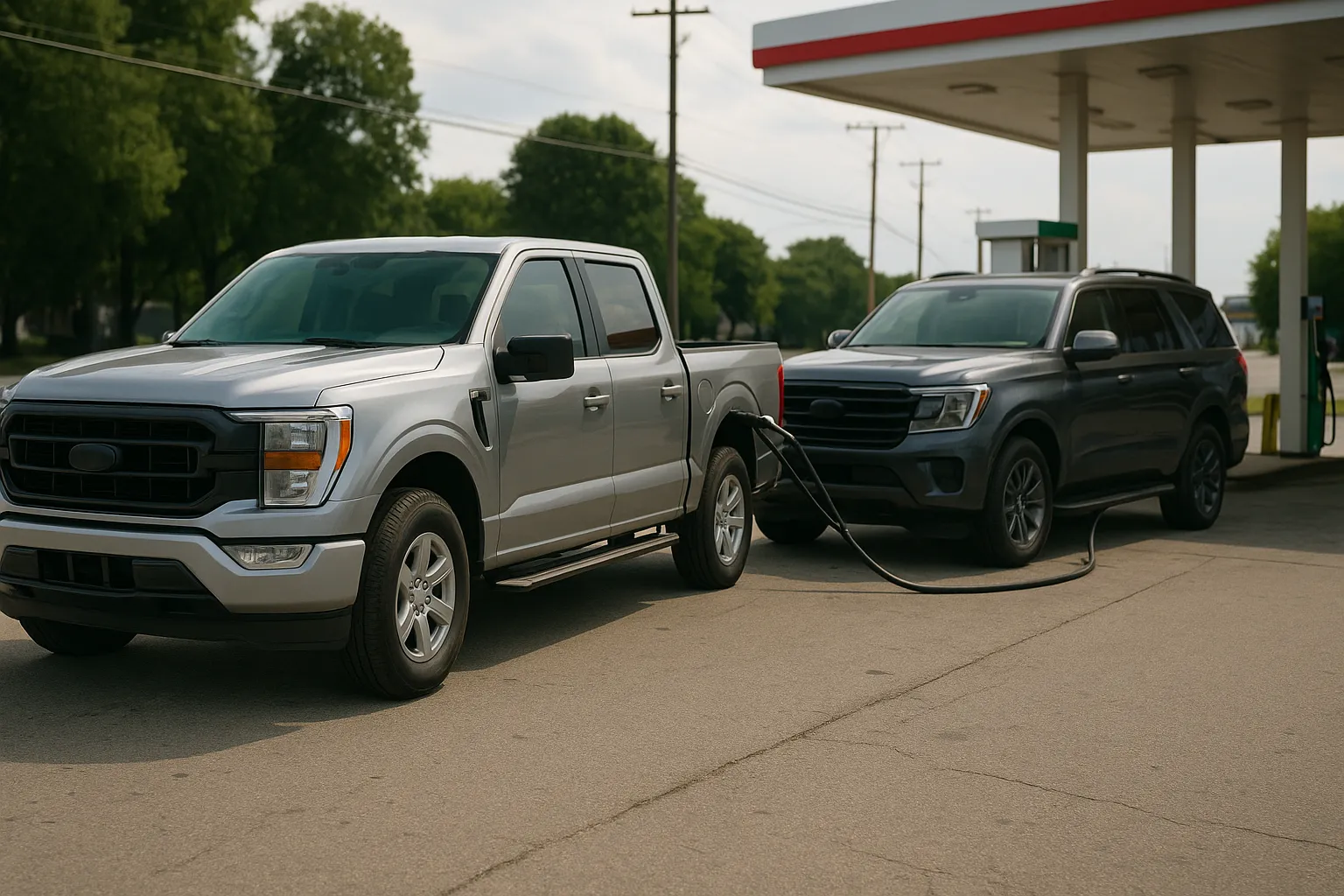
The previous direction of US regulation was aimed at significantly higher fleet efficiency by the end of the decade. Manufacturers therefore had more incentive to bring electric cars, plug-in hybrids, full hybrids, smaller engines, aerodynamic measures and lighter platforms into high volumes more quickly. A target of 34.5 mpg for 2031 noticeably reduces this pressure.
For the industry, this means more flexibility in the short term. Companies that rely heavily on large pick-ups and SUVs can sell their most profitable model series for longer with less regulatory risk. These include full-size pick-ups, large family SUVs and heavy crossovers, which traditionally achieve high volumes and high profits in the US. At the same time, manufacturers can stagger investments in battery production, pure electric platforms or costly lightweight technology differently.
But that does not mean electrification is disappearing. Many manufacturers have already invested billions in electric cars, battery plants, hybrid drives and software architectures. Other influencing factors also remain: fuel prices, buyer preferences, local emissions rules, international markets, fleet customers and competition from brands with more efficient powertrains. The new CAFE mark changes the pressure, not the entire direction of technology development.
More room for SUVs and pick-ups
The easing is likely to have the clearest effect on large vehicles. Pick-ups, SUVs and crossovers have dominated in the US for years. They are practical, spacious and, for many customers, also a status symbol. For manufacturers, they are particularly attractive because they allow higher margins than small cars or traditional sedans.
Stricter fuel economy targets would not have automatically ended these vehicles, but they would have pushed their development more strongly toward hybridization, downsizing and weight reduction. With a lower fleet target, the pressure to make every model generation aggressively more efficient decreases. A large gasoline engine, a turbocharged six-cylinder or a V8 could therefore remain economically viable for longer, provided demand and emissions requirements in other areas fit.
For enthusiasts, this is ambivalent. Those who value large engines, towing capacity and traditional US vehicle formats could benefit from a wider range of offerings for longer. Those, on the other hand, who hope for technical efficiency, low operating costs and rapid electrification may have to reckon with a slower transition.
What buyers can specifically expect
For new-car buyers, three developments could emerge. First, the selection of large SUVs and pick-ups is likely to remain stable. Manufacturers have to regulate less strongly against their own sales priorities. Second, some efficiency technologies could be introduced later or only in higher-priced variants. A hybrid drive that would have become standard more quickly under stricter rules may then remain an option or be offered only in certain trims.
Third, it is not certain that cars will automatically become cheaper as a result. Lower regulatory costs and lower penalties can theoretically help reduce price pressure. In practice, however, vehicle prices depend more strongly on material costs, interest rates, demand, equipment, labor costs and profit targets. An eased CAFE target is therefore not a promise of cheaper new cars.
When it comes to operating costs, the individual fuel consumption remains decisive. A large SUV with higher consumption can be significantly more expensive over several years than an efficient hybrid, even if the purchase price appears similar. If fuel prices rise, this difference becomes greater. Buyers should therefore not only look at the leasing rate or monthly payment, but also factor in expected annual consumption, mileage and resale value.
Hybrids remain strategically important
Even with lower requirements, hybrids are likely to retain an important role. They offer manufacturers a comparatively low-risk way to reduce the fuel consumption of large model lines without forcing customers to charge. Especially in midsize SUVs, family vehicles and for urban commuters, full hybrids can save a lot of fuel in everyday use.
Plug-in hybrids also remain relevant, especially where buyers can drive short daily distances electrically but want to keep a combustion engine for long journeys. However, their benefit depends heavily on charging behavior. If they are not charged regularly, they carry their additional battery weight around with them and lose part of their efficiency advantage.
Pure electric cars face a changed environment because of the new target. Manufacturers may have to use them less heavily to meet fleet targets. That could slow the pace for some models, especially in segments with weaker demand. At the same time, electric cars remain important for brands that want to meet global CO2 requirements over the long term, demonstrate technology leadership or reduce operating costs for customers.
Consequences for the industry
For automakers, the lower target creates planning flexibility. Model cycles in the car business last for years, and plants and supply chains are planned for the long term. If the regulatory benchmark falls, companies can use existing platforms for longer and manage the mix of combustion-engine vehicles, hybrids and electric cars more flexibly.
Suppliers will feel this shift in different ways. Providers of combustion-engine components, exhaust systems, transmissions and traditional drive technology gain more time. Battery manufacturers, charging infrastructure providers and specialists in electric drives, on the other hand, could expect more cautious call-off plans if manufacturers stretch out their electric ramp-ups. This does not necessarily affect all projects, but it can influence investment decisions.
Competition is also becoming more complex. Brands with particularly efficient hybrids can continue to use low operating costs as a sales argument. Manufacturers with strong pick-up businesses get more breathing room. New electric providers have to assert themselves more through product quality, range, charging network, software and price, rather than benefiting only from regulatory tailwinds.
The crucial point
The new US target of 34.5 mpg for 2031 is not an immediate cut for existing vehicles. But it changes the incentives according to which manufacturers plan their next model generations. For buyers, this probably means more continuity for large vehicles and less pressure for rapid electrification. At the same time, the old calculation still applies: those who drive a lot continue to pay for inefficient technology at the pump.
For the market, the message is clear: The US is giving manufacturers more freedom in the mix of combustion engines, hybrids and electric cars. Whether this freedom leads to better, cheaper and more everyday-friendly vehicles now depends less on a single fuel economy figure – and more on which models customers actually buy.