US government increases pressure on Ford over China partnerships
The Trump administration is calling on Ford to significantly scale back ties to Chinese automotive and supplier companies. For buyers, the main issues are EV prices, batteries and future model availability.
The Trump administration is sharpening its tone toward Ford: The company is supposed to quickly scale back its ties to Chinese automotive and supplier companies. Security concerns are at the center, but the debate extends far beyond foreign policy. It touches on battery technology, electric car costs, manufacturing in North America and the question of how strongly Western manufacturers may be allowed to rely on Chinese know-how in the future.
Ford is a particularly visible case in this dispute. The company sells vehicles in the US, but like many global manufacturers it also has business activities, partnerships and supply relationships in China. In addition, China is now a central player in electric cars, battery cells, cathode materials and certain production processes. It is precisely this interdependence that is becoming increasingly controversial politically.
What the pressure from Washington is about

The US government is criticizing Ford over cooperation with Chinese companies and justifies this with national security interests. Publicly, it is currently not clear in every detail which individual contracts, joint ventures or technology agreements are specifically supposed to be ended. However, the direction is clear: less dependence on Chinese partners, especially where data, vehicle software, battery technology or strategic industrial expertise could be involved.
This creates a difficult balancing act for Ford. On the one hand, the manufacturer must show politicians that sensitive technologies, production data and supply chains are adequately protected. On the other hand, Ford needs competitive batteries, affordable EVs and access to global know-how in order to compete against Tesla, General Motors, Hyundai-Kia, Volkswagen and fast-growing Chinese brands.
Why batteries are at the center

The debate is particularly closely linked to electric cars. With combustion-engine vehicles, engines, transmissions and exhaust aftertreatment were decisive core competencies. With EVs, the focus is shifting: battery cells, cell chemistry, software and charging performance determine range, costs and everyday usability.
China has built up a lead in many of these areas. This applies not only to complete vehicles, but also to lithium iron phosphate batteries, production equipment, precursor materials and economies of scale. LFP batteries are considered cheaper and robust, but depending on their design they offer lower energy density than some nickel-rich cell chemistries. For models in the lower and mid-price range, they are therefore particularly attractive.
If Ford were forced to replace certain Chinese technology or supply relationships faster than planned, development programs could become more expensive or slower. That does not automatically have to lead to higher vehicle prices, but it increases pressure on margins and schedules. Especially with EVs, where many manufacturers are already struggling with high investments and fluctuating demand, this is relevant.
Possible consequences for buyers
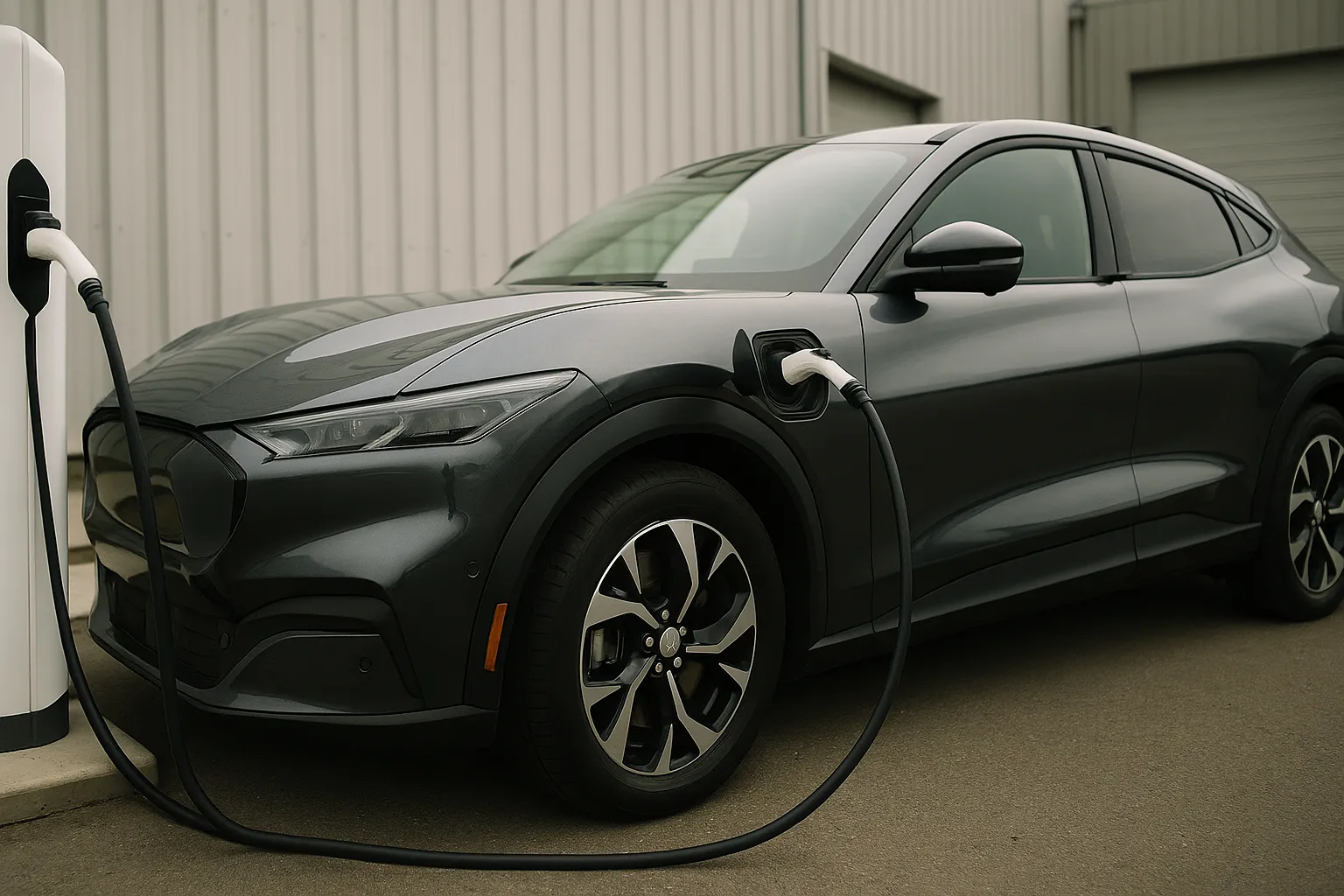
For car buyers, the political dispute is initially abstract. No one should expect that a Ford model already purchased will suddenly no longer be supported because of this debate. Existing vehicles such as the Mustang Mach-E, the F-150 Lightning or hybrid models will not be technically changed solely because of a political demand.
In the medium term, however, the conflict may become noticeable. If Ford reorganizes supply chains, that can influence prices, equipment, production volumes and market launches. Models whose competitiveness depends heavily on inexpensive batteries would be particularly affected. A more local, more strongly North American supply chain can reduce political risks, but it is not automatically cheaper or available more quickly.
Government incentive rules also play a role. In the US, certain tax benefits for electric cars already depend on where vehicles are assembled and where battery components come from. Stricter requirements toward Chinese companies could influence the eligibility of individual models for incentives. For customers, what ultimately matters is not geopolitical theory, but the effective purchase price after discounts, tax incentives and financing costs.
What Ford now has to weigh
Ford must pursue three goals at the same time: political acceptance in the US, technological competitiveness and economic scaling. A complete, immediate break with Chinese structures would be difficult to implement in a globalized auto industry. Many supply chains contain direct or indirect links to China, from raw materials to electronics to battery chemistry.
Therefore, for Ford it will probably not be just a simple yes or no to China, but a detailed separation of sensitive and less sensitive areas. Critical areas include software access, data flows, manufacturing know-how, battery technology and ownership structures. Less visible, but equally important, are precursor materials and machines that are embedded deep in the supply chain.
For the company, one response could be to locate more production in the US, Canada or Mexico, build up alternative battery suppliers and control technical licenses more tightly. Such steps cost time and capital. In the long term, they can improve security of supply, but in the short term they can reduce efficiency advantages.
Significance for the industry
Ford is not alone with this problem. Almost every major manufacturer has to decide how to deal with Chinese technology, Chinese suppliers and the Chinese sales market. China is at the same time a huge car market, a leading EV location and a geopolitical competitor of the US. This triple role makes strategy complicated.
US industrial policy aims to keep key technologies within its own economic area or bring them back there. For automakers, this means more control, but also higher requirements for transparency and local value creation. Enthusiasts may see this as an opportunity for more domestic development and production. Critics fear higher costs and less access to inexpensive technology.
In Europe, the development is being followed closely. European brands also use Chinese supply chains, develop vehicles in China or sell large volumes there. If the US further tightens its stance toward Chinese partners, this could influence global standards for batteries, software architectures and supplier contracts.
No immediate model discontinuation, but a clear signal
The context is important: So far there has been no confirmed announcement that Ford is discontinuing a specific production model, stopping deliveries or changing warranty services because of the political pressure. The immediate effects for owners therefore remain limited.
The signal to the industry is nevertheless clear. Cooperation with Chinese companies in the US is no longer being assessed only from the perspective of costs and efficiency, but increasingly as a strategic risk. For Ford, this could mean that future electric car programs will have to be planned more strongly according to political resilience.
For buyers, it is therefore worth taking a close look at the next model years: Which EVs remain eligible for incentives? Which battery types does Ford use? Where are vehicles and cells built? And whether lower battery prices continue to reach customers. The answer to these questions will help determine whether Ford remains price-competitive in the EV market.