Volkswagen Mission Efficiency: Streamlined EV with 500-Mile Target
With the Mission Efficiency, Volkswagen is showing an electric concept car that reinterprets the idea of the XL1: extreme aerodynamics, MEB Entry technology and greater everyday usability.
A new efficiency attempt from Wolfsburg
Volkswagen has unveiled the Mission Efficiency, an electric concept vehicle with a clear message: range does not have to come solely from ever-larger batteries. The car follows on from the XL1, which appeared in small-series production in 2013 and was considered a radical attempt to reduce the consumption of a road-legal vehicle to a minimum. While the XL1 still relied on a small diesel-hybrid drive, the Mission Efficiency is fully electric.
The key figures are deliberately ambitious. Volkswagen cites a range target of up to 500 miles, or around 800 kilometers. At the same time, the concept is not intended to be merely a two-seat technology demonstrator, but to offer significantly more practical value than the highly specialized XL1. The Mission Efficiency is described as an aerodynamically focused car with room for a family. That is exactly where the interesting point lies: efficiency should no longer mean that buyers have to give up everyday usability.
XL1 idea, but in the EV era

The comparison with the XL1 is obvious. The earlier model was extremely low, narrow, light and uncompromisingly designed for low energy demand. Its two-cylinder turbodiesel was supported by a small electric motor, with system output of only around 40 bhp. In return, the car achieved consumption figures that were significantly below those of conventional small cars. In practice, however, the XL1 remained an exclusive niche model: expensive, rare and with limited practical value.
The Mission Efficiency takes up the basic idea again, but shifts it into today's reality. Electric cars struggle less with local consumption in city traffic than with motorway range, charging stops, battery weight and costs. Aerodynamics is a central lever here. The higher the speed, the more strongly air resistance determines how much energy a vehicle needs. A smooth body can therefore take the same battery much farther – or allow for a smaller battery without cutting range too severely.
Technical basis: MEB Entry instead of an exotic platform

It is notable that the Mission Efficiency is not described as a completely detached research vehicle. It uses the basic MEB Entry architecture on which the new ID. Polo is also based. This is important because Volkswagen is at least signaling that some solutions could be closer to possible series implementation than in classic show cars.
The same 134-bhp electric motor that is also used in the ID. Polo is named as the drive unit. Converted, that corresponds to about 136 PS. For an efficiency vehicle, that is not a spectacular power figure, but that is exactly the point: the focus is not on maximum acceleration, but on low energy consumption. In combination with a heavily optimized body, such a drive could be entirely sufficient for everyday use, especially since electric cars deliver their torque immediately.
It remains open what battery size Volkswagen is calculating for the 500-mile target. This information in particular would be crucial in order to realistically assess the efficiency. A very large battery could enable high ranges, but would increase weight, costs and resource demand. What would really be relevant for buyers would be a production car that goes far with a moderate battery and therefore remains more affordable.
Aerodynamics as the main actor
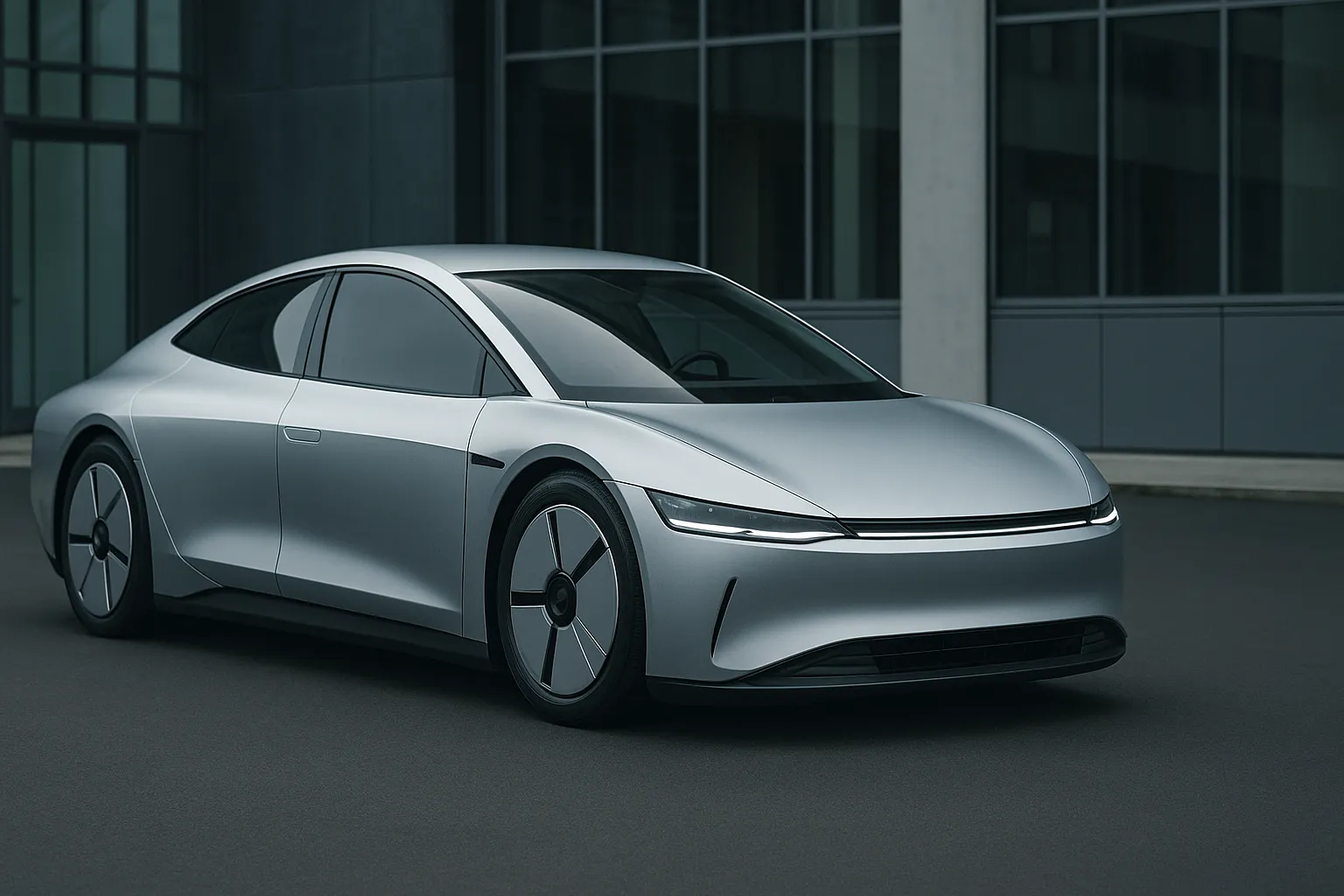
The shape of the Mission Efficiency visibly follows its purpose. A flat front section, aerodynamically favorable side surfaces and a long tapering rear are reminiscent of vehicles that were not designed primarily for a fashionable SUV appearance, but for the lowest possible air resistance. Volkswagen is presenting the concept in the context of several efficiency records and positioning it as a particularly aerodynamic road car.
Concrete production values cannot yet be derived from this. In concept vehicles, record figures are often achieved under ideal conditions, and the step into production brings additional requirements: crash structure, costs, noise comfort, payload, tire choice, exterior mirror or camera solutions and legal requirements influence the final form. Nevertheless, the Mission Efficiency shows where electric cars could develop if manufacturers shift their focus more strongly from pure battery capacity to energy demand per kilometer.
For enthusiasts, this is an exciting counterproposal to the current trend of heavy, powerful electric SUVs. The Mission Efficiency is a reminder that technical sophistication does not have to lie only in more horsepower or larger displays. Well-executed aerodynamics is invisible engineering work that can be directly noticeable in range, noise level and charging frequency.
Could this become a production car?
A production version has not yet been officially confirmed. However, a possible entry price of around 42,000 pounds for the British market is being discussed if the project goes on sale. Converted and depending on taxes, equipment and market positioning, that would not be a cheap car, but also not a pure luxury product. The decisive factor would be whether Volkswagen can offer the announced efficiency in a package that provides enough comfort, safety and space for families.
Such a car would occupy a gap. Many buyers want long range, but do not want to drive or pay for a large SUV. At the same time, compact electric cars are often limited by costs and battery size. A streamlined family car based on MEB Entry could show that range is also achievable in the lower to middle price segment if the body is consistently optimized.
For existing EV owners, such a concept would also be relevant. Lower consumption means not only longer legs, but also lower operating costs. Those who charge at home pay less per 100 kilometers. Those who use fast chargers on the road spend less time plugged in or need costly charging stops less often. At fleet level, such vehicles could also reduce the load on charging infrastructure and electricity demand.
Why the Mission Efficiency matters
The Mission Efficiency comes at a time when the electric-car strategies of many manufacturers are under pressure. Buyers are paying more attention to prices, real ranges, charging times and residual values. At the same time, brands must meet their CO2 targets and use battery raw materials efficiently. A car that improves range through lower consumption instead of through more and more battery cells fits exactly into this discussion.
Of course, the Mission Efficiency remains a concept for now. Without final battery details, consumption figures according to production standards, charging power, interior data and production confirmation, its real market value cannot yet be conclusively assessed. Nevertheless, the direction is relevant: Volkswagen is combining the radical efficiency idea of the XL1 with a modern electric platform and the claim of greater everyday usability.
If the Mission Efficiency actually becomes a production model, it would be less a car for acceleration records than a test case for the next EV generation. The central question would then not be how large the battery is, but how sensibly the vehicle uses every kilowatt-hour. In the end, exactly this shift could be more important for buyers than any individual concept figure.