US court allows billion-dollar lawsuit over Kia and Hyundai thefts to proceed
An appeals court has revived a lawsuit brought by insurers against Kia and Hyundai. At the center are US models without standard immobilizers – and the question of who must pay for the high theft costs.
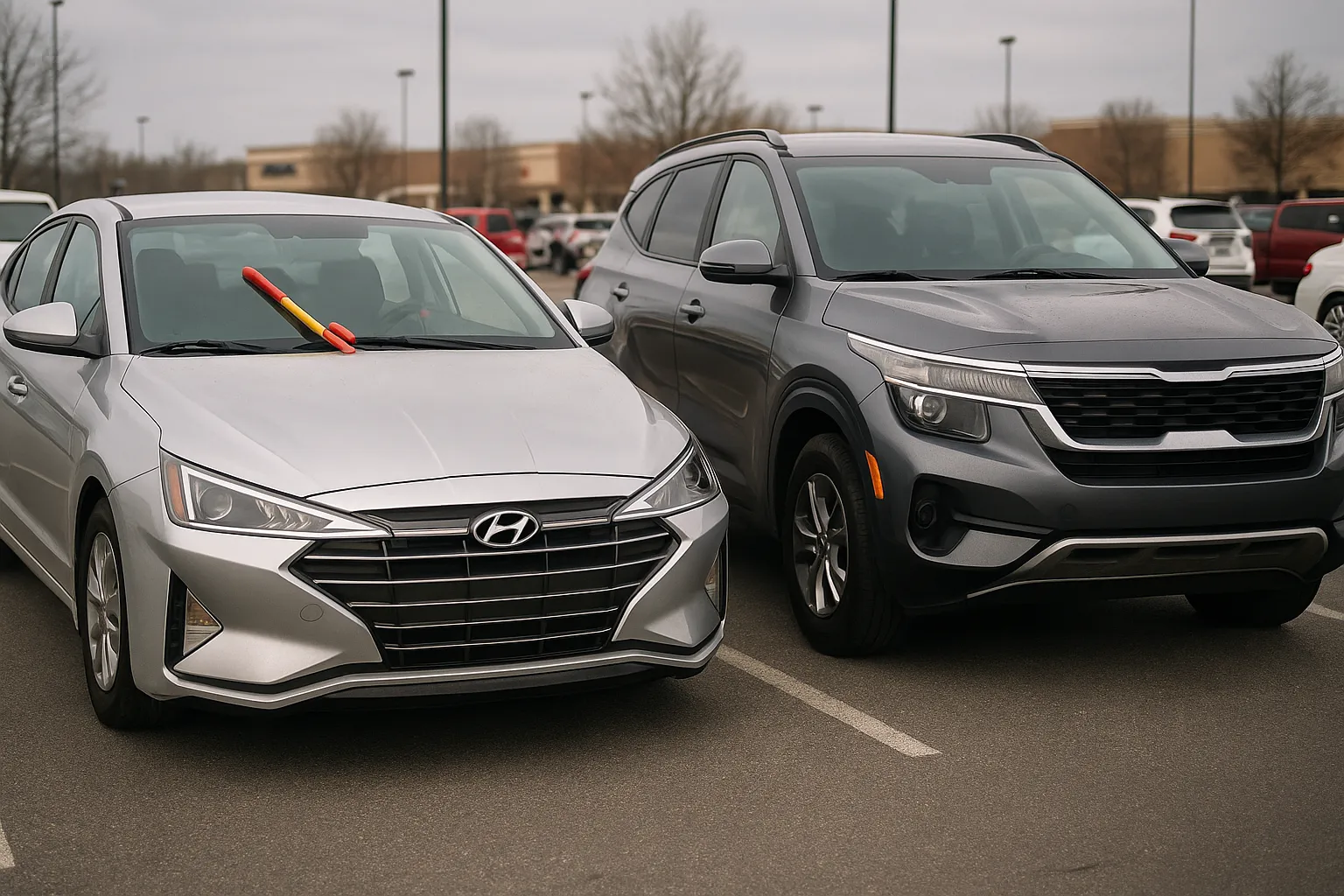
A US appeals court has put a major insurance lawsuit against Kia and Hyundai back on track. The case revolves around vehicles sold in the US without a standard electronic immobilizer that became especially frequent targets of simple thefts in recent years. For the auto industry, this is more than an interim legal development: It is about what safety equipment buyers may expect, how manufacturers must respond to risks discovered later, and who ultimately pays for sharply increased theft losses.
At its core, insurers accuse the two manufacturers of having created, or at least not sufficiently mitigated, what they see as an avoidable weakness in numerous models with mechanical ignition keys. They are seeking damages on the order of around one billion US dollars. The appeals court has not decided that Kia or Hyundai are liable. But it has opened the way for the claims to be examined further after they had previously been stopped at a lower level.
What the affected cars are about

The well-known wave of thefts primarily affected US versions of various Kia and Hyundai models from the 2010s and early 2020s, provided they were equipped with a traditional key rather than a start button. The decisive factor is not the model badge alone, but the specific equipment. Many vehicles with keyless start systems have an electronic immobilizer. In numerous simpler variants with a mechanical ignition lock, however, this technology was missing in the US.
An electronic immobilizer normally prevents an engine from being started without a correctly coded key. If it is missing, a vehicle can, under certain circumstances, be started with comparatively simple means if there is access to the interior. It was precisely this combination that made certain Kia and Hyundai models attractive for opportunistic thefts. Videos circulating on social networks exacerbated the problem because they made methods visible and attracted copycats.
For European buyers, the situation is not directly transferable. In many markets, including Europe, immobilizers have long been a regulatory or practical standard. The current legal dispute concerns the US market. Nevertheless, the case also shows internationally how strongly basic technical equipment can influence resale value, insurability, and owners' sense of security.
Why the decision matters

The fact that the case is continuing increases pressure on Kia and Hyundai to defend their equipment decisions at the time and their later countermeasures in court. For insurers, a lot of money is at stake: If theft rates for certain vehicles rise sharply, they pay out more claims, increase premiums, or restrict insurance for certain models. That is exactly what some owners in the US have already experienced – with higher contributions, additional proof of anti-theft protection, or difficulties taking out a new policy.
For owners of affected vehicles, the legal reopening is not automatically associated with a direct payment. This lawsuit is being pursued by insurers and differs from separate proceedings and settlements aimed at consumer claims. Even so, the outcome can have indirect consequences: It can influence how manufacturers design recall or service programs, how insurers price risks, and how strictly the industry pays attention to theft protection in entry-level models in the future.
What Kia and Hyundai have already done
The manufacturers have already announced and implemented measures in the US to reduce the risk of theft. These include software updates for many affected vehicles. Among other things, these updates are intended to change the alarm system and start logic so that the car can no longer be started in the same way. For vehicles that cannot technically be updated, alternative measures such as steering wheel locks or reimbursements for additional security devices were offered depending on the case.
However, such programs do not solve every problem. Not every vehicle can be updated, not every owner has had the measure carried out, and additional mechanical security devices only work if they are used consistently. In addition, an improved theft risk cannot automatically undo insurance and repair costs that have already arisen. This is exactly where the insurers' claims come in.
What owners should check now
Anyone in the US who drives or wants to buy a Kia or Hyundai from the affected model years should first clarify whether the specific vehicle has an immobilizer. A start button is a strong indication, but not the only point to check. More reliable are the vehicle identification number, the equipment list, and a check with the dealer or through official manufacturer portals.
The status of possible software updates is also important. When buying a used car, it should be possible to verify in writing whether the anti-theft update has already been carried out. If this proof is missing, it can be a point for price negotiations. It is also worth calling your own insurance company before the purchase contract is signed. Some insurers assess these models differently depending on the region and update status.
Mechanical steering wheel locks are not an elegant solution, but they can help as a visible deterrent. In areas with a high theft rate, well-lit parking spaces, garages, aftermarket alarm systems, or GPS tracking systems can also be useful. What matters is a realistic assessment: No single accessory makes a car impossible to steal, but multiple barriers can lower the risk.
Signal to the industry
The case shows that safety equipment is not just a comfort or premium issue. If a component such as the immobilizer is missing in many vehicles, the follow-up costs can go far beyond individual repairs: Insurers, municipalities, dealers, leasing companies, and owners become part of the same risk chain. For manufacturers, a supposed saving in standard equipment can become expensive later if it undermines trust in entire model lines.
For new-car buyers, the lesson is clear: Theft protection belongs on the checklist, even for inexpensive models. For used-car buyers, it is not only important whether a car runs reliably, but also whether it is insurable in the respective region and protected against known weaknesses. And for enthusiasts, the case is an example of how digital dissemination and simple technical gaps can shape the reputation of entire brands in a short time.
The legal dispute is still at the beginning of a new round. The revival of the lawsuit does not mean a final liability decision and no automatic compensation. But it ensures that the central question is not off the table: What responsibility do manufacturers bear when missing safety technology turns a mass-market model into a preferred target for thieves?