Nissan Kicks coming to Europe from Sunderland as hybrid SUV
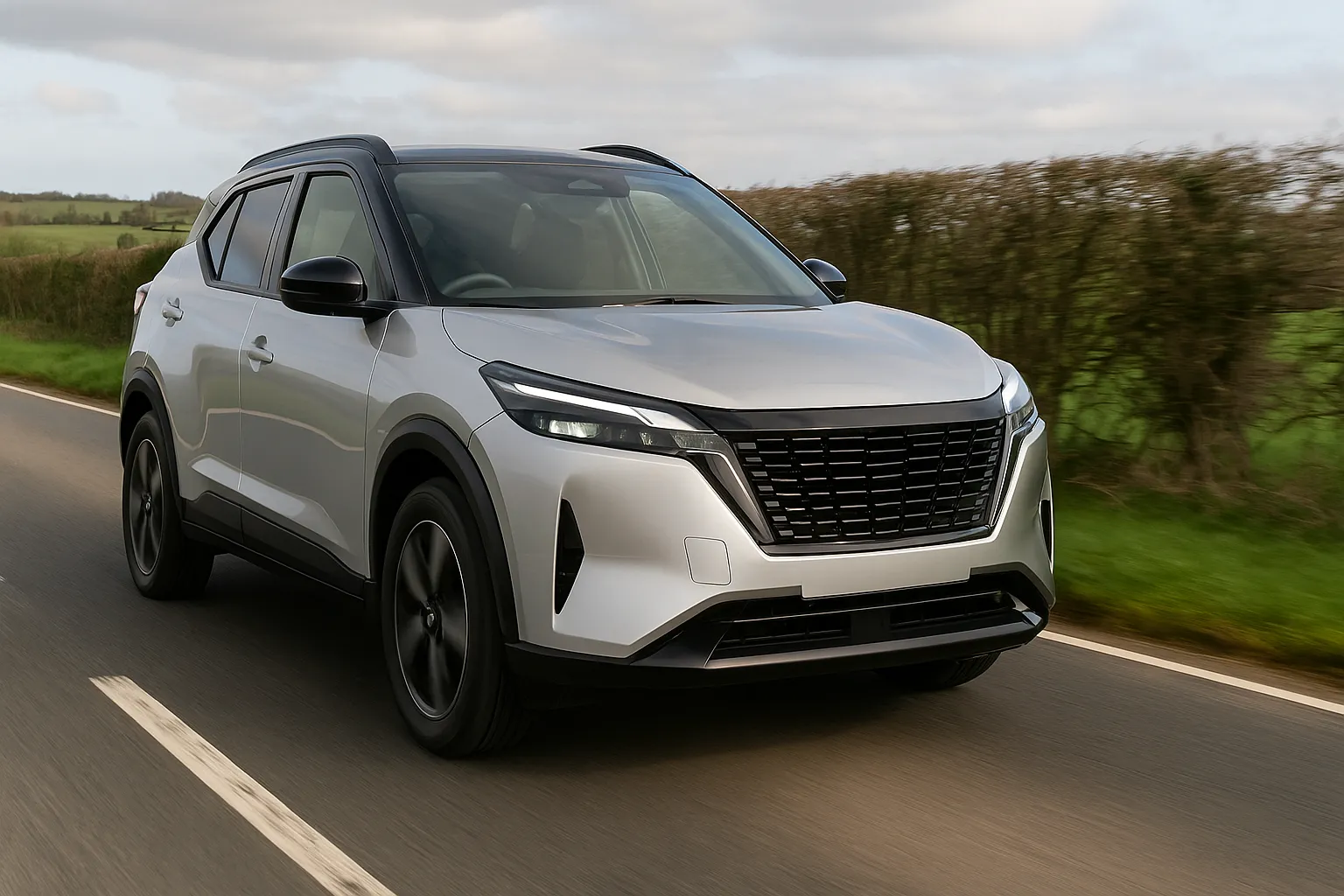
Nissan confirms the Kicks for the UK and Europe. The compact SUV is set to be built in Sunderland, use e-Power hybrid technology and complement the electric Juke range.
Compact SUV with a new role in Europe
Nissan is expanding its European SUV lineup with the Kicks. The model was previously known mainly from markets outside Europe, but in future it is also set to be sold in the UK and on the continent. Particularly important: the Kicks will not be imported, but built at the British plant in Sunderland. Nissan is thus linking the market launch with an investment of around 170 million pounds in the long-established site in northeast England.
For European buyers, this is more than just an additional model variant. The Kicks moves into a segment that remains one of the highest-volume in Europe: compact SUVs with manageable dimensions, a higher seating position and an interior suitable for everyday use. At the same time, it arrives at a point when Nissan is electrifying its model range more strongly and wants to position the next generation of the Juke as a purely electric model.
e-Power instead of a conventional gasoline engine
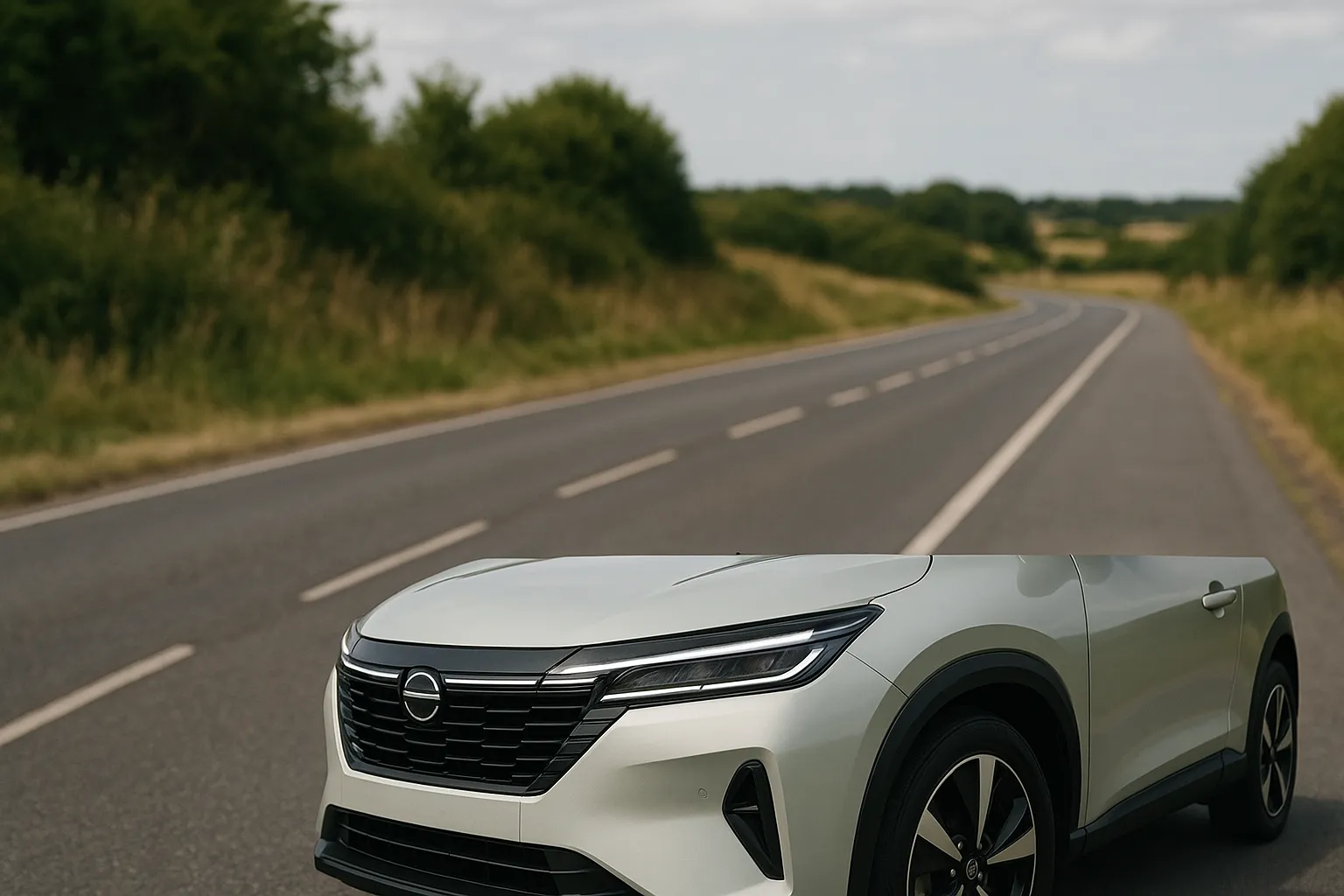
While the Kicks is offered in other markets with conventional gasoline engines, a layout with Nissan’s e-Power hybrid technology is planned for Europe. This system differs from many conventional full hybrids: the wheels are driven electrically, while the combustion engine primarily works as a generator to provide energy for the battery and electric motor.
The aim is a driving feel closer to an electric car than to a conventional gasoline vehicle, without the driver having to charge. For buyers who want low consumption and electric drive characteristics but do not have their own charging option or do not yet want to switch to a purely electric car, this can be a relevant offering.
Specific European performance data, consumption figures, equipment and prices have not yet been finalized. The exact market launch and the model structure for individual countries also remain open. What is certain, however, is that Nissan is not simply introducing the Kicks in Europe as another gasoline SUV, but is positioning it as a hybrid model in a gap between conventional drivetrains and fully electric vehicles.
Complement to the upcoming electric Juke

The Kicks will be close in format to the current Juke. Depending on the market, the second-generation Kicks measures around 4.37 meters in length, while the current Juke is about 4.21 meters long. Both models therefore serve the same basic need: compact exterior dimensions, SUV looks, city-friendly maneuverability and enough space for family or commuter everyday life.
The strategic significance lies in the division of roles. The next Juke is set to enter the market as an electric car. The Kicks is therefore expected to take on the role of the combustion-supported but electrified entry point into Nissan’s small SUV world. Customers gain more freedom of choice: those who can drive locally emissions-free and charge regularly are likely to end up with the electric Juke. Those who do not have charging infrastructure or prefer long distances without charging stops get a hybrid alternative with the Kicks.
This separation can help Nissan avoid losing buyers to competitors that continue to offer gasoline, hybrid and electric versions in parallel in the small SUV segment. This is especially important in Europe because the transition to electric cars is progressing at very different speeds from region to region. In cities with good charging infrastructure, demand for EVs is rising, while rural regions and street parkers often continue to look for hybrid solutions.
From global model to European building block
The Kicks already has a longer international history. It was shown as a concept in 2014, and series production began in 2016. In markets such as Latin America, North America, Japan and the Middle East, the model has been part of Nissan’s portfolio for years. In the USA and Canada, the Kicks temporarily took on the role previously held by the Juke.
The second generation was presented in 2024 and brought a more mature design, larger dimensions and a stronger SUV character. The fact that this model is now planned for Europe shows a changed product strategy: Nissan is using a globally established vehicle and adapting it to European requirements instead of exclusively pursuing regional special paths.
For enthusiasts, the Kicks is not a sports model, but it shows how Nissan is reorganizing its identity in the small SUV segment. The original Juke was polarizing because of its design and helped shape the segment. The Kicks appears more international and more objectively positioned. The key question will be whether Nissan gives it enough individuality in Europe in terms of chassis tuning, interior feel, assistance systems and infotainment.
Significance for Sunderland
The production decision is also relevant in industrial policy terms. Sunderland is one of Nissan’s most important European sites and has been building models for the European market for decades. The additional investment of 170 million pounds strengthens the role of the plant in a phase in which the automotive industry has to shoulder high costs for electrification, new platforms and changed supply chains.
For the region, another model means more planning security for employment, suppliers and local service providers. For Nissan in turn, European production is an advantage because transport routes are shorter and the brand can react more flexibly to changes in demand. Especially with compact vehicles, where margins are under greater pressure than with large SUVs or premium cars, production location and supply chain can determine competitiveness.
The Kicks will also be produced in the same environment as other electrified Nissan models. This fits Nissan’s longer-term plan to develop Sunderland into a core site for electrified vehicles. The hybrid technology of the Kicks is not an end point here, but rather a transitional solution for buyers who cannot or do not yet want to travel fully electrically.
What buyers can expect
In everyday use, the Kicks is likely to aim to score above all with lower urban consumption, straightforward operation and compact dimensions. e-Power systems are particularly strong where there is frequent recuperation and driving at low speeds. On the highway, efficiency depends more heavily on tuning, weight and aerodynamics. Without official European figures, it is not yet possible to say seriously where the Kicks will land compared with hybrid rivals from Toyota, Renault, Hyundai or Kia.
Nissan also still owes answers on price. The crucial factor will be whether the Kicks is positioned clearly below larger SUVs and whether it remains noticeably cheaper than an electric Juke. Buyers will pay close attention to exactly that, because many in this segment decide pragmatically: monthly payment, consumption, tax, insurance, space and resale value often count for more than pure fascination with technology.
An important signal, but still with open details
The confirmation of the Kicks for Europe is a logical step. Nissan needs a solution in the small SUV segment for customers who do not yet want a fully electric car. At the same time, the brand has to keep its plants utilized and electrify its European models more strongly. The Kicks combines both: a globally known SUV, local production in Sunderland and a hybrid drive that does without any obligation to charge.
Whether this becomes a sales success depends on the details still outstanding. Price, equipment, consumption, trunk volume, towing capacity and delivery times will ultimately be more important for buyers than the mere announcement. Nevertheless, the direction is clear: Nissan is not only expanding its European offering electrically, but is deliberately leaving room for hybrid customers. In a market that is not electrifying at the same pace everywhere, precisely this mix could make the difference.