Dodge Charger 2026: Muscle Car with Six-Cylinder and Electric Drive
The new Dodge Charger is coming to Europe as a gasoline-powered Sixpack and a Daytona electric model. It offers plenty of character and space, but remains a niche car.
An American classic looks for new customers
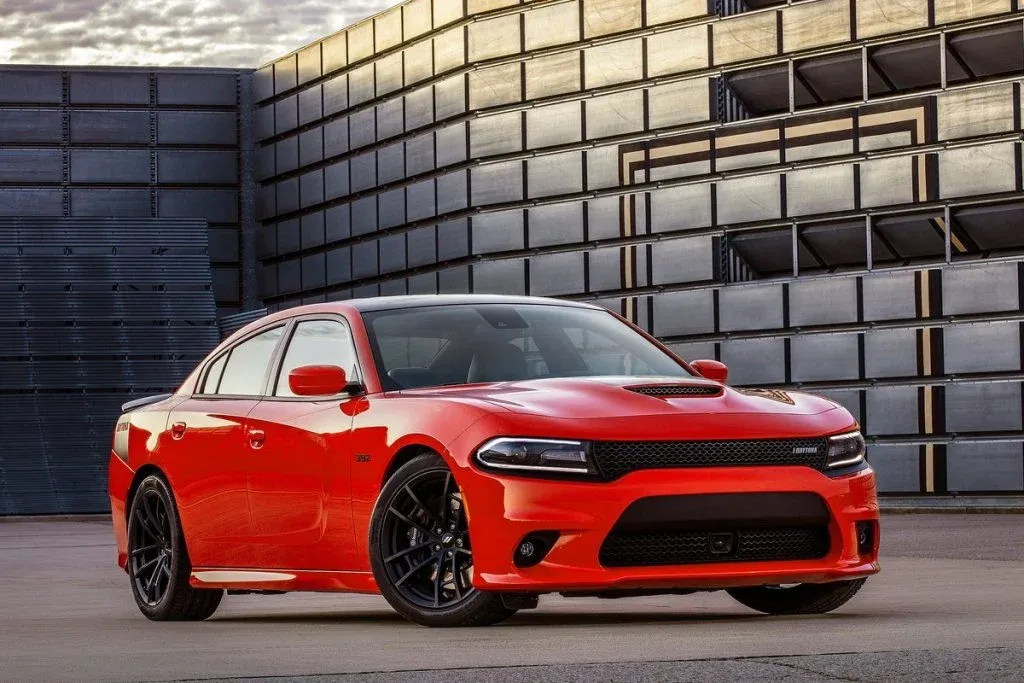
The 2026 Dodge Charger represents an unusual moment in muscle-car history: it is not only entering the market with a gasoline engine, but also as the battery-electric Daytona. With this, Dodge is trying to carry the traditional U.S. performance narrative into an era in which emissions regulations, electrification, and changing customer wishes do not stop even at large American coupes.
For European buyers, the new Charger is especially interesting because it is also coming to markets such as Great Britain through official import channels. That makes it more tangible than many earlier U.S. specialties, but it does not change the fact that it remains a car for committed enthusiasts. Left-hand drive, limited dealer coverage, and enormous dimensions set clear limits in everyday use.
Two drive worlds: Sixpack and Daytona

The most important innovation is the two-track nature of the model range. The Charger Sixpack serves the brand's classic side with an internal-combustion engine, while the Charger Daytona takes the electric route. In doing so, Dodge addresses two target groups that do overlap, but have different expectations.
The Sixpack is aimed at drivers who are still looking for mechanical combustion-engine character, sound, and the familiar muscle-car feeling. The Daytona, in turn, is intended for customers who prefer instant electric torque, locally emissions-free driving, and a new interpretation of performance. Technical details may vary depending on market and importer; for buyers in Europe, it is therefore crucial which equipment, power levels, and warranty services are actually offered.
What is remarkable is less that Dodge is electrifying, and more that the brand is not committing the Charger to a single future. While some manufacturers either fully electrify icons or let them run out, Dodge is pursuing both paths for the time being. For enthusiasts, this is a rare transitional state: a new muscle car that embodies both old and new drive ideas at the same time.
Big, wide, present

The Charger remains a car with imposing presence. Its width of more than two meters makes it immediately noticeable on European roads. On wide highways, this format suits the car's personality, but on narrow country roads, in parking garages, or in historic city centers, it quickly feels oversized.
This is not a small detail, but a central point for potential owners. Anyone who wants to use the Charger in Europe must expect restricted visibility, tighter parking spaces, and more attention in city traffic. The car rewards these compromises with an appearance that hardly any other new vehicle offers. At the same time, it requires more planning than a European sports coupe with similar performance.
Weight also plays a role. The new Charger is not designed as a delicate driver's car, but as a large, stable performance vehicle with everyday usability. Especially with the electric Daytona, mass is part of the package by design. This can be noticeable during changes of direction and under braking, even if modern chassis and drive technology can conceal a lot.
More practical than the muscle-car cliché
One advantage of the Charger is its usability. Compared with many sports coupes, it offers more space and therefore greater everyday practicality. This fits the model's historical role: the Charger was never just a pure two-seater for weekend drives, but a large performance car with reserves of space.
For buyers looking for an emotional car but not wanting to completely give up utility, that is relevant. The Charger can function more as a long-distance and leisure car than many more compact sports cars. It is precisely this mixture of drama and space that distinguishes it from the tighter, more coupe-like part of the market.
Nevertheless, practical value should not be confused with European rationality. Consumption or electricity demand, tire and brake wear, insurance, maintenance, and import handling are likely to be above the level of ordinary coupes. With the electric model, there is also the question of how well charging planning, range, and local infrastructure suit one's own driving profile.
The Mustang remains the obvious rival
In the classic muscle-car segment, the offering has shrunk considerably. The Ford Mustang remains the obvious rival, while the Charger, with its size and the choice between electric and gasoline drive, occupies a position of its own. That is exactly what makes it interesting for the market: it is not a direct copy of the Mustang, but a larger, more extroverted car with a broader drive concept.
For the industry, the Charger shows how difficult the future of iconic models has become. Pure nostalgia is no longer enough, but too much of a break with the past can alienate regular customers. Dodge is trying to solve this balancing act through design, format, and model name: the Charger is still meant to be recognizable as an American muscle car, even if part of the range is electric.
Europe remains difficult territory
The European market will not be a sure-fire success for the Charger. Left-hand drive is not a problem in many countries, but in Great Britain it is a clear disadvantage. In addition, the car is not available through a dense network of traditional authorized dealers. Service, spare parts, warranty handling, and resale should therefore be clarified carefully before purchase.
This does not make the Charger unattractive, but it does make it specialized. It suits customers who consciously want something different and are prepared to accept the practical disadvantages of a U.S. import. For them, the Charger can be a car with especially strong character. For buyers looking for uncomplicated availability, easy workshop access, and maximum everyday efficiency, there are more suitable alternatives.
Why the 2026 Charger matters
The new Dodge Charger is more than just another new model. It shows how a manufacturer rich in tradition is trying to lead the muscle car into a new era without immediately giving up the combustion engine. For fans, that is a rare choice. For buyers, it is a reminder that emotion, practicality, and drive technology can be combined in very different ways today.
The Charger is most convincing where its strengths matter: space, presence, character, and clear differentiation from the European mainstream. Its weaknesses are just as obvious: size, weight, import realities, and limited everyday practicality on narrow roads. That is exactly why it is unlikely to become a volume model in Europe, but rather a car for people who explicitly seek its special character.
The 2026 Charger is therefore neither pure past nor an entirely new future. It is a transitional model in the best sense: loud or quiet, gasoline-powered or electric, but always distinctly American.