Audi RS Q5: Prototype hints at plug-in hybrid with RS 5 tech
Audi is apparently preparing the first RS Q5. The performance SUV is likely to get a V6 plug-in hybrid with more than 600 PS, all-wheel drive and everyday electric range.

Audi's Q5 apparently moves up into the RS league for the first time
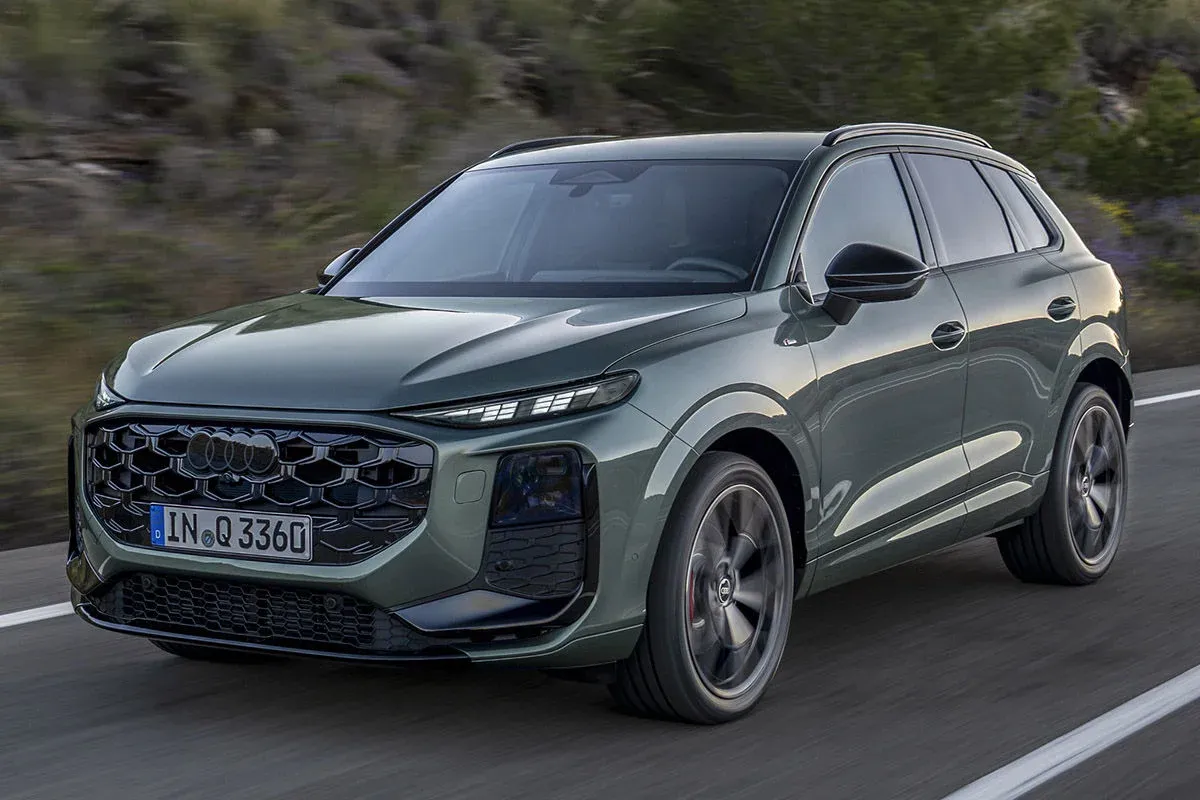
Audi is working on a particularly powerful Q5 that is likely to wear the RS badge for the first time. Camouflaged prototypes show a significantly sportier midsize SUV, and the technical key data point to a major step up from the current SQ5: instead of a conventional performance powertrain, the RS Q5 is expected to use a plug-in hybrid system said to be closely related to the new RS 5 technology.
The RS Q5 has not yet been officially confirmed. However, the combination of prototype appearance, RS-typical styling and Audi Sport's current powertrain strategy makes the model plausible. A market launch could take place as early as 2027. For the British market, an entry price of around 100,000 pounds is expected; German prices are still open and are likely to be confirmed only closer to the premiere.
V6 plug-in hybrid instead of pure combustion power

At the center is expected to be a 2.9-liter V6 with biturbo charging, supported by an electric motor. According to current expectations, the electric motor sits between the combustion engine and the eight-speed automatic transmission. Energy is supplied by a battery with a capacity of around 25.9 kWh. This architecture corresponds to the approach Audi is increasingly using in its new high-performance models: more system output, electric driving in everyday use and better CO2 figures in the test cycle.
If the RS Q5 adopts the performance figures of the RS 5, around 630 PS and 825 Nm of system torque would be realistic. That would place the SUV far above the SQ5 and push it into a segment that has so far been shaped more by models such as the Mercedes-AMG GLC and BMW X3 M. Because of the higher weight and the SUV body, the RS Q5 is likely to accelerate slightly more slowly than a lower RS model with a comparable engine. A sprint to 100 km/h in the high three-second range nevertheless appears likely.
Important: These figures should still be understood as expectations. Audi has not yet finally published output, battery data, range or price.
Electric range as a purchase argument

The plug-in hybrid powertrain is not only a means of delivering high peak performance. For buyers, the electric range could be at least as relevant. Figures of about 45 to 50 miles, or roughly 72 to 80 kilometers, are being discussed, depending on wheel size, equipment and test cycle. In everyday use, that would allow many commuters to cover short distances locally emissions-free, provided the vehicle is charged regularly.
That changes the character of an RS model. A classic performance SUV is primarily emotional: sound, acceleration, traction, presence. An RS Q5 with PHEV technology could additionally offer rational advantages, such as lower official CO2 figures and better efficiency in urban and commuter traffic. Figures in the region of 100 g/km CO2 and very low standard consumption are being mentioned. However, with plug-in hybrids, such figures depend heavily on how often they are charged. Anyone who rarely uses the battery drives around in everyday use with extra weight from the battery and electric technology.
For company car drivers and markets with CO2-based taxation, precisely this point could be decisive. A powerful SUV with significantly reduced test-bench emissions can be more attractive for tax purposes than a pure gasoline model with similar performance. Private buyers, on the other hand, benefit above all if charging is possible at home or at the workplace.
What stands out on the prototype
The test vehicles show a Q5 with a visibly more aggressive appearance than the civilian variants. Even under camouflage, the front appears more open, the track wider and the wheel arches better filled. Large wheels and a sportier braking system fit the expected RS claim. As is usual with prototypes, individual body parts may still be provisional; the final design is likely to become fully visible only at the premiere.
An RS Q5 would be a strategically important new addition for Audi. The Q5 is one of the brand's core models worldwide, but until now there has been no full-fledged RS derivative above the SQ5. Audi Sport does have larger SUV models such as the RS Q8 in its range, but there remained a gap in the high-volume midsize SUV segment. That is exactly where the RS Q5 could in future appeal to customers who want RS performance but are looking for a more everyday-friendly format than large luxury SUVs.
Why this matters for enthusiasts and buyers
For enthusiasts, the RS Q5 is another sign that performance brands are not simply continuing their fastest combustion-engine models unchanged. Electrification is becoming part of the top models. That brings advantages such as instant torque, an electric boost function and better consumption figures in the official cycle. At the same time, new challenges arise: higher weight, more complex technology and the question of how authentic a plug-in hybrid feels compared with earlier pure gasoline RS models.
For buyers, the balance matters most. On paper, an RS Q5 could combine several roles: fast family SUV, electric short-distance commuter and long-distance car with a gasoline engine. This versatility is attractive, but it requires discipline when charging. Without regular recharging, the efficiency advantage shrinks, while the costs and weight remain.
The technology could also play a role in resale. Plug-in hybrids with a large battery and high electric range are better accepted in many cities and corporate fleets than pure high-performance gasoline models. At the same time, potential used-car buyers will pay closer attention to battery condition, charging history and maintenance.
An RS model for a new transition phase
The coming RS Q5 is exemplary of the transition period for performance SUVs. Pure electric cars are gaining importance, but many buyers still want range, fast refueling and the character of a combustion engine. A strong plug-in hybrid can connect these worlds if the tuning succeeds.
Audi must deliver more than high numbers here. An RS model is measured by steering feel, braking stability, chassis control and durability under continuous load. A heavier PHEV SUV in particular needs convincing thermal management, resilient brakes and powertrain tuning that allows the combustion engine and electric motor to work together seamlessly.
Until the official presentation, some details remain open: final output, charging power, trunk volume, weight, price and market launch. What is already clear, however: If Audi brings the RS Q5 as expected, it will not just be a faster Q5, but an important statement about how the brand defines high-performance models in the coming years.