Volvo XC60 and XC90: Facelift PHEV drives much farther electrically
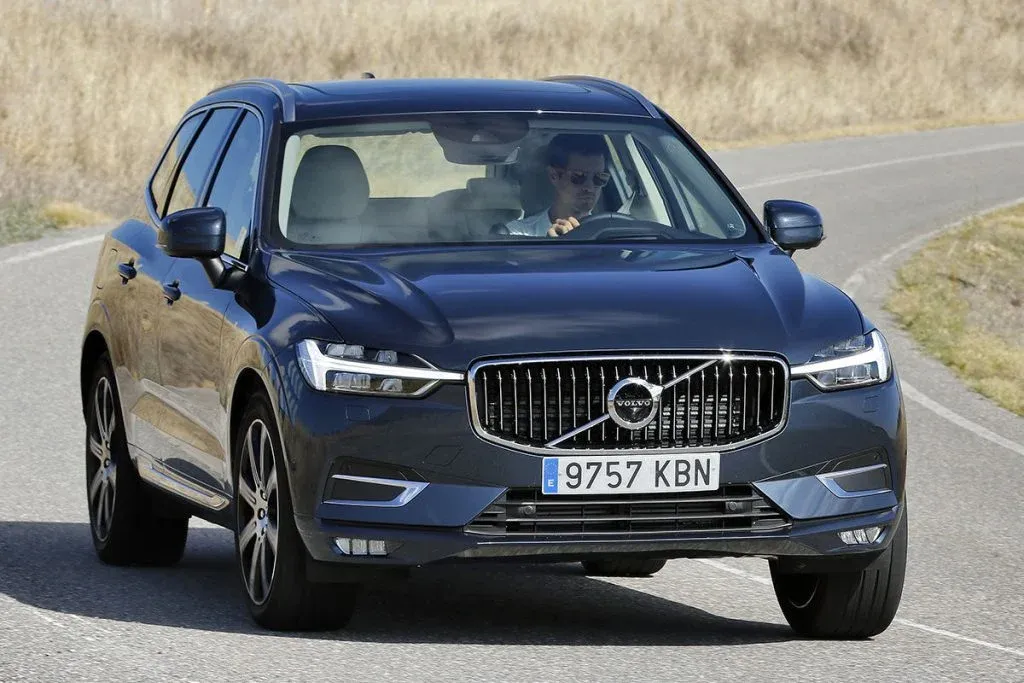
Volvo revises the XC60 and XC90 as plug-in hybrids: A large battery raises the electric range to up to 124 miles in the XC60 and 99 miles in the XC90.
Volvo makes the plug-in hybrid more relevant again
Volvo is refreshing the XC60 and XC90 for the 2026 model year and is putting the plug-in hybrid drive front and center. The most important technical change is a significantly larger battery: The new long-range PHEV system uses a battery with 41.2 kWh gross capacity, of which 37.9 kWh is usable. This moves the two SUVs into a range class that until now has been more the exception than the rule for plug-in hybrids.
For the midsize XC60, up to 124 miles of purely electric range is on the table, equivalent to around 200 kilometers. The larger, seven-seat XC90 is expected to manage up to 99 miles, or about 159 kilometers. Both figures should be understood as best-case values; as usual, the actual range depends on temperature, speed, topography, load, tires and driving style. Nevertheless, the leap is remarkable: The electric distance is roughly two and a half times as great as with the previous PHEV setup of these models.
Large battery instead of a small token electric range

The new battery is more than just a moderate model update. At 41.2 kWh gross, it is more than twice as large as the previous battery in the XC60 and XC90 PHEV. For comparison: Many established plug-in hybrid SUVs remain well below that. A BMW X3 plug-in hybrid reaches up to 56 miles of electric range with 19.7 kWh. Even large premium PHEVs often use batteries that are not much larger; the Range Rover Sport plug-in hybrid is listed with 38.2 kWh gross capacity.
This shifts the character of Volvo's drivetrain. Classic plug-in hybrids were long mainly useful for short commutes: electric to the office in the morning, back again in the evening, charging in between. With nearly 200 kilometers of possible electric range in the XC60, some customers can manage several days or an entire working week without using the combustion engine, provided they charge regularly at home or at work. The gasoline engine nevertheless remains on board for vacation trips, long highway stages or regions with sparse charging infrastructure.
Total range remains a PHEV argument

In addition to electric range, Volvo also cites high combined ranges with a full tank and a full battery. The XC60 is said to manage up to 770 miles, or around 1,239 kilometers. For the larger XC90, it is more than 680 miles, around 1,094 kilometers. Such figures show why some buyers continue to consider plug-in hybrids despite the growing number of pure electric SUVs: They can drive locally emission-free in everyday use, but do not require charging planning on long journeys like a battery-electric car.
For the industry, the signal is also interesting. While many manufacturers are focusing their development budgets heavily on pure electric cars, the PHEV remains a transitional concept with demand for certain markets and buyer groups. This is especially true for large family SUVs, company cars and customers who want to commute electrically but do not yet want to give up the combustion engine completely.
XC60 and XC90 serve different needs
In Volvo's portfolio, the XC60 is the more compact and higher-volume SUV offering for families, commuters and company-car drivers. With the new battery, it could become more attractive to buyers who are looking for an electric everyday life but do not want to buy a pure electric car. The range of up to 124 miles is unusually high in this segment and could lower operating costs if electricity is charged cheaply and the gasoline engine actually rarely starts.
The XC90 plays a different role. It is larger, heavier and, as a seven-seater, more strongly aimed at families needing space. The fact that it is supposed to drive up to 99 miles electrically despite its size is relevant for a vehicle in this class. Especially in city and suburban operation, on school runs, shopping trips or short everyday journeys, a large SUV can therefore be on the road electrically much more often. Those who regularly drive long distances with a full complement of passengers will appreciate the combined range more.
Not every rival is beaten
Despite the strong figures, Volvo is not alone at the top of the field. Some electrified models with a range-extender approach, for example from the sphere of new Chinese premium brands or sportily positioned electric SUVs, achieve even higher electric ranges of more than 200 miles with significantly larger batteries. However, these vehicles partly pursue a different concept and are not always directly in the classic European PHEV competition.
What will be decisive for buyers will therefore not only be the maximum EV range. Charging power, charging times, price, equipment, real-world efficiency, trunk volume and tax or company-car rules can tip the scales. The available information does not yet provide reliable details on prices, specific market launches in individual countries or complete equipment details. Details on possible changes to the combustion engine, system output or chassis tuning also remain to be seen.
What the facelift means for buyers
For those interested in the previous XC60 and XC90 PHEV models, the new battery is an important point. Anyone looking to buy or lease a vehicle shortly before the model change should compare residual values, delivery times and possible price differences carefully. An older model can be attractive as a run-out offer, but the significantly shorter electric range could matter in later resale or with rising fuel costs.
Existing customers must also calculate realistically. The new battery does not automatically make the plug-in hybrid cheaper than a pure electric car or an efficient diesel substitute, if the latter is still offered in the respective market. But those who charge consistently and predominantly drive routes below the EV range can greatly reduce gasoline consumption. Those who rarely charge, on the other hand, are driving a heavy SUV with a large battery and are wasting a key advantage of the concept.
A PHEV with clearer utility
The revised Volvo XC60 and XC90 show where plug-in hybrids need to go in order to remain relevant: away from small batteries for short standardized-cycle advantages, toward electric ranges that can actually replace combustion-engine journeys in everyday use. The large 41.2-kWh battery makes the models heavier and is unlikely to be cheap, but it brings a noticeable benefit for customers.
For enthusiasts, this is less an emotional message than a technical course-setting. For buyers of large SUVs, it is much more tangible: A plug-in hybrid can once again be more than a compromise. If price, charging power and real-world consumption figures are right, the XC60 and XC90 with the facelift could rank among the most interesting electrified family SUVs in their classes.