U.S. agency demands sworn answers from Tesla on Cybercab
The NHTSA is taking a closer look at Tesla's steering-wheel-free Cybercab. The process is not a sales stop, but it could become decisive for how autonomous vehicles without conventional controls are regulated.
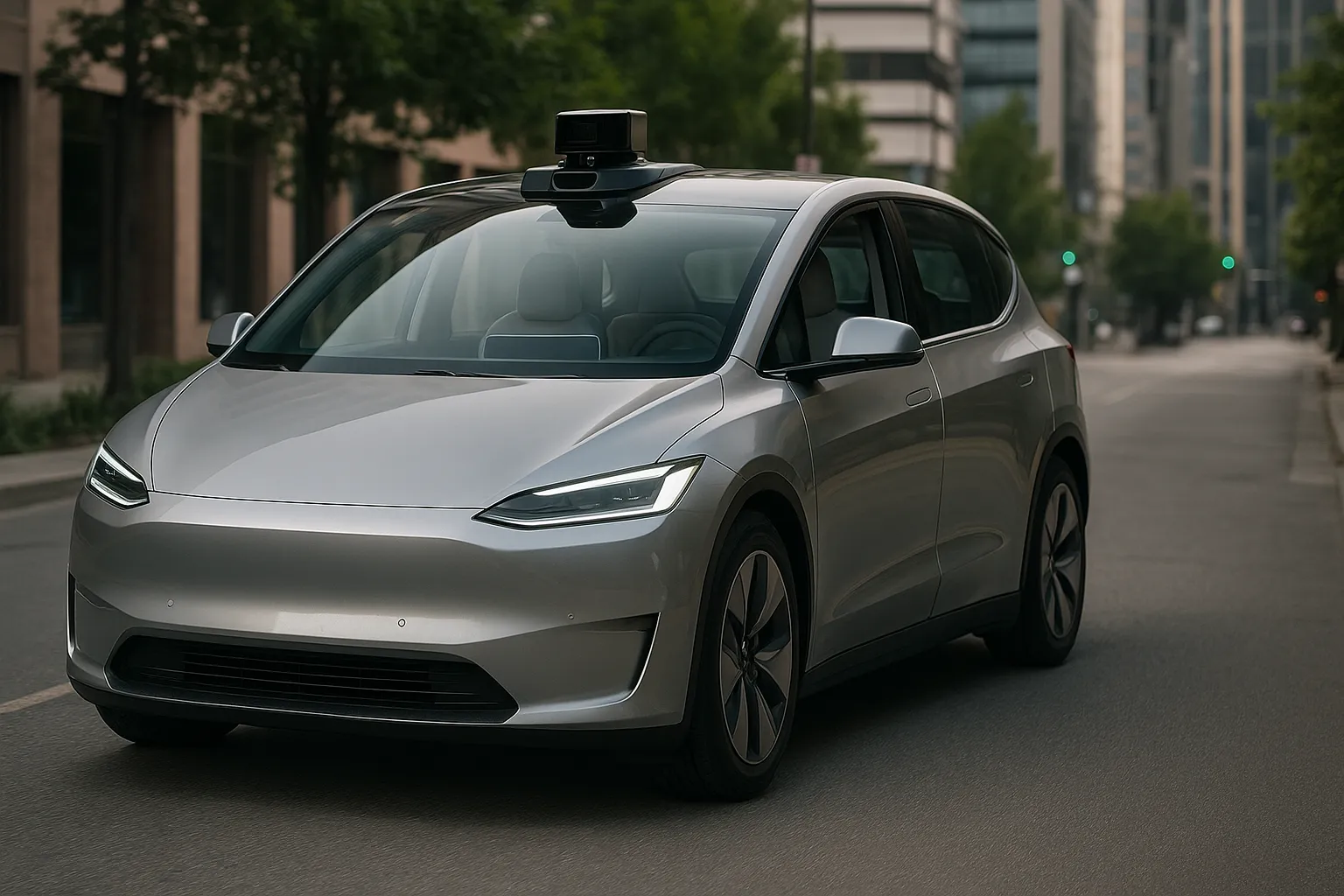
Tesla must get more specific with the U.S. safety agency on Cybercab
The U.S. traffic safety agency NHTSA is demanding formal, sworn answers from Tesla regarding the Cybercab. At the center is Tesla's planned robotaxi, which is intended to do without a steering wheel and pedals. The agency has used what is known as a Special Order for this, meaning a binding request for information with deadlines and possible sanctions.
For Tesla, this is not just about paperwork. Anyone who does not respond to such an order completely, on time, or truthfully can risk significant legal consequences. A possible civil penalty of up to 139 million U.S. dollars is on the table; in the case of false statements under oath, criminal risks can also arise. The specific effects on the Cybercab's timeline are currently open.
What is important: The order is not a recall, not a sales ban, and also not a final determination that the vehicle would be unsafe. But it does show that the regulators want to see precise evidence for a car without conventional driver controls before such a concept can play a broader role on public roads.
Why the Cybercab is special from a regulatory perspective

The Cybercab differs fundamentally from today's Tesla models such as Model 3, Model Y, Model S, Model X, or Cybertruck. These vehicles continue to have steering wheels, pedals, mirrors, and operating concepts that fit into existing safety regulations. Even if Tesla markets assistance systems such as Autopilot or Full Self-Driving, the human being has so far remained part of the safety concept in these production vehicles.
With the Cybercab, the idea is different: The vehicle is intended to function as an autonomous robotaxi and do without a driver's seat in the conventional sense. This is exactly where the conflict arises with a vehicle world whose rules have been tailored to a human driver for decades. In many places, safety standards refer to controls, fields of vision, restraint systems, warnings, and intervention options. If a vehicle has no steering wheel and no pedals, the manufacturer must explain how the same safety objectives are achieved in another way.
In such cases, the NHTSA can request detailed information: on the technical design, on safety processes, on planned use, on test data, on software safeguards, on remote monitoring, and on procedures at system limits. Which individual questions Tesla must answer is not fully publicly known. What is clear, however, is that the focus is on the Cybercab and its departure from the classic vehicle layout.
What the September deadlines mean

Tesla must respond within tight deadlines in September. Such deadlines are uncomfortable for manufacturers because answers cannot be formulated only by lawyers. Technical data, internal process descriptions, responsibilities, and often also statements from executives or specialist departments are needed.
Because the answers are given under oath, the pressure increases. Vague marketing statements are not enough. The agency wants reliable information that can be verified later. For a company like Tesla, which strongly links its future with autonomy, software, and robotaxi services, this is a sensitive point: Any official presentation of the Cybercab can influence how regulators, investors, customers, and competitors assess the maturity of the project.
At the same time, the process should not be overinterpreted. Regulatory authorities regularly request documents from manufacturers when new technologies, accident data, or safety issues are in question. What will be decisive is whether Tesla answers the questions completely and whether further steps follow from that. Additional follow-up questions, technical discussions, conditions, or a longer review process would be possible. It is equally possible that, after reviewing the answers, the agency will initially take no immediate measure.
Significance for buyers and Tesla owners
For current Tesla owners, the order does not immediately change anything for the time being. Existing vehicles may continue to be used, and the process does not automatically affect the road approval of current models. Nevertheless, the development is relevant because Tesla increasingly defines its vehicles and services through software, automation, and connected functions.
Anyone buying a current Tesla model is often also interested in future autonomous functions. The review of the Cybercab is a reminder that fully autonomous driving is not solely a matter of cameras, chips, and software. It also requires a legal basis, clear responsibilities, and evidence that the system operates safely in real traffic situations.
For potential robotaxi users, the process is also important. A vehicle without a steering wheel requires a different kind of trust than a normal car with an assistance system. Passengers cannot intervene if something unusual happens. That is why questions about emergency strategies, safe stopping points, dealing with roadworks, bad weather, emergency services, or communication failures are more than technical details. They determine whether a driverless service is socially accepted and approved by authorities.
Signal to the entire auto industry
The case does not concern Tesla alone. Many manufacturers, suppliers, and technology companies are working on automated driving functions or mobility services. So far, however, it has become apparent that the path from an impressive prototype to scalable series operation is difficult. Vehicles must not only work in demonstrations, but millions of times in confusing everyday situations.
The NHTSA order makes clear that U.S. regulation for vehicles without traditional controls is unlikely simply to rely on self-certification and manufacturers' promises. That can slow development, but it also creates more clarity. When authorities formulate precise requirements, companies know better which evidence they must provide.
For the industry, there is a lot at stake. A successfully approved robotaxi without a steering wheel could enable new business models: cheaper ride-hailing services, specially designed urban vehicles, different interior concepts, and a stronger separation between private car ownership and mobility services. If the regulatory safeguards fail, such vehicles will remain limited for longer to test fleets, restricted operating areas, or conventional transitional solutions.
No judgment, but an important test case
The order against Tesla is therefore less an individual dispute over one model than a test case for the next stage of automation. The Cybercab embodies a clear thesis: If the vehicle drives itself, it no longer needs a driver's seat. The safety agency is now asking the obvious counterquestion: How is it proven that such a vehicle is safe enough without a human intervention option?
For Tesla, the process comes at a decisive moment. The company wants to present autonomy not as a secondary function, but as the core of its future value. The closer series or fleet use gets, the more technical promises must be translated into verifiable safety arguments.
For car buyers and enthusiasts, this is a reminder of the difference between vision and approval. A futuristic vehicle design can generate attention, but in road traffic, standards, tests, liability, and comprehensible safety concepts count. That is exactly where it will be decided whether the Cybercab becomes a real building block of mobility or remains an ambitious concept for the time being.