Toyota and Honda face extra costs from new Canada tariffs
US tariffs of up to 50 percent on vehicles and parts from Canada could hit Toyota and Honda especially hard. For buyers in the US, it comes down to prices, discounts and delivery times.
A new cost center at an already sensitive border
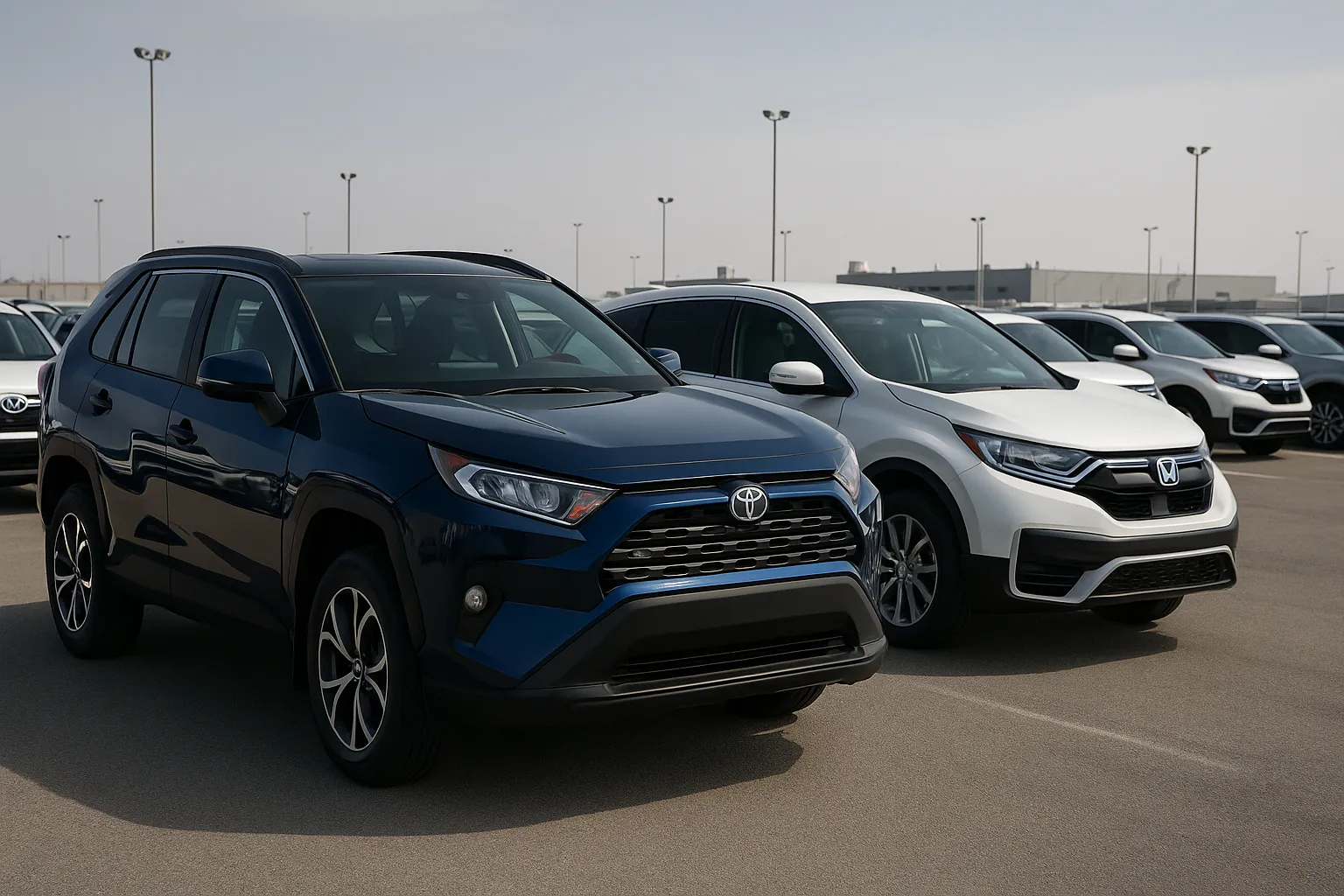
Toyota and Honda are facing a possible cost surge in North America. New US tariffs on vehicles and auto parts from Canada could reach up to 50 percent depending on classification. For the two Japanese manufacturers, this is more than an abstract trade-policy issue: both operate large plants in Canada and supply the important US market from there.
What remains decisive is how the rules are applied in detail, whether there are exceptions and which parts or vehicles are actually burdened and to what extent. But one thing is clear: a tariff of this magnitude can hardly be absorbed quietly in a highly interconnected auto industry. In the end, it comes down to three possible consequences: lower manufacturer margins, higher prices for buyers or adjustments in production and model distribution.
Why Toyota and Honda in particular would be affected

Canada is a central production location for several manufacturers, but Toyota and Honda have especially important models in their lineups there. In Ontario, Toyota builds, among other things, high-volume SUVs and Lexus models for North America. Honda also produces core models for the regional market in Alliston and has operated a large manufacturing base there for decades.
The problem is not only the finished car. Modern vehicles consist of thousands of parts, and many components cross the border between Canada and the US several times during production. Engines, transmissions, electronics, body parts, seats or battery modules can come from different plants depending on the supply chain before a finished car reaches the dealer. If part of these goods flows is subject to high duties, the cost base rises quickly.
For manufacturers already working with tight margins on entry-level and volume models, that is especially unpleasant. A luxury model can absorb additional costs more easily than a compact car or a popular family SUV, where buyers pay close attention to monthly payments, leasing factors and discounts.
What this can mean for new-car buyers

For buyers in the US, the effects could show up in several ways. The most obvious would be a higher list price. Manufacturers can adjust price lists, raise target prices or rebundle equipment packages to compensate for extra costs. Often this does not happen with one large jump, but through smaller changes over several model years.
A second possibility is lower discounts. If a manufacturer does not want to fully add additional costs to the sticker price, it can instead reduce sales incentives. For customers, that feels similar: the advertised base price remains stable, but the actual offer at the dealer becomes less attractive.
Third, lease rates could rise. Leasing is sensitive to vehicle price, residual value, interest-rate levels and manufacturer subsidies. If tariffs make the calculation more expensive, even an outwardly unchanged price can lead to higher monthly payments.
In the short term, it is also conceivable that especially sought-after versions become scarcer. In such situations, manufacturers often prioritize variants with better margins or stable demand. Buyers looking for a specific color, equipment package or powertrain variant might then have to wait longer or switch to another model.
The manufacturers have several options – but no easy one
Toyota and Honda could try to bear part of the additional costs themselves. That protects market share and keeps dealer prices more stable, but it reduces profit per vehicle. At high volumes, even a moderate cost increase can have an impact in the billions.
Another option would be to redirect production or sourcing in the medium term. However, that is expensive and slow. A plant cannot be moved from one country to another at short notice, and suppliers also need planning certainty. New tooling, supply contracts, quality approvals, logistics routes and labor can take years.
In addition, North America has been organized as a shared production area for decades. The idea of manufacturing every part and every vehicle entirely in a single country hardly fits the reality of modern automakers. Especially with hybrid drivetrains, electronics and safety components, supply chains are complex and designed for high volumes.
Enthusiasts should watch model strategy
For car enthusiasts, the tariff question is not only a pricing problem. It can also influence which variants are offered at all. When a manufacturer is under cost pressure, it often reviews the portfolio: Which trim lines sell well? Which engine option is expensive to certify? Which special editions deliver enough margin?
This can become especially noticeable with niche versions. Sportier trims, rare paint finishes or special drivetrains come under discussion sooner than bread-and-butter models. Conversely, profitable top trims could be favored because they can absorb additional costs more easily.
The transition to electrified models could also be affected. Toyota and Honda are investing in hybrid, plug-in and electric programs in North America. If import duties apply to parts, that can make the calculation for new powertrains more difficult – especially if battery cells, power electronics or other key components are sourced across borders.
Owners are also affected indirectly
Anyone who already owns a vehicle does not feel tariffs directly in the purchase price. Nevertheless, consequences can arise. If replacement parts from Canada become more expensive, repair costs could rise. This primarily affects insurers, workshops and fleet operators, but in the long term it can also influence premiums and maintenance budgets.
On the other hand, rising new-car prices could support used-car values. If new Toyota and Honda models become more expensive or scarcer, lightly used vehicles become more attractive. For owners, that can be advantageous when reselling; for buyers of used vehicles, however, it can mean additional costs.
Much still depends on details
The decisive factor remains which vehicles and parts specifically fall under the new duties, whether existing trade rules allow exceptions and how long the measure remains in place. A tariff rate of up to 50 percent would be significant for the industry, but the actual burden can vary greatly depending on model, origin share and delivery route.
For Toyota and Honda, the situation is therefore less an immediate switch than a new risk in the calculation. Both manufacturers must decide how much they pass on through prices, how much they bear themselves and whether they align their North American production differently in the long term.
For buyers, the practical consequence is: anyone considering a Canadian-built Toyota or Honda model in the US should watch price changes, dealer incentives and delivery times more closely. Not every car has to become more expensive yet. But the probability is increasing that trade policy will become more visible in the purchase contract in the future.