Jaguar Land Rover offers voluntary exits as part of cost-cutting drive
Jaguar Land Rover is tightening its cost-cutting drive: Voluntary severance programs are intended to help reduce costs. Up to 4,000 jobs are being discussed, while China, tariffs and new competitors are increasing the pressure.
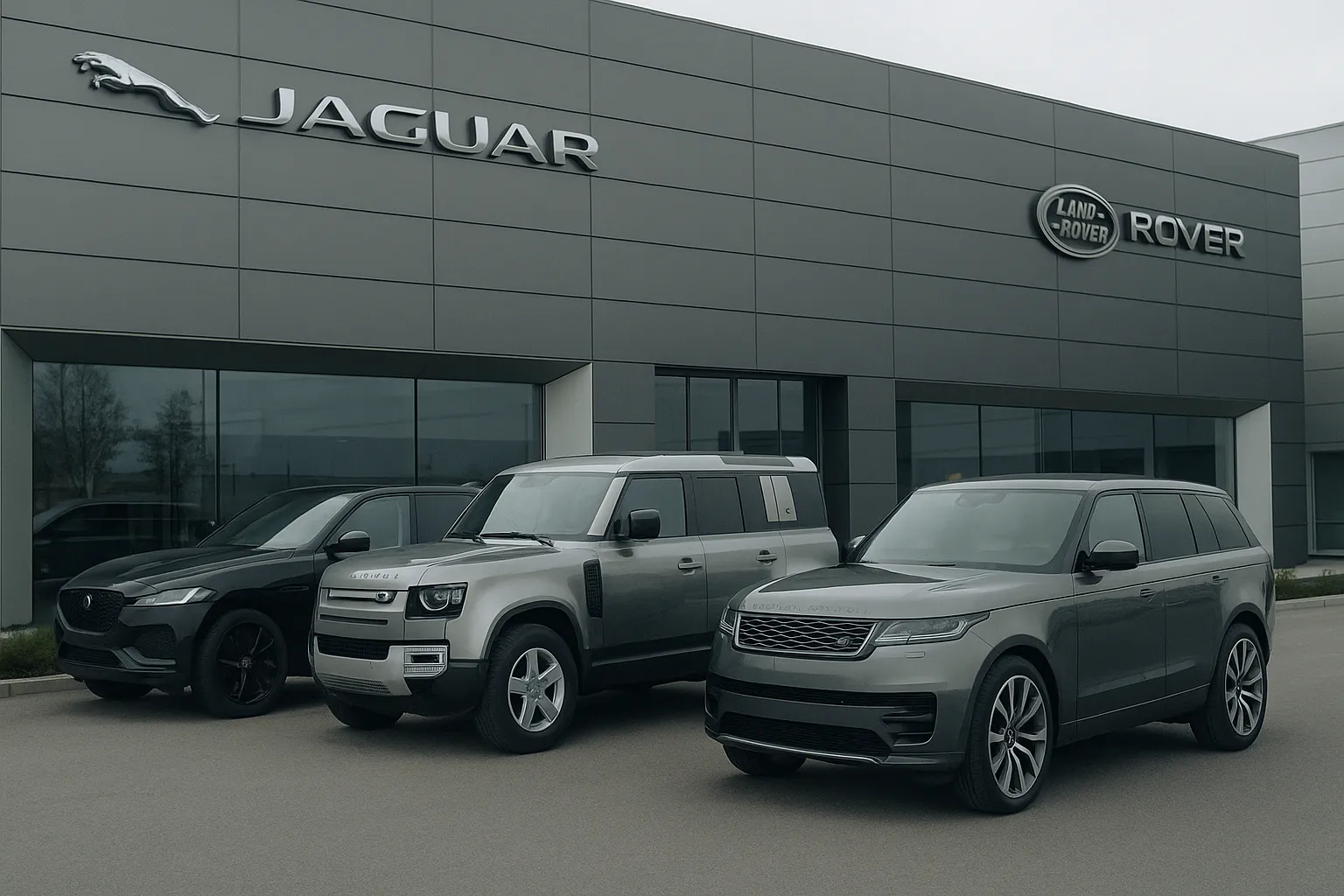
Jaguar Land Rover is tightening its cost-cutting drive and offering employees voluntary exits. The British manufacturer is working on an extensive efficiency program intended to deliver savings of around £1.7 billion. At the same time, the company’s break-even point is to fall to about 300,000 vehicles per year. That means: JLR wants to be able to operate profitably even at significantly lower unit volumes.
How many jobs will actually be eliminated in the end remains open. A scale of up to 4,000 positions is under discussion. What is decisive, however, is the nature of the current step: For now, it is a voluntary program, not a confirmed number of compulsory redundancies. For the workforce, however, it is still a clear signal that JLR is realigning its cost base.
Why JLR is now looking more closely at costs

The pressure is coming from several directions. In China, one of the most important markets for premium manufacturers, the environment has changed. Local brands have become significantly stronger in many segments, especially in electrified vehicles, digital equipment and aggressive pricing. For Western premium brands, it has become more difficult to maintain previous growth rates or enforce high margins.
Added to this are tariffs and trade policy risks, which hit global manufacturers particularly hard. Jaguar Land Rover sells vehicles in many markets, but does not produce everywhere demand arises. When duties on imports rise or supply chains become more expensive, calculations, prices and profit margins come under pressure. Premium vehicles generally offer higher margins than volume models, but even there, additional costs cannot be passed on to customers without limit.
Another burden was a cyberattack last year that disrupted processes within the company. Such incidents often have an impact far beyond the actual IT disruption: production, logistics, dealer processes, parts supply and internal planning can be affected. Even when operations return to normal, additional costs and delays arise, which weigh more heavily in an already tense market environment.
Voluntary exits instead of an immediate hard cut

Voluntary severance programs are a common tool in the auto industry for adjusting staffing levels without immediately resorting to confrontational measures. Employees can leave the company under certain conditions, often with financial packages or early retirement solutions. For companies, this is more predictable and socially acceptable than short-term layoffs; for employees, however, it remains a difficult decision.
The fact that JLR is choosing this path also shows that the group wants to buy time. The manufacturer has to reduce costs, but at the same time wants to retain its ability to develop new models, improve software, advance electrification and reliably serve existing customers. Too severe a cut could cost know-how that is particularly important during the transformation.
The figure of up to 4,000 affected positions should therefore be classified cautiously. It describes the possible scope of the program or the positions at risk, not necessarily the final number of departures. How many employees accept the offer and whether further steps will follow later remains open.
What the lower break-even point means
The goal of lowering the break-even point to around 300,000 vehicles per year is particularly revealing. A lower break-even volume means that JLR wants to reduce its fixed costs so that the company can be in the black even with lower production. For a premium manufacturer with comparatively low volumes, that can make strategic sense.
JLR does not live on mass volume, but on strong individual models, high equipment take rates and brand value. Range Rover, Range Rover Sport, Defender and Discovery stand for high-margin SUV models. Jaguar, by contrast, has been in a more difficult position for years because the brand has to be redefined between the traditional luxury sedan, sporting heritage and an electric future.
A lower break-even point can give the group more stability if individual markets weaken or model changes lead to temporarily lower unit volumes. At the same time, it increases the pressure to set priorities consistently: Which vehicles receive development funding? Which markets are profitable enough? Which variants, engines and trim lines are still worthwhile?
Significance for buyers and owners
For car buyers, little is likely to change in the short term. Anyone currently wanting to buy a Range Rover, Defender, Discovery or Jaguar will not automatically experience different delivery times, warranties or service benefits just because a voluntary exit program is under way. Dealer operations and workshops generally work independently of group personnel programs at headquarters or in plants.
In the medium term, however, the cost-cutting drive may have consequences. Manufacturers that reduce costs often streamline their model ranges. That can mean fewer variants, fewer niche models or a stronger focus on high-margin versions. For customers, this can be a double-edged sword: A clearer offering makes selection easier, but can raise entry prices if cheaper variants disappear.
The cost-cutting drive is also relevant to the development of new models. JLR must invest in electrification, software, assistance systems and digital services while operating costs are supposed to fall at the same time. Buyers today expect not only high-quality interiors and powerful powertrains, but also reliable infotainment systems, over-the-air capabilities and seamless smartphone integration. Anyone who cuts back here risks competitive disadvantages. Those who become more efficient, by contrast, can redirect money precisely into these areas.
For owners, parts and service supply are especially important. A cost program must not result in spare parts becoming available more slowly or technical support for dealers suffering. Especially with expensive premium vehicles, customer satisfaction after purchase is a central component of brand value.
A symptom of the broader industry situation
Jaguar Land Rover’s move fits into a larger pattern. Many established automakers face the same equation: They have to invest in electric mobility, software and new platforms while traditional markets become more uncertain and new competitors act faster. China is not only a sales market in this context, but increasingly also an export base and innovation center.
For European premium manufacturers, this is particularly challenging. Their brands are based on craftsmanship, design, comfort, performance and prestige. But buyers today also compare charging speed, user interfaces, digital functions and value for money. New providers can catch up faster in some of these disciplines.
JLR’s decision to lower its cost base is therefore less an isolated problem than a sign of adjustment. The manufacturer is trying to make itself more resilient against lower volumes, fluctuating demand and higher trade costs. Whether the plan works depends on whether the savings not only ease the balance sheet in the short term, but also enable the right investments in the long term.
The decisive balancing act
The difficult part begins now. Jaguar Land Rover must reduce personnel and operating costs without weakening product quality, development capability and customer support. Especially with premium brands, trust is hard to build and easy to lose. Buyers accept high prices when technology, material quality, service and brand promise fit together.
Voluntary exits can be an orderly first step. But they do not automatically solve the structural challenges: intense competition in China, tariff risks, the costs of electrification and the repositioning of Jaguar. For customers and industry observers, the decisive question will be whether JLR turns the cost-cutting drive into a more focused, more robust company – or whether excessive cuts burden the next generation of models.