Scout Traveler: Two concept ideas show luxury and off-road toughness ahead of 2028 launch
Scout is sharpening the profile of the upcoming Traveler early on. Two SUV concepts indicate how the brand aims to appeal to buyers between a high-quality everyday car and a rugged off-roader.

# Scout Traveler: Two concept ideas show luxury and off-road toughness ahead of 2028 launch
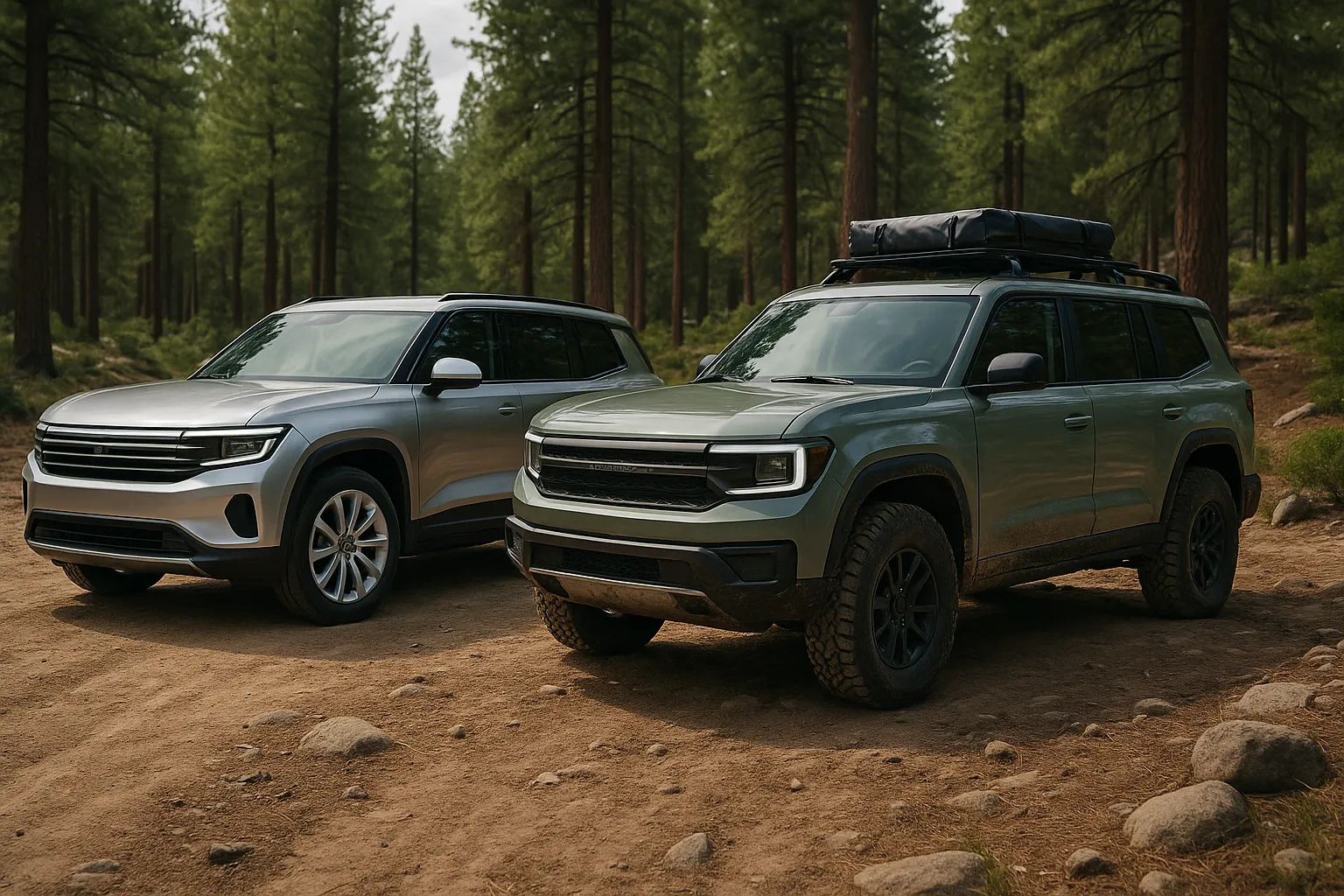
Scout is once again giving the upcoming Traveler a stage, long before the production model rolls out to customers. The new concept vehicles do not show completely new technical data, but above all the range in which the electric SUV is intended to position itself: on the one hand, an upscale, comfort-oriented touring vehicle, and on the other, a deliberately rugged off-road vehicle with a clear outdoor focus.
This is more than a design exercise. For a revived brand like Scout, early positioning is important because the Traveler will launch in a difficult market. By 2028, buyers of electric SUVs should have significantly more choice than they do today. Scout therefore has to deliver not only range, charging performance and utility value, but also explain why this SUV plays its own role emotionally and practically.
An SUV with two target groups
The concepts shown present the Traveler as a vehicle with two personalities. The more luxurious interpretation targets customers who like the boxy off-road look but expect comfort, high-quality materials and a confident road presence in everyday use. In this environment, Scout indirectly competes with expensive premium SUVs, where design, refinement and status are at least as important as genuine off-road capability.
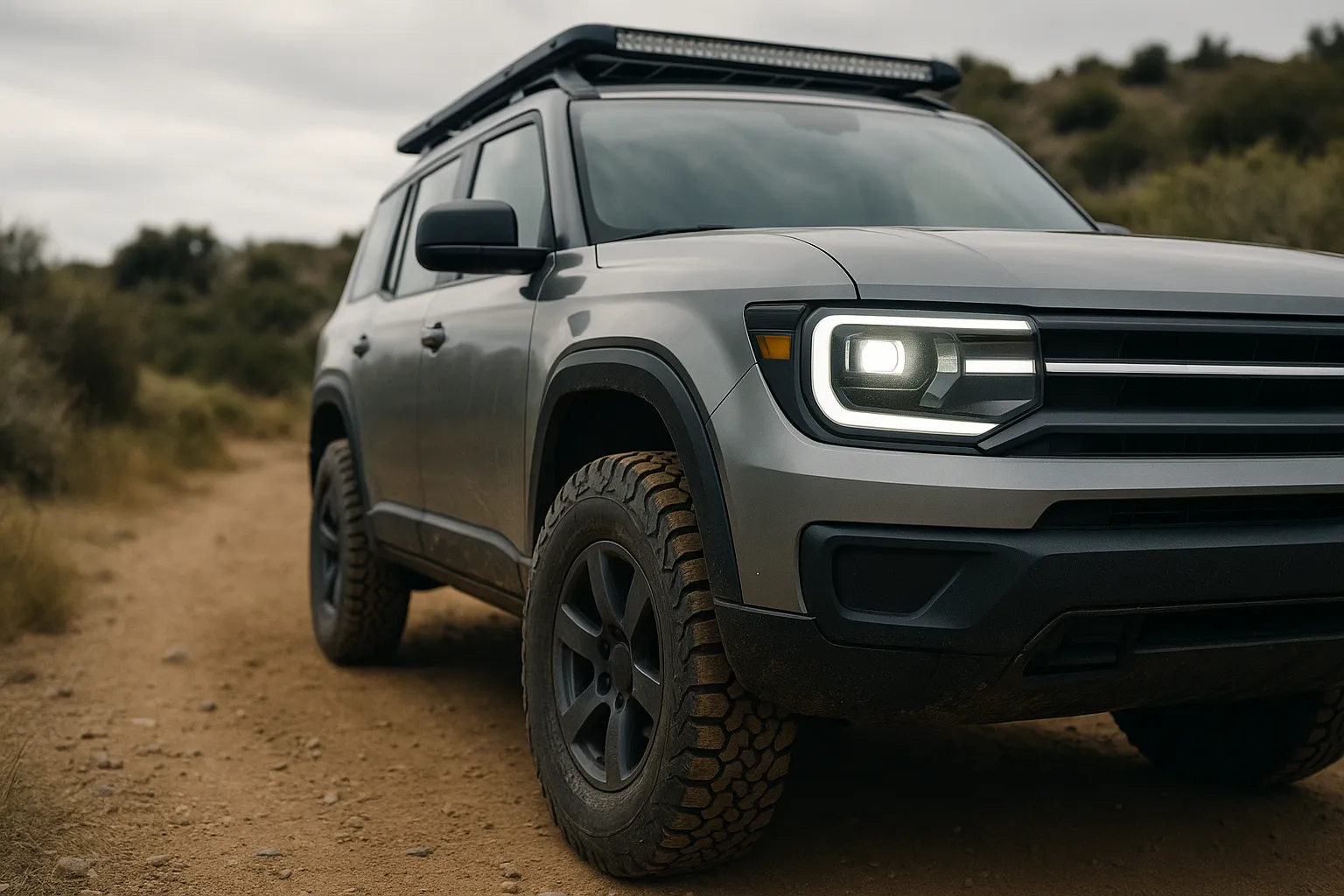
The second direction emphasizes the more original part of the Scout idea. Coarser tires, functional add-on parts and an appearance more strongly geared toward outdoor use are intended to appeal to buyers who do not see their SUV merely as a lifestyle object. Here it is about ground clearance, durability and accessory capability — in other words, qualities that count for overlanding fans, campers and off-road enthusiasts.
What remains important: concepts are not final equipment variants. Colors, materials, add-on parts and details can still change before series production starts. Even so, such studies show what scope Scout could explore for trims, accessory packages and special models.
What is known so far about the Traveler
The Traveler is planned as a large electric SUV from the newly established Scout brand. The brand belongs to the Volkswagen Group, but is intended to develop an independent character and not feel like an ordinary offshoot of existing VW models. Alongside the SUV, a pickup is also planned, called Terra.
Technically, a clear focus has already been announced for the Scout models: robust usability rather than a purely aerodynamic crossover shape. The Traveler is intended to appear as an off-road-capable SUV and, in earlier announcements, was associated with a purely battery-electric version as well as a variant with a range-extender concept. This solution is intended to combine electric everyday usability with an additional range reserve, which can be particularly interesting in North America for customers who plan long distances, remote regions or trailer operation.
This point in particular is likely to be decisive by the time of market launch. Many buyers like the idea of an electric off-roader, but worry about charging infrastructure away from major traffic routes or about energy demand when towing a trailer. An optional range extender can lower this barrier without turning the vehicle into a conventional combustion model.
Why this is relevant for buyers
For car buyers, the early preview is interesting above all because it shows that Scout does not see the Traveler as a single niche product. Anyone looking for a rugged SUV today, depending on budget, ends up with models such as Ford Bronco, Jeep Wrangler, Land Rover Defender, Toyota Land Cruiser or electric alternatives such as Rivian R1S. Scout is trying to find space between these worlds: electric, boxy, practical and at the same time modern enough for buyers who expect a premium experience.
The two concept approaches also make it clear that equipment and accessories are likely to play a major role in the Traveler. For owners, this could become important later because a vehicle of this kind is sold heavily through personalization. Roof racks, underbody protection, tires, interior packages, camping accessories and software functions can turn a base model into very different vehicles.
For interested buyers, however, the timeline also means: the Traveler is not a short-term alternative for the next lease change. A market launch in 2028 is still far enough away that prices, final ranges, charging times, warranties, service concept and exact production equipment remain open. Anyone who has to buy in the next twelve to 24 months will still have to look at existing models.
Significance for enthusiasts and the industry
For enthusiasts, Scout is especially exciting because the name is historically associated with simple, robust off-road vehicles. The challenge is to transfer this identity into an electric age without merely delivering retro looks. A modern Scout has to be credible off-road, convincing on the road and meet the expectations of today's SUV buyers in the interior.
For the industry, the Traveler is another indication that electric off-road vehicles are not sold only through acceleration or range records. Buyers in this segment pay attention to trust: Can the technology withstand dust, water, cold, heat and heavy loads? Does charging planning work on trips? Is there a service network that suits an expensive, complex vehicle? Scout has to answer these questions if enthusiasm for concepts is to become real purchase contracts.
The project is also important for the Volkswagen Group. Scout offers the opportunity to compete in North America in an emotionally strong segment that would hardly be reachable with classic VW products. If the Traveler succeeds, it could show that a large corporation can credibly build an independent off-road brand with electric technology.
Still much open, but the direction is becoming clearer
The new Traveler concepts do not deliver a final production decision, but they do sharpen the message: Scout does not want to build a smooth electric SUV for the city, but a vehicle with genuine breadth. Luxury and off-road toughness are not meant to appear as opposites, but as two expressions of the same platform.
Whether that works by 2028 depends on the hard data: price, range, charging performance, towing capacity, quality and availability. Nevertheless, the concepts serve a purpose. They show potential buyers early on that Scout does not want to sell the Traveler only through nostalgia, but through a mix of design, utility value and electric flexibility.