JLR cuts 4,000 jobs and focuses more on electric cars
Jaguar Land Rover plans to cut around 4,000 jobs worldwide over the next two years. The move mainly affects office and management functions and is intended to reduce costs as the group pushes ahead with its electric strategy.

Jaguar Land Rover is facing a far-reaching restructuring: the British manufacturer plans to cut around 4,000 jobs worldwide over the next two years. To this end, the company has launched a voluntary severance and exit program aimed at employees in salaried and management functions. The move is part of a larger cost-cutting program with which JLR wants to reduce its cost base and free up funds for the next phase of electrification.
According to details known so far, the areas mainly affected will be so-called white-collar functions, meaning office, administrative, development, planning and leadership roles. One focus is likely to be the company headquarters in Whitley near Coventry. The production workforces in the plants are therefore not at the center of the measure, even though not all details on the regional distribution have yet been made public.
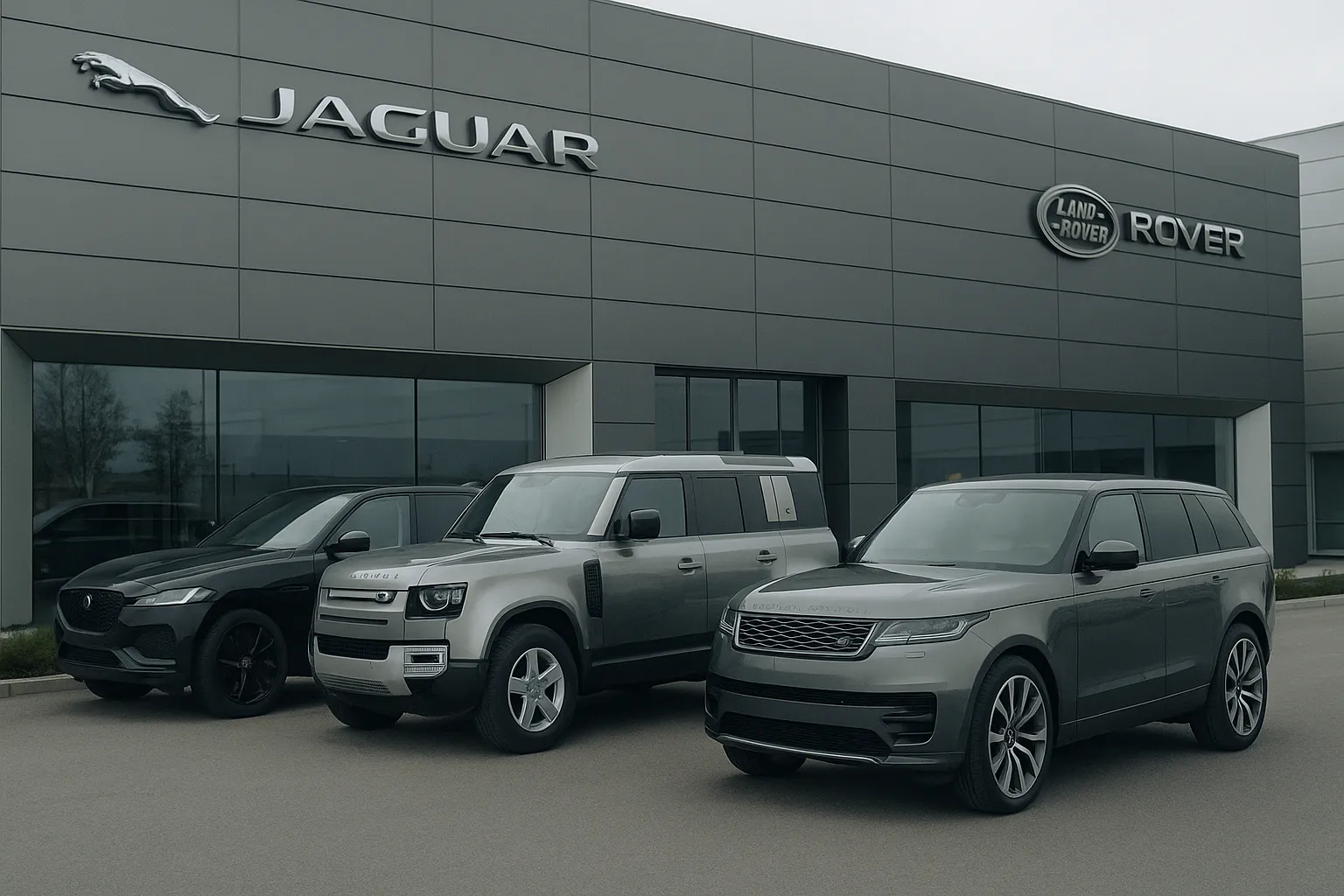
JLR puts the savings target at around 1.7 billion pounds over two years. The voluntary program runs until early October. The group presents the cuts as a response to several pressures: technological change in the industry, intensified competition and geopolitical uncertainties. These factors are affecting many established manufacturers at the same time, but they have a particularly strong impact on JLR because the Range Rover, Defender, Discovery and Jaguar brands compete in capital-intensive premium segments.
Why JLR now has to cut costs

The switch from combustion engines to electric cars is expensive for every manufacturer. New platforms, battery technology, software, power electronics, charging functions and digital services have to be developed or purchased. At the same time, the traditional business with gasoline, diesel and hybrid models remains important because it continues to generate revenue and profits. For brands such as Range Rover and Jaguar, there is also the fact that buyers in the upper segment have high expectations for range, comfort, sound insulation, towing capacity, operation and quality.
JLR is working on several electrified models, including the Range Rover Electric. This vehicle in particular is strategically important for the brand: it is intended to show that a large luxury SUV with electric drive not only operates locally emissions-free, but also fulfills the core values of the model series – effortless power delivery, high everyday usability and a premium feel. This is technically more demanding than with smaller vehicles because weight, battery size, aerodynamics and charging power carry more weight.
The job cuts therefore show not only a short-term cost-saving round, but also a redistribution of resources. JLR must decide which functions remain in-house, which processes are simplified and where investments take priority. This can make the company more efficient, but it also carries risks: if too much know-how is lost or projects are streamlined too heavily, this can affect development quality, market launch and customer service.
What does this mean for buyers?

For new-car buyers, nothing initially changes directly regarding warranties, delivery contracts or the model range. Anyone ordering a Range Rover, Defender, Discovery or Jaguar today should not automatically expect delays just because jobs are being cut in administrative and management areas. Since, according to the available information, the measure does not primarily affect manufacturing, a direct production stop cannot be inferred from it.
Nevertheless, the move is relevant. Buyers in the premium segment pay attention not only to the vehicle, but also to brand stability, dealer network, software maintenance, residual values and spare parts supply. A manufacturer that is restructuring its organization must prove that it remains capable in everyday operations. Especially with new electric cars, the decisive factor will be how reliably JLR implements charge planning, over-the-air updates, battery management and diagnostic processes.
For those interested in the Range Rover Electric or future electric Jaguar models, the workforce reduction is therefore a signal to look more closely. Concrete data will be important: range, charging power, real-world efficiency, battery warranty, delivery times and price positioning. As long as not all technical specifications and dates have been finalized, the assessment of the EV offensive remains provisional.
What does this mean for owners?
Existing customers should pay particular attention to whether contacts, service processes or processing times change. In a restructuring at corporate headquarters, internal procedures can be affected, for example in customer support, warranty decisions, parts logistics or technical approvals. This does not automatically mean deterioration, but owners of high-quality vehicles rightly expect reliable support.
For owners of newer plug-in hybrid and electric vehicles, software maintenance is a particularly important point. Premium vehicles are increasingly shaped by digital functions, and bug fixes or feature updates depend on well-organized development and support teams. In this phase, JLR must show that cost discipline does not come at the expense of long-term product support.
Political dimension in the United Kingdom
The job cuts also have industrial-policy significance. The British government wants to hold talks with the company to explore possibilities for limiting the impact on employees and sites. That is understandable: JLR is one of the United Kingdom’s most important car manufacturers, a major employer and a central player in the domestic supply chain.
For the British automotive industry, this is about more than individual jobs. The shift to electric mobility will determine where batteries, drivetrains, software and vehicles are developed and built in the future. Countries with stable supply chains, competitive energy costs and clear industrial policy have advantages. When a manufacturer like JLR cuts staff while also having to invest in new technology, it shows the pressure on traditional automotive locations.
A balancing act for the brand
JLR is in a difficult, but not unusual, position: the company must save money, invest and sharpen its brand identity at the same time. Range Rover is intended to carry luxury and off-road capability into the electric era. Defender remains an image carrier with a large fan base. Jaguar must credibly fulfill its future role as an electric premium brand.
The reduction of 4,000 jobs is therefore a drastic step, but not automatically a sign of a lack of future prospects. The decisive factor will be whether JLR actually translates the savings into competitive products, robust software and reliable customer support. For buyers and fans, what matters in the end is not the internal organizational structure, but whether the coming vehicles are on time, mature and desirable.
The next two years will therefore become an important test. If the restructuring succeeds, JLR could secure its premium position in an electrified world. If it fails, delays, rising costs and greater pressure from established competitors as well as new providers loom. For the industry, the case is another example of how expensive and complex the transformation to electric mobility has become.