IIHS focuses on heavy pickups in crash tests for the first time
Heavy U.S. pickups such as the Ford Super Duty and Ram HD were long rarely assessed in independent consumer crash tests. New IIHS tests now show that size alone is no guarantee of safety.
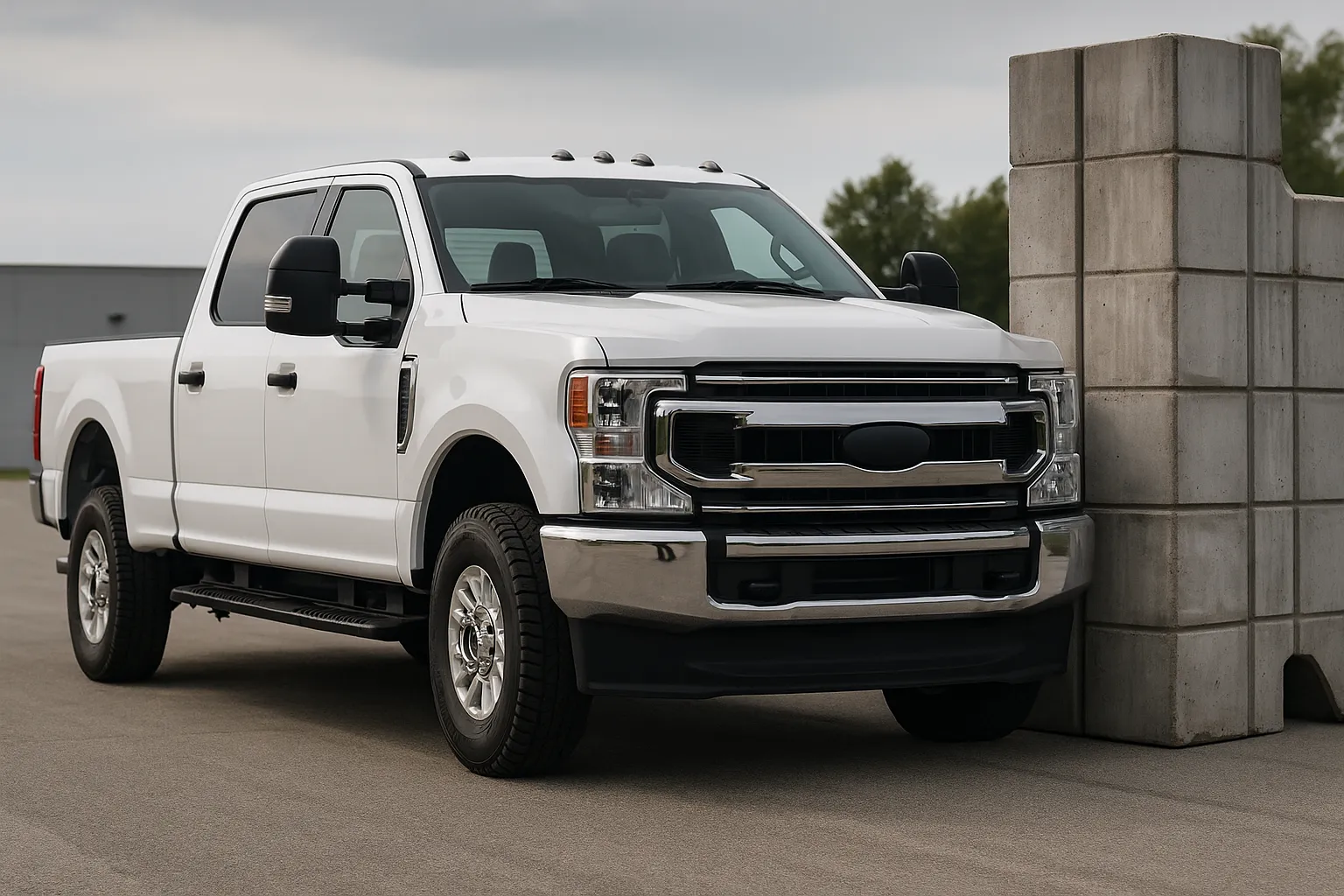
Heavy-duty pickups are in the independent safety spotlight for the first time
Heavy pickups are among the most important work tools on wheels in North America. They tow horse trailers, fifth-wheel campers, construction machinery, and large boats, serve trades businesses as mobile workshops, and are also increasingly being used as family vehicles. Nevertheless, for a long time there was less publicly comparable safety data for this vehicle class than for cars, SUVs, or lighter pickups. That is now changing: the IIHS has included heavy-duty pickups in its safety assessment for the first time.
The focus is therefore on models from a segment that buyers often judge not only by engine output, towing capacity, and payload. Names such as Ford Super Duty or Ram HD stand for enormous capabilities, but also for very high vehicle weights, long hoods, and large bodies. The first results make one thing clear: a large, heavy pickup may subjectively convey a great deal of protection, but good safety engineering still depends on structure, restraint systems, visibility, lighting technology, and assistance systems.
Why these tests were missing for so long
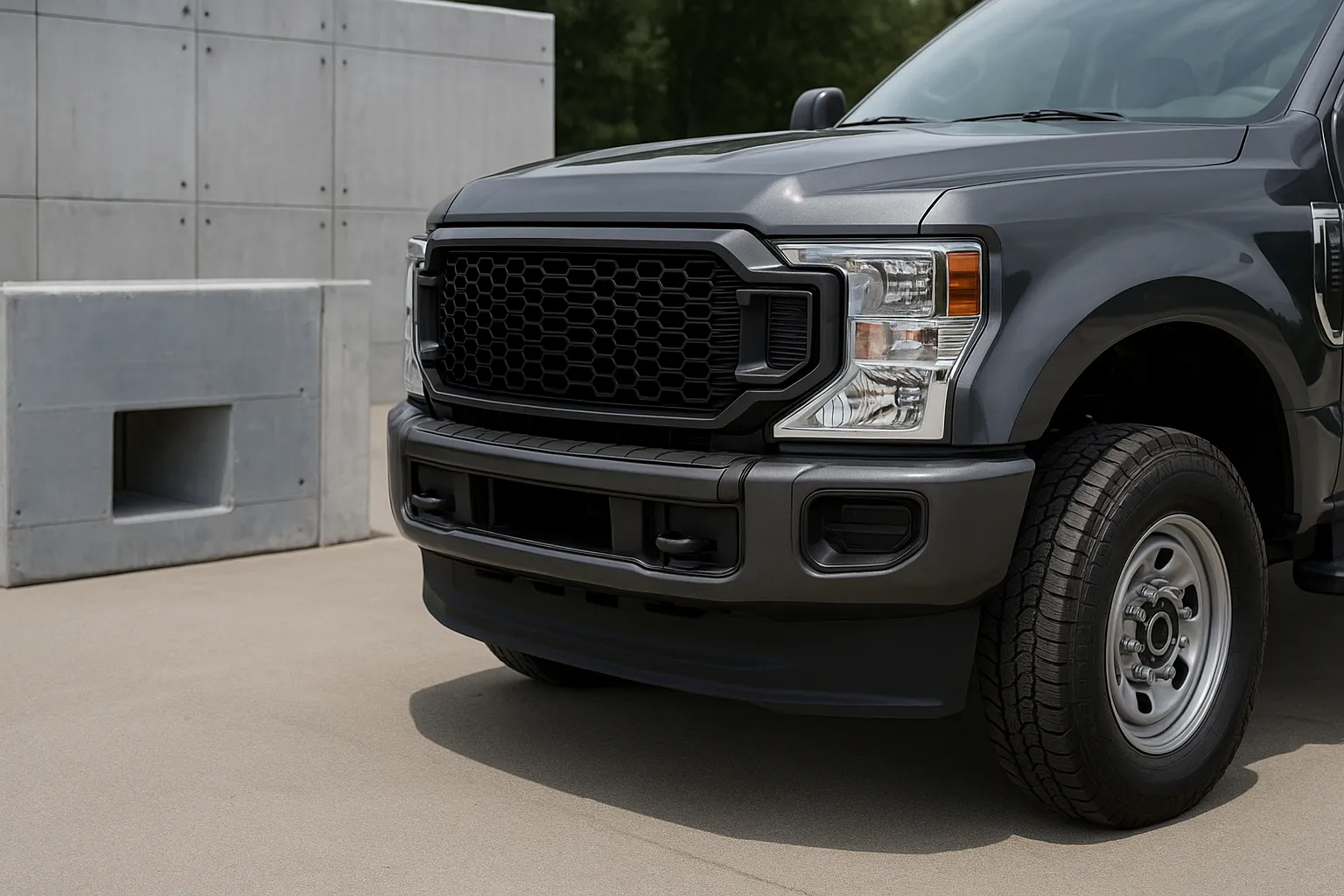
Heavy-duty pickups occupy a special role in the USA. Many variants are above the weight classes in which consumer programs, consumption figures, and certain comparison tests traditionally do most of their work. That does not mean these vehicles are completely outside all safety rules. But it does mean that buyers have so far been less able to rely on the same kind of publicly accessible, easy-to-understand crash test ratings that are common for compact SUVs, sedans, or half-ton pickups.
That is precisely where the significance of the new test series lies. Anyone who previously bought a heavy diesel pickup could compare towing capacity, torque, axle ratio, and equipment packages very precisely. When it came to safety performance in a crash or the assessment of modern crash-avoidance systems, the market was less transparent. The new assessment creates, for the first time, a more direct benchmark for a segment that is used daily in many households and businesses.
Size does not automatically protect
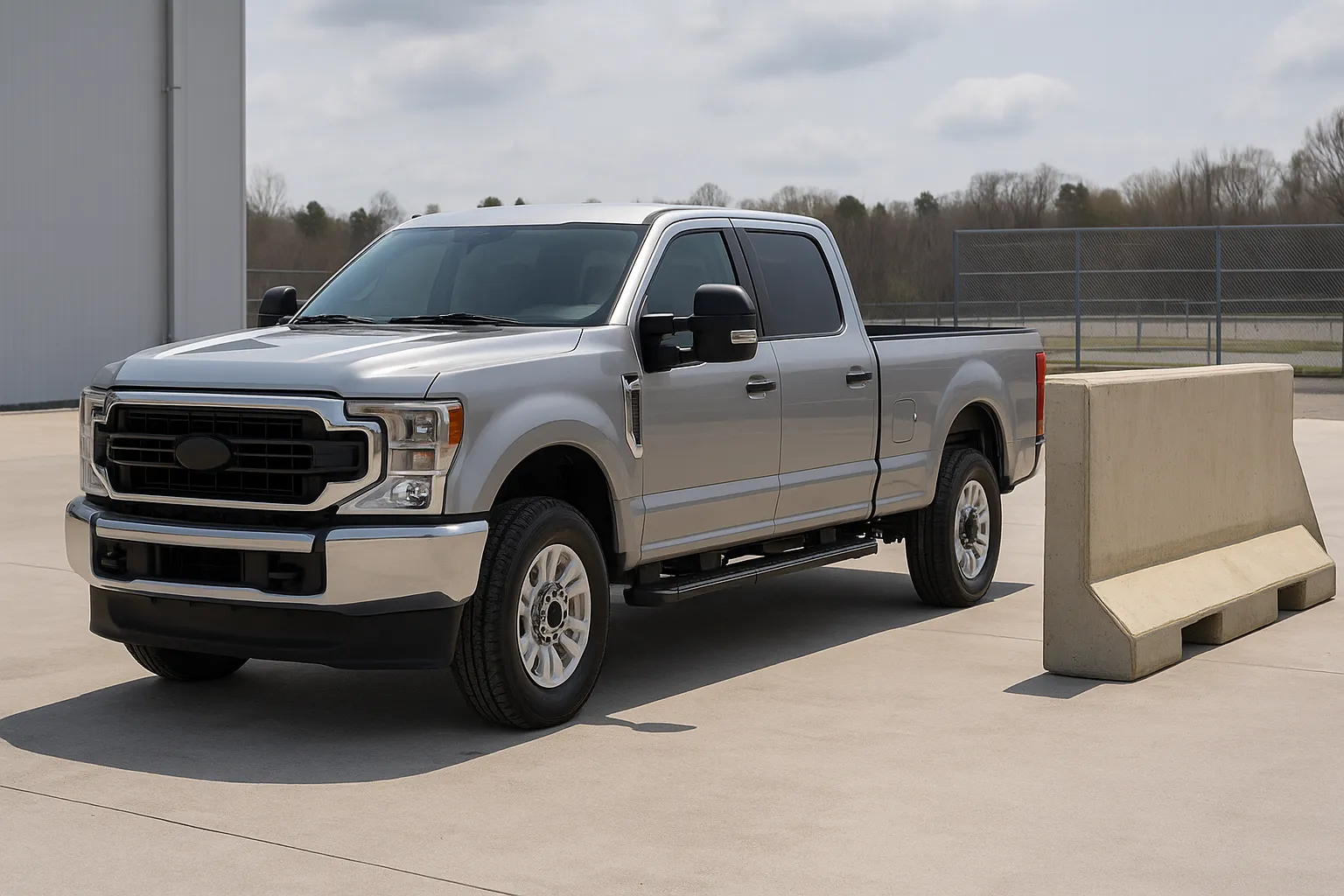
According to the information known so far, the first tests do not show a uniformly strong picture. Some vehicles perform more weakly in individual disciplines than buyers might expect given their size. That is an important point, because the weight of a pickup is only one part of the safety equation. A heavy vehicle can offer its occupants advantages in certain collisions, but at the same time it places high demands on body structure and on the tuning of airbags, belts, and seats.
In crash tests, what matters is how controllably the passenger cell retains its shape, whether the footwell remains stable, how well the dummies' head, chest, pelvis, and legs are protected, and whether the occupants remain in a favorable position after impact. With large pickups, additional issues come into play: high front ends, wide bodies, and longer braking distances can influence the risk for other road users. That is why assessments of front crash prevention, pedestrian detection, headlights, and fields of vision are particularly relevant for this class.
Relevance for private buyers
For private customers, the main thing that changes is the basis for decision-making. Anyone using a heavy-duty pickup as a tow vehicle for camping, equestrian sports, or leisure often looks first at maximum towing capacity and comfort equipment. In the future, safety ratings can be incorporated more strongly into this consideration. This is especially important if children or other passengers are regularly on board.
A poorer result in a single test does not automatically have to disqualify a vehicle. But it should be a reason to look more closely: Which model years are affected? Does the rating apply to a specific cab configuration or equipment level? Are assistance systems standard or only included in expensive packages? How well do the headlights perform, which can be crucial in everyday use on country roads, construction-site access roads, and night drives?
The step is also relevant for used-vehicle buyers. Heavy-duty pickups often remain in service for a long time and achieve high residual values. If independent safety data is available, it may also influence pricing in the future. A model year with better assistance systems or an improved structure may become more attractive, while older versions will be viewed more critically.
Significance for fleets and commercial use
The effect could be even greater in the fleet market. Construction companies, energy utilities, farms, municipalities, and service companies often buy heavy-duty pickups in larger quantities. There, operating costs, downtime, and insurance classifications matter just as much as the safety of employees. A public rating system makes it easier for fleet managers to include safety criteria in tenders.
For manufacturers, this creates additional pressure. Until now, they have been able to differentiate heavy pickups primarily through payload, towing capacity, engine output, cabin equipment, and brand loyalty. If independent safety results receive more attention, body structure, active safety, and standard equipment become more important. This may lead to functions such as automatic emergency braking, better headlights, or enhanced pedestrian detection spreading more quickly across all trim levels.
A signal to the industry
The new testing practice comes at a time when pickups overall have become larger, more powerful, and more comfortable. Modern heavy-duty models offer interiors on a luxury-SUV level, infotainment systems with large displays, and diesel or gasoline engines with enormous performance reserves. At the same time, public debate is growing around crash compatibility, blind spots, and the protection of pedestrians and cyclists.
Independent tests can make this debate more objective. They do not replace purchase advice in individual cases and do not reflect every real-world crash situation. But they make technical differences visible that are difficult to recognize in a brochure. For enthusiasts, this is also interesting: safety thus becomes another field in which engineering work can be compared — similar to chassis, powertrain, or towing performance.
What buyers should now check
Anyone looking to buy a heavy pickup in the coming months should use the new safety data as an additional building block. It makes sense to look at the exact variant tested, because cab configuration, drivetrain, equipment, and model year can influence results. It is also important whether safety-relevant systems are standard on board or have to be ordered as options. Particularly with work vehicles, base trims are frequently chosen; there, comfort and assistance features that seem self-evident in higher trims are sometimes missing.
A test drive also remains crucial. Forward and side visibility, camera systems, mirrors, maneuvering aids, brake feel, and lighting performance can be judged better in everyday use than on a data sheet. In vehicles of this size, a good camera system when maneuvering in tight spaces can be almost as important as a powerful engine when towing heavy loads.
More transparency for an important segment
The first IIHS assessment of heavy-duty pickups is not a niche topic for safety statisticians. It concerns a vehicle type that works, tows, commutes, and transports families by the millions in North America. The fact that some results show weaknesses is no reason for blanket judgments about the entire class. But it is a clear indication that even the biggest pickups should be assessed according to the same principles as other vehicles: How well do they protect their occupants, how reliably do they help avoid crashes, and how compatible are they with the traffic environment?
For buyers, that means more guidance. For manufacturers, it means more comparability. And for the industry as a whole, it is a step toward a safety culture in which even particularly capable commercial vehicles are judged not only by power, size, and towing ability.