Rivian delivers significantly more vehicles, but the stock falls
Rivian reports a 46 percent increase in deliveries, but on the stock market it is nevertheless overshadowed by Tesla’s figures, which were received better than expected.
Operational progress meets hard stock market logic
Rivian significantly increased its vehicle deliveries in the most recently reported period. The 46 percent gain is a strong signal for a manufacturer that is still in the scaling phase and has to hold its own in the electric car market against established automakers as well as Tesla. Nevertheless, the stock market did not react with enthusiasm: Rivian shares fell, while Tesla was able to gain despite declining deliveries.
The contrast shows how differently investors are currently viewing electric car manufacturers. At Rivian, a sharp increase in delivered vehicles is apparently not automatically enough to dispel doubts about costs, margins and long-term profitability. At Tesla, by contrast, a decline was assessed less negatively because it was smaller than feared. For the auto industry, this is an important moment: It is not only growth that counts, but also the expectation of whether that growth is profitable, predictable and resilient.
Specific unit figures were not mentioned in the summarized information. What is clear, however, is that a 46 percent increase in deliveries points to better operational performance. For a young manufacturer like Rivian, every additional vehicle handover is relevant because it helps utilize factory capacity, stabilize supply chains and spread fixed costs across more units.
Why a 46 percent increase is not automatically enough

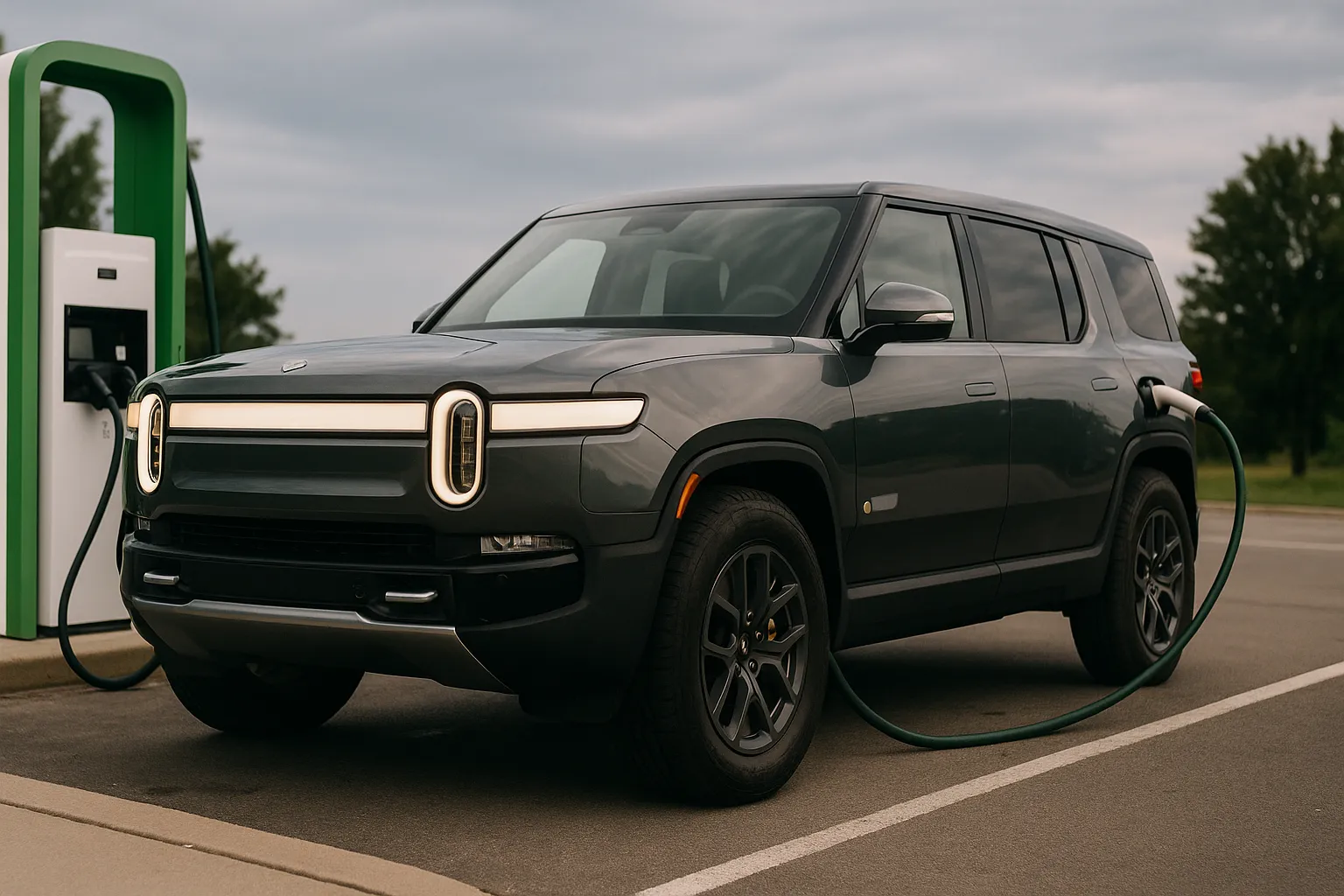
From a customer perspective, a significant increase in deliveries initially sounds clearly positive. More delivered vehicles can indicate that production and logistics are running more smoothly. For a manufacturer like Rivian, which has become known above all for the R1T electric pickup, the R1S SUV and electric delivery vehicles, this is especially important. These vehicles are complex, expensive to manufacture and aimed at a buyer group that has high expectations for range, software, charging capability, build quality and service.
On the stock market, however, it is not only counted how many vehicles get from the factory to the customer. What is also decisive is the price at which they are sold, how high production costs are, whether discounts were necessary and how quickly investments in new models, plants and platforms pay off. A company can deliver more cars and still come under pressure if investors fear that each additional vehicle still contributes too little profit.
This is precisely where the difference lies between operational news and the capital market reaction. An increase in deliveries is evidence of demand and execution. But it does not answer all questions about margins, possible price cuts, inventories or the pace of the production ramp-up. For Rivian, the central task therefore remains translating growth into reliable economic viability.
Tesla remains the benchmark, even if the numbers are weaker

The comparison with Tesla is unavoidable for Rivian, but not always fair. Tesla produces in significantly larger volumes, has more experience in mass production and has a broader international presence. At the same time, in the eyes of many investors, Tesla has long been not just an automaker on the stock market, but also a technology stock with expectations for software, the energy business, charging infrastructure and future automation functions.
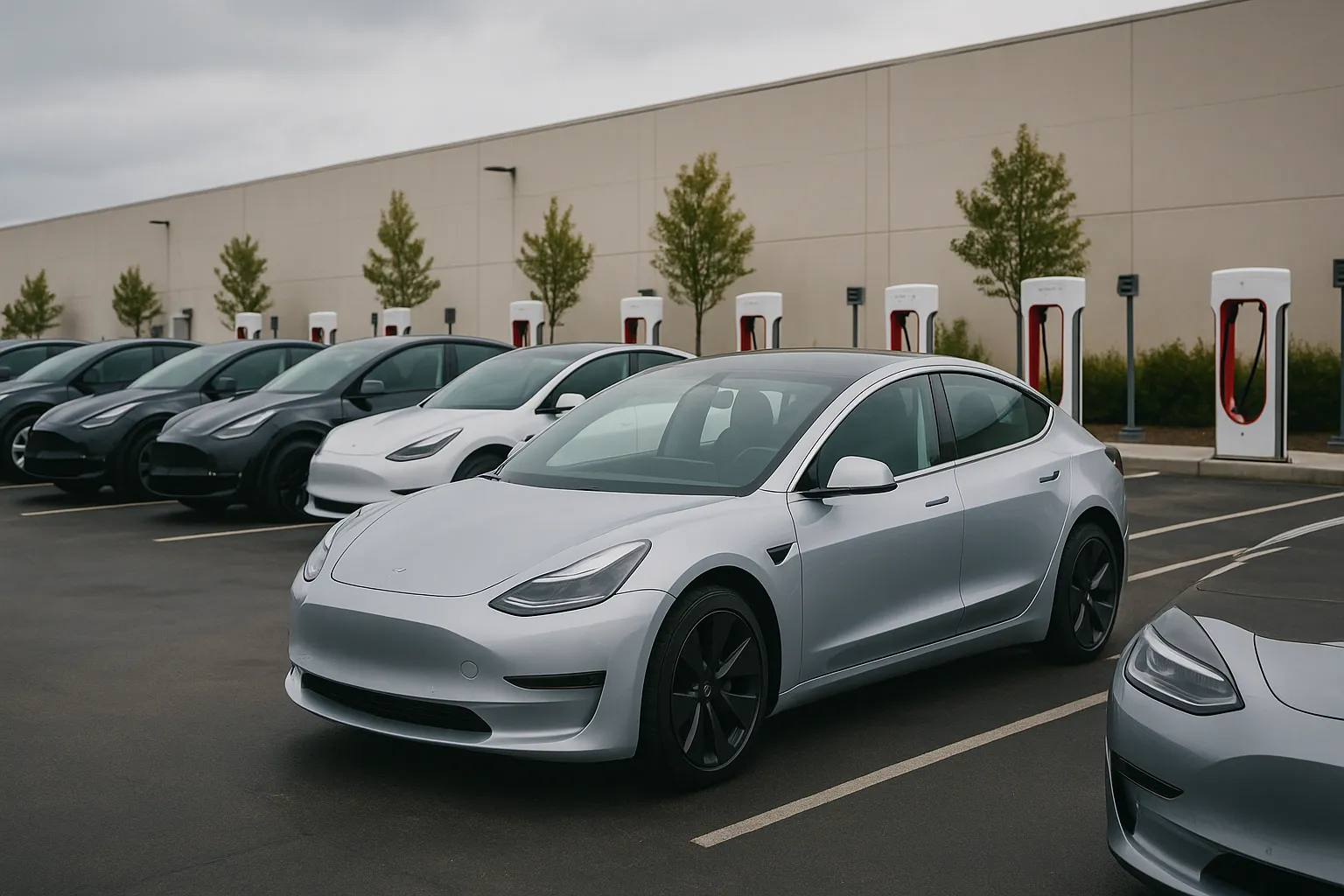
That Tesla shares rose despite a decline in deliveries is due to expectations. If a decline turns out to be smaller than previously feared, that can already be a positive surprise for investors. At Rivian, by contrast, growth was strong, but apparently not strong enough to overshadow existing concerns.
For buyers, this stock market reaction is not immediately decisive. No one gets a different vehicle delivered as a result, and a falling share price does not automatically change range, towing capacity or interior quality. Indirectly, however, the financing situation of a young manufacturer can very much play a role. It influences how quickly a service network grows, how aggressively leasing offers can be structured, how much goes into software updates and how quickly new models come to market.
What this means for Rivian customers
Rivian owners and interested buyers should view the development in a nuanced way. Rising deliveries are a good sign because they can indicate greater market penetration and potentially better spare parts and service coverage. The more vehicles of a brand are on the road, the more worthwhile it becomes for the manufacturer to expand workshops, mobile service units and regional infrastructure.
At the same time, Rivian remains a comparatively young manufacturer. Anyone who buys an R1T or R1S is not only choosing a specific vehicle, but also an ecosystem that is still being built up. This affects charging experiences, app functions, software maintenance, accessories, warranty processing and resale values. A steadily growing vehicle fleet can help here because it strengthens trust in the brand and motivates third-party providers to offer accessories or services.
For owners, the residual value question is also important. Electric cars are currently subject to strong price movements because battery costs, incentive programs, leasing terms and manufacturer prices can change quickly. If a manufacturer is growing operationally, that can support confidence in the brand. If the stock market nevertheless remains skeptical, it is a reminder that residual values depend not only on product quality, but also on market sentiment and the perception of the company.
A signal to the entire electric car industry
The reaction to Rivian’s figures shows how demanding the EV market has become. In the early phase of electric mobility, the prospect of strong growth was often enough to convince investors. Today, manufacturers are under greater pressure to provide proof. They must show that they can not only develop and sell vehicles, but also build them efficiently.
This is especially true in the premium and adventure segment in which Rivian is active. Large batteries, robust chassis, high towing capacities and elaborate interiors make vehicles attractive, but expensive. At the same time, customers expect modern software, short charging times and continuous improvements. This combination is capital-intensive.
Rivian’s situation is also interesting for established automakers. It shows that a convincing product alone is not enough if the path to profitability remains long and expensive. For start-ups in the automotive sector, the message is even clearer: Growth must quickly be combined with cost control and reliable production.
The real test comes after growth
Rivian’s 46 percent increase in deliveries is measurable progress. It shows that the company is bringing more vehicles to customers and remains visible in the market. The weak stock reaction does not mean that the products are losing appeal or that demand is collapsing. Rather, it shows that investors are looking more closely at young electric car manufacturers than they did a few years ago.
For car buyers, the most important lesson is this: Sales and delivery figures are only part of the picture. Anyone considering an electric car from a young manufacturer should examine not only range, price and equipment, but also service coverage, warranty conditions, software history and long-term corporate strategy.
For the industry, Rivian remains a relevant test case. If the company can turn rising deliveries into better economic viability, that strengthens diversity in the electric car market. If not, the gap to larger competitors will become harder to close. The latest numbers therefore make one thing above all clear: In the electric car business, the real test does not begin with building desirable vehicles, but with the ability to deliver them consistently in large volumes and at sustainable costs.