Renault's new design direction: more character for Scenic, Austral and Rafale
Design chief Alexandre Malval wants to make Renault's family cars more emotional, bolder and spatially smarter. A concept vehicle could offer a first preview as early as October.
Renault seeks the next design step
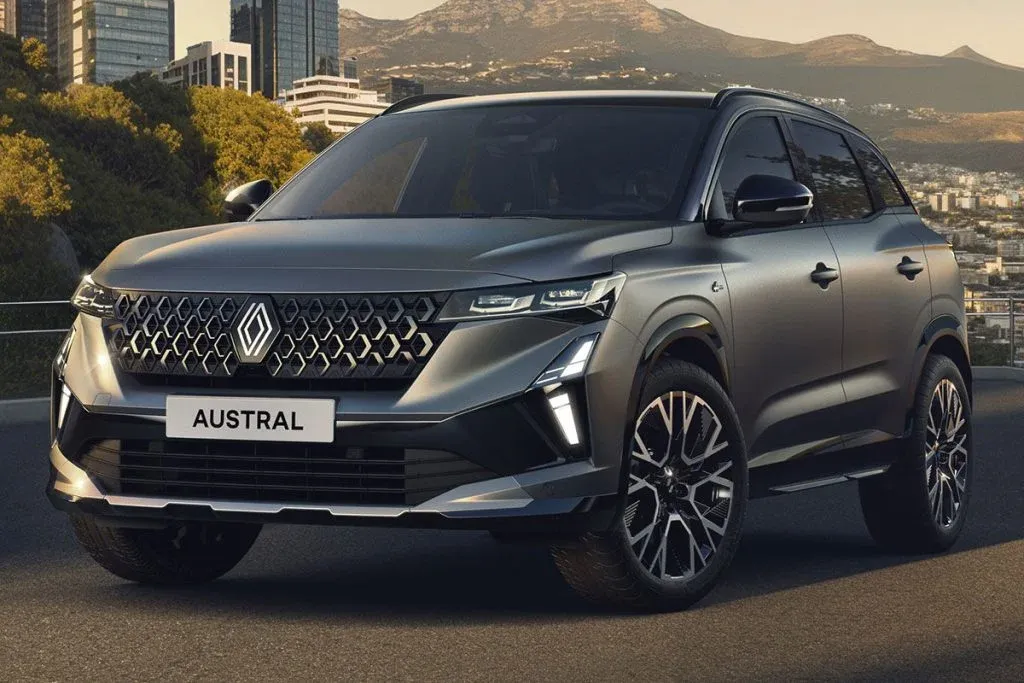
Renault wants to define its future production models more strongly through design, a sense of space and everyday practicality. The brand's new design chief Alexandre Malval is focusing above all on the mid-range model lines: Rafale, Austral and Scenic are intended to show more independence in their upcoming development stages and communicate more clearly what Renault wants to stand for in the family car segment.
The approach is not a break with recent model policy, but rather a sharpening of it. With models such as the current Scenic, the Rafale and the retro-inspired small cars, Renault has already tried to visually stand apart from sober volume brands. Malval's task will now be to translate this course into a design language that is recognizable in the long term – especially where Renault has to hold its own against strong competitors from Europe, Korea and China.
“Voiture à vivre” as the core of the brand

At the center is an old Renault idea: the car as a living space. The French formula “voiture à vivre” does not simply describe a practical vehicle, but a car intended to make everyday life easier for families, couples and frequent drivers. For Renault, this idea was historically closely linked to models such as the Espace and the Scenic. Both focused less on status display than on flexible interiors, good visibility, many storage spaces and a friendly, homely atmosphere.
These are precisely the values that are now to flow more strongly back into the design language. Malval speaks of personality, bolder proportions and a more conscious handling of space. This is more relevant for buyers than it may sound at first: in the mid-size SUV and crossover segment, many vehicles now differ technically only in nuances. Range, assistance systems, infotainment and efficiency are important, but the purchase decision is often made based on seating feel, visibility, trunk solutions, material impression and the emotional impression when getting in.
With this, Renault is trying not only to position its family cars as a rational alternative. They are once again meant to have a stronger character of their own – something that can be a sales argument in a densely occupied market.
Concept car as a first preview

A first visible sign of the new course is likely to be a concept vehicle in the mid-size environment. The timing has not yet been finally nailed down, but a debut in October is considered likely. It would not yet be a near-production car in the classic sense, but rather a design and ideas vehicle that outlines themes such as space layout, proportions and brand identity.
The timing is important here: Malval's first production models developed entirely under his responsibility are expected to come onto the road only in a few years. Vehicle design has long lead times. Models presented today were usually defined years earlier. Accordingly, in the short term the new design chief will become visible more through studies, facelifts, interior details and future model decisions before his signature fully arrives in series production.
For enthusiasts, such a concept is nevertheless exciting because Renault traditionally uses studies to hint at new ideas quite clearly. If the upcoming vehicle actually emphasizes the theme of “crafted space” – meaning deliberately designed, high-quality usable space – it could provide indications of how Renault is thinking about the next generation of Scenic, Austral or Rafale.
Rafale, Austral and Scenic are at the center
For Renault, the model lines mentioned cover a strategically important field. The Rafale takes on the role of the upscale flagship with a coupé-like SUV silhouette. The Austral is the more conventional, more family-oriented crossover in the C-segment. The Scenic, in turn, carries a historic name that has today been translated into a modern, more strongly electrified family car form.
It is precisely here that Renault has to find a balance. Too much design experimentation can deter buyers who are looking for space, usability and value retention. Too little character makes it difficult to stand out against a growing number of well-equipped competitors. Malval's focus on proportions is therefore significant. Good proportions can make a car appear more premium without necessarily requiring expensive technical solutions. A long wheelbase, short overhangs, clear surfaces and a confident front end can strongly change the impression of a vehicle.
The interior is also likely to play a larger role. If Renault takes the idea of living space seriously, it is not just about screens and ambient lighting. Seat comfort, operating logic, storage compartments, variable cargo use, noise insulation and the perceived spaciousness will be decisive. After a few months of everyday use, what matters to owners is no longer just how modern the car looks in press photos, but whether it handles strollers, shopping, charging cables, sports bags and vacation luggage without stress.
Why Renault has to become bolder
Pressure in the European market is increasing. Chinese manufacturers are appearing with confident design, extensive equipment and aggressive value-for-money offers. At the same time, established brands from Korea and Europe have greatly improved their family SUVs. Renault therefore cannot rely solely on tradition, dealer network or familiar model names.
In this environment, design becomes a strategic tool. A car that is immediately recognizable as a Renault and at the same time convinces in practical terms can have an advantage in the showroom. For the industry, this is a sign that volume brands have to work more strongly through identity again. Electrification and software are important, but they also homogenize many vehicles. When platforms, batteries and assistance systems become more similar, the way a car looks, feels and organizes everyday life matters all the more.
Renault has a particular advantage here: the brand has a genuine history with unconventional family cars. Espace and Scenic were not just model names, but concepts that appealed to new customer groups. The challenge is not to repeat this spirit nostalgically, but to translate it into today's expectations – with efficient drive systems, good digital operation, high safety and attractive operating costs.
What buyers can expect
In the short term, interested buyers should not expect a radical changeover of the entire Renault range. The current models remain the basis, and the first completely new production cars from the Malval era still need time. More likely at first are design hints in studies, followed by gradual adjustments to the exterior, interior and model positioning.
For buyers of Scenic, Austral or Rafale, the new course means above all: Renault does not want to treat these vehicles as interchangeable crossovers. They are each intended to have more distinct roles. The Scenic could appear even more clearly as an intelligent family car, the Austral as the versatile core of the model range and the Rafale as a more emotional, higher-quality flagship.
Whether this plan succeeds does not depend only on design. Price, quality, efficiency, software stability and residual values remain decisive. But the direction is understandable: Renault wants to build practical cars that do not feel arbitrary. In a market where many family vehicles provide similar technical answers, precisely this mix of everyday sense and design courage could make the difference.