Porsche responds to weaker sales with stronger focus on the 911
After a significant decline in sales in 2026, Porsche is aligning its recovery strategy more closely with the 911. More special models are planned to support the brand, margins, and desirability.

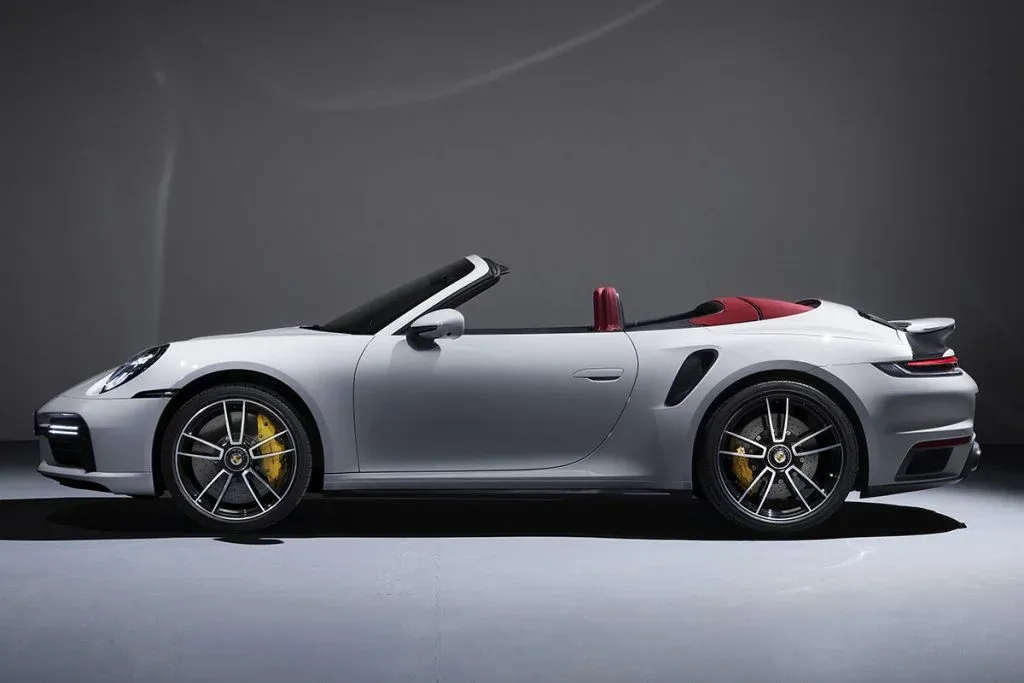
Porsche is aligning its strategy more closely with the 911 after a weaker sales year in 2026. The classic sports car is intended to play a central role in stabilizing the brand and securing profitability. The focus is on additional special models and limited variants that position the 911 even more strongly as an emotional and economic driving force.
Specific production figures, regional breakdowns, or model shares were not mentioned in the available information. What is clear, however, is that Porsche is recording a noticeable decline in global deliveries in 2026 and is not responding with a purely volume-driven offensive, but with a stronger concentration on the model that represents the brand like hardly any other.
Why the 911 is becoming even more important now

For Porsche, the 911 is more than a single model. It is the core of the brand, an image carrier, and in many markets a particularly high-margin product. While SUV model lines such as the Cayenne and Macan have delivered large volumes for years, the 911 provides the emotional anchor. It is precisely this role that now apparently is to be expanded.
Special models are a proven instrument for this. They allow a manufacturer to repackage existing technology with exclusive equipment, special tuning, distinctive looks, or historical references. For Porsche, this is particularly logical because the 911 has a long model history and appeals to customers who pay attention to details, collector value, and authenticity.
It remains open which new 911 derivatives will follow in concrete terms. Limited editions with special designs, performance-oriented versions, lightweight packages, or variants referencing earlier racing and road models are conceivable. What is confirmed from the available information above all is the strategic direction: more special 911 models to get the brand moving again after the sales decline.
A turnaround through desirability rather than discounts
From an industry perspective, the decision is noteworthy because it shows how Porsche deals with pressure. An obvious path when sales are falling would be to make prices more aggressive, promote stock vehicles more heavily, or increase volume through widely available entry-level models. The approach now becoming apparent, by contrast, relies on exclusivity.
That fits the brand’s positioning. Porsche lives not only from driving performance, but also from residual values, scarcity, and the perception that certain models are not available at will. Special editions can reinforce this perception. They create talking points, bring customers into showrooms, and offer owners the feeling of driving a car with a special status within the model line.
For the balance sheet, this can be attractive. Limited or particularly well-equipped models usually achieve higher average prices than standard versions. At the same time, many components from the existing 911 family can be used. That reduces development risks compared with entirely new model lines and can show results more quickly.
What buyers can expect
For new-car buyers, the strategy is likely to have two sides. Anyone already looking for a 911 could see more choice in special equipment, design packages, and limited series in the coming months or model years. For customers with an interest in collecting, this can be appealing because rare Porsche variants have historically often developed strong demand on the used-car market.
At the same time, there is no guarantee that more special models will make access easier. Limited editions are often allocated early to regular customers, collectors, or particularly active dealer networks. Depending on the market, waiting times, premiums on the secondary market, or very high equipment prices can play a role. Anyone who wants to buy a 911 primarily for driving and less as an investment should therefore check carefully whether a special model actually offers the added value promised by the price.
Leasing and financing rates could also be affected. Vehicles with high demand and stable residual values can often be calculated more attractively, but that does not automatically apply to every edition. The decisive factors are limitation, technical distinctiveness, market sentiment, and long-term desirability.
Significance for owners and collectors
For current 911 owners, the stronger concentration on the model line can in principle be positive. If Porsche maintains the 911 even more intensively and places it at the center of communications, that supports the perception of the model as a whole. Particularly sought-after generations, rare manual-transmission cars, GT models, or historic special versions could indirectly benefit from such brand stewardship.
But that does not mean that every 911 automatically increases in value. The market differentiates very precisely between mileage, condition, history, equipment, and actual rarity. In addition, too many editions can dilute the exclusivity of individual models. For collectors, it therefore becomes more important which variant truly stands out technically or historically and which is differentiated mainly through colors, badges, and interior details.
The 911 as a counterpoint to the transformation phase
The move comes at a time when the auto industry is strongly shaped by electrification, software, battery costs, and fluctuating demand. Porsche is not exempt from this. With the Taycan, the brand has an electric performance model in its lineup and at the same time must address traditional sports car customers, SUV buyers, and new target groups. In this field of tension, the 911 offers stability.
Precisely because the 911 has such a clear profile, it can help keep the brand understandable. For enthusiasts, it embodies continuity: rear-engine layout, distinctive silhouette, closeness to motorsport, and decades of evolution instead of a radical break. In a phase in which many manufacturers are reorganizing their identity, such a model is a valuable signal.
For the industry, the plan also shows that premium manufacturers in difficult phases do not necessarily think only in terms of unit numbers. Profitability, brand value, and product mix can be more important than short-term growth. Porsche appears to be betting on achieving more impact with particularly desirable vehicles than with broad availability at any cost.
Risks of the strategy
Nevertheless, the 911 focus is not a surefire success. First, the model is comparatively expensive and appeals to a limited customer group. It cannot offset weaker sales in other model lines indefinitely. Second, there is a risk that too high a number of special models will weaken the idea of limitation. If almost every new variant is marketed as exclusive, exclusivity loses sharpness.
Third, success depends heavily on the economic situation of the target customers. Sports car purchases are less dependent on the economic cycle than mass-market models, but wealthy buyers also react to interest rates, asset prices, and market uncertainty. A strong brand helps, but it does not replace demand.
A signal to fans and investors
Porsche’s response to the sales decline is therefore above all a strategic signal. The manufacturer wants to make the core of the brand more visible and use the 911 as an anchor of stability. For fans, that could become exciting because additional variants often enable technical and design experiments. For buyers, it means more choice, but possibly also more competition for particularly sought-after cars.
Whether the plan sustainably offsets the decline in sales depends on details that have not yet been publicly specified: which special models are coming, how limited they are, which markets receive them, and whether they offer real technical substance. The only certainty is that Porsche continues to see the 911 not only as a heritage model, but as a business tool. In a difficult year, the most famous Porsche of all is intended to help bring the brand more firmly back on course.