Renault Twingo EV gets the Twingobay panoramic roof
Renault is expanding the electric Twingo with an unusually shaped glass roof. The Twingobay is intended to bring in more light without changing range or everyday usability.
More light for Renault’s smallest EV
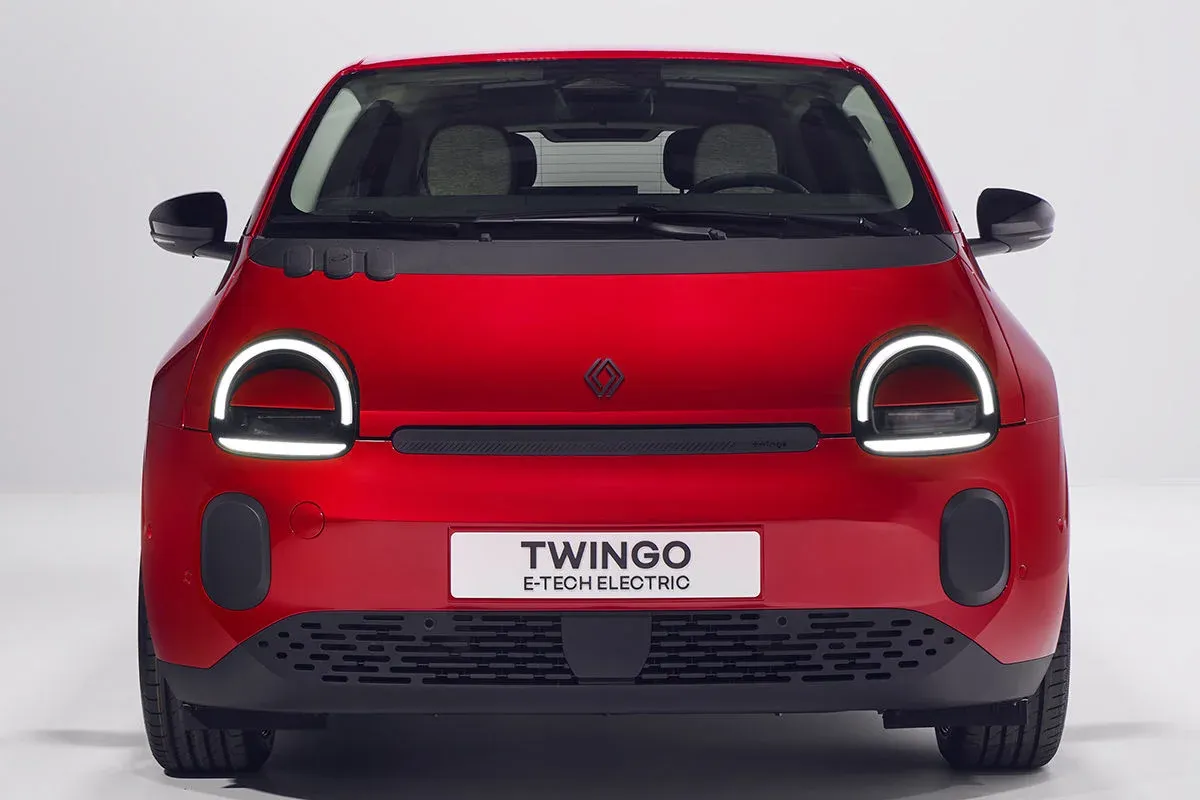
Renault is adding a new option to the electric Twingo that focuses more on design and the feeling of space inside than on pure technical data. The so-called Twingobay is a panoramic glass roof with an area of 0.7 square meters. What stands out above all is its shape: instead of a classic rectangular insert, Renault uses a softly rounded, almost organic-looking glass panel intended to suit the deliberately playful design of the small electric car.
This gives the Twingo EV an equipment feature that, while not entirely new in this vehicle class, still cannot be called standard. In very compact electric cars in particular, costs, weight and packaging matter especially strongly. A large glass roof is therefore more than just a decorative extra: it influences the feeling of space, climate comfort, weight balance and ultimately also price positioning.
Twingobay: unusual shape instead of standard glass roof
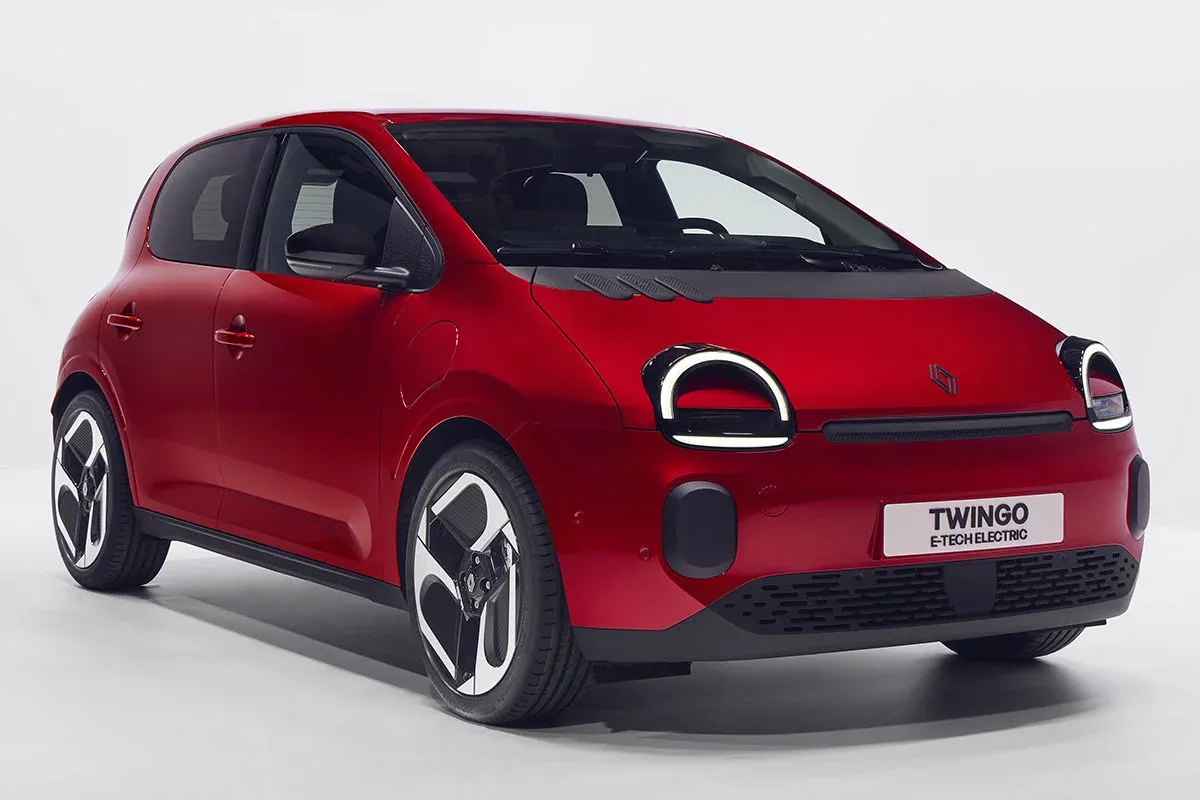
Visually, the Twingobay roof differs from many panoramic roofs, which in larger vehicles are often designed as straight, almost frame-like glass surfaces. In the Twingo, Renault relies on rounded edges and a surface intended to emphasize the model’s retro-inspired design. The current electric Twingo picks up design ideas from earlier generations without simply being a copy of the original. The roof follows this approach: it is meant to look recognizably modern, but not cold or arbitrary.
At the edge of the glass surface, Renault integrates graphic elements from its own Twingo alphabet. These include abstracted symbols that are inspired by details of the car. One example is an N whose shape is intended to recall the headlight; a G is implemented as a symbol with echoes of a location marker. This is not a technical breakthrough, but a deliberate detail for buyers who, in a small electric car, pay attention not only to range and price but also to character.
No blind, but UV protection and thermal insulation
Technically, Renault uses a multilayer structure for the Twingobay. The roof is intended to block 99.9 percent of UV radiation. At the same time, it is intended to reduce the burden from solar radiation in summer and, at cooler temperatures, help keep heat inside the cabin. Renault therefore does without a separate blind.
That is relevant for several reasons. A blind needs installation space, mechanics and weight. In a small car, that can noticeably affect headroom, especially in the rear seats. If the glass roof can do without internal shading, it can help make the interior feel airier without unnecessarily reducing its size. In everyday use, however, the decisive factor will be how well the glass actually works against heat in strong sun. City cars in particular often stand outdoors, are driven briefly and frequently parked again. An interior that has heated up too much costs comfort and, in electric cars, also energy if the air conditioning then has to work hard.
Drivetrain and range remain unchanged
The new roof option does not change the known key data of the Twingo EV. The electric small car continues to use a battery with 27.5 kWh capacity and a front-mounted electric motor with 80 bhp, i.e. around 81 PS or about 60 kW. The official WLTP range is 163 miles, equivalent to around 262 kilometers. For the sprint from 0 to 62 mph, i.e. 0 to 100 km/h according to British measuring logic, 12.1 seconds are stated.
A glass roof generally brings additional weight. However, Renault does not communicate any changed range or acceleration figures for the Twingobay version. For buyers, that means: anyone who opts for the roof does not, based on the current status, have to expect a different official efficiency class or a deviating data sheet. In real-world operation, weight, weather, tires, speed and heating or cooling requirements can nevertheless play a larger role than a single equipment detail.
Why this matters for buyers
The Twingo EV competes in a segment in which price is particularly sensitive. Small electric cars are supposed to remain affordable, be easy to park and convince in city and commuting use. A panoramic roof is not a must here, but it can significantly increase the perceived value of the vehicle. Bright interiors feel larger, which can be a real advantage with short exterior dimensions.
At the same time, interested buyers should soberly assess whether the extra fits their own usage profile. Anyone who often drives in hot regions or frequently parks the car without protection should pay attention during a test drive to glare, heat build-up and climate comfort. Anyone who takes children in the rear seats is likely to welcome the UV protection. And anyone who wants to keep their car for a long time should, as with any glass roof, find out about possible repair costs, insurance classification and stone-chip risks.
Specific information on price and country-specific availability is still open. These points will be decisive in determining whether Twingobay becomes a popular equipment package or rather a charming detail for customers who consciously want to configure their Twingo more individually.
A small detail with greater significance
The new roof shows where affordable electric cars can develop. For a long time, many small EVs were sold primarily on rational arguments: low operating costs, compact dimensions, sufficient range for everyday use. These points remain important. But with growing competition, manufacturers must also provide emotional reasons why a customer chooses precisely this model.
With the Twingo EV, Renault uses design, nostalgia and clever attention to detail to turn a functional city car into a stronger lifestyle product. The Twingobay panoramic roof does not fundamentally change the Twingo, but it reinforces its role as a deliberately friendly electric car with strong character. For enthusiasts, this is interesting because it shows that small cars do not necessarily have to be sober and interchangeable. For the industry, it is an indication that individualization and the interior experience are also gaining importance in the entry-level segment.
In the end, the Twingobay roof remains an optional comfort and design element. But especially in a compact EV, such a detail can make the difference: not on the test bench, but in the daily decision as to whether a car feels pleasant, bright and special enough.