Ferrari Purosangue Handling Speciale: Fine-tuning for the V12 all-wheel-drive model
The new Handling Speciale package makes the Ferrari Purosangue noticeably sharper: revised active dampers, faster shifts and more V12 presence in the cabin.
Ferrari sharpens the Purosangue
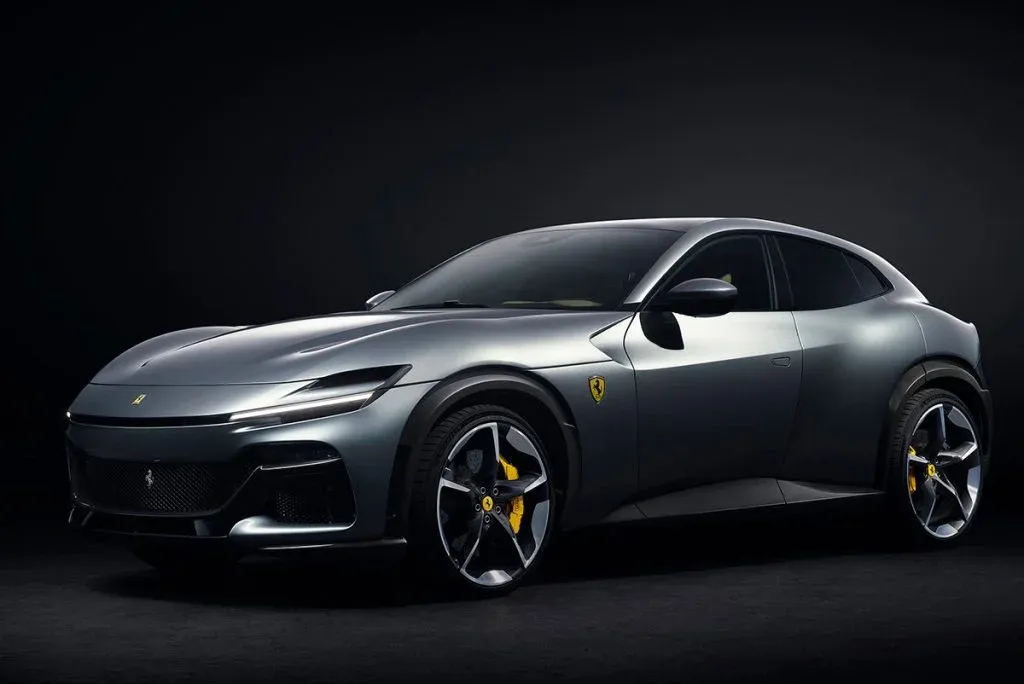
The Ferrari Purosangue was a special case even when it was introduced: four doors, four seats, tailgate, all-wheel drive and a raised body – but Ferrari continues to avoid the classic SUV category and prefers to speak of a sporty GT with added everyday usability. With the new Handling Speciale package, often referred to as Purosangue HS, the focus now shifts more strongly back to what counts for buyers and enthusiasts in a Ferrari: precision, feedback and the emotional impact of the V12.
The package is not a radical conversion, but rather targeted fine-tuning of an already unusually elaborate car. At its heart are newly tuned active dampers, faster gear changes and a more perceptible twelve-cylinder sound in the cabin. The surcharge is stated at 16,450 pounds for the British market; there, the base price of the Purosangue is more than 313,000 pounds. Equipment, taxes and final prices may differ in other markets.
What the Handling Speciale package changes
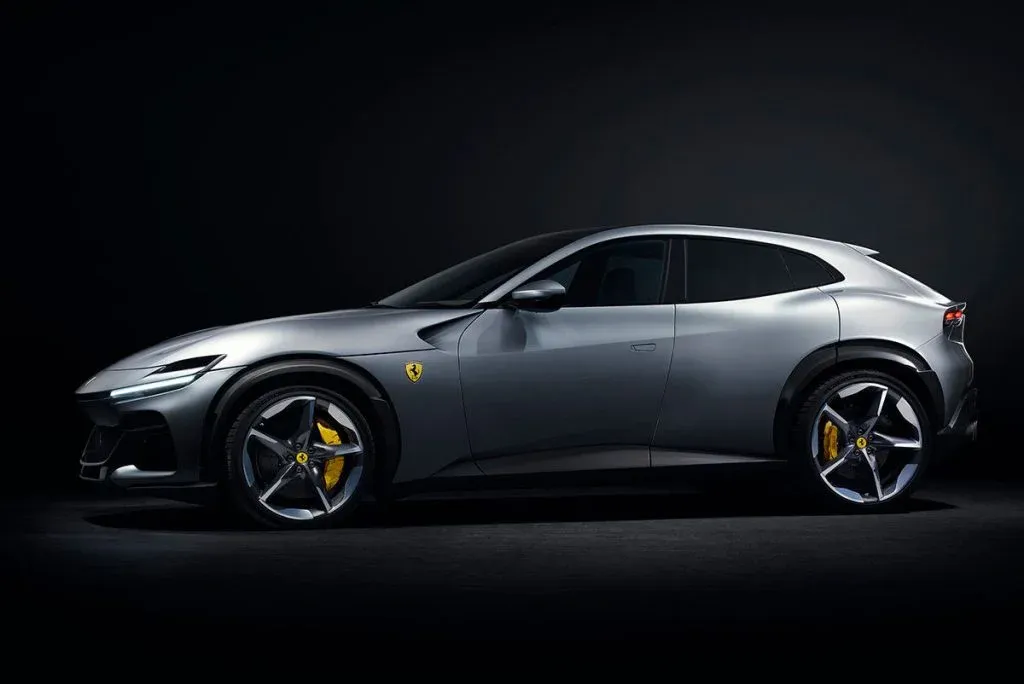
The most important technical change concerns the chassis. The Purosangue uses a highly developed active damper system that can control body movements very precisely. In the HS version, this control system has been recalibrated. The primary aim is not more stiffness, but more direct turn-in, better control of the mass and an even closer feeling between driver, front axle and road.
That is crucial in a car of this size. The Purosangue combines supercar technology with a body shape that brings more height, more utility and more weight than a classic two-seat Ferrari. The more precisely the chassis manages the movements of the body, the less the car feels like a heavy high-riding vehicle. This is exactly where Handling Speciale comes in: less delay in response, more composure when transitioning from corner to corner and a more natural feel at high speed.
There are also faster gear changes. Ferrari pairs the V12 with a gearbox at the rear axle, which contributes to the weight distribution. The combination of a front-mid-mounted engine and a rear transaxle layout gives the Purosangue a distribution of 49 to 51 percent between the front and rear axles. This is a central reason why the car is dynamically closer to a large sports car than to many luxury SUVs.
More V12 in the cockpit
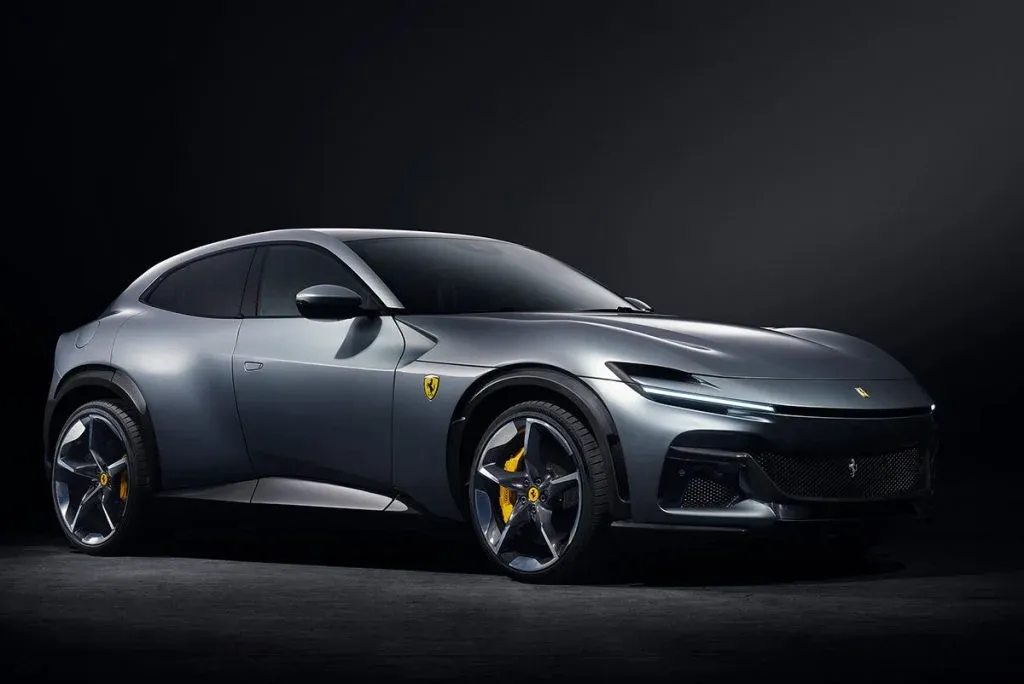
Another component of the package concerns the acoustic presentation. The 12-cylinder engine is intended to feel more present in the cabin. This is no minor matter, because the naturally aspirated V12 is one of the Purosangue's strongest arguments. In a market in which more and more high-performance models are electrified, turbocharged or acoustically muted, a large naturally aspirated engine is a deliberately analogue luxury.
For owners, this means that the HS Purosangue should not only react faster, but also feel more intense. Especially in a car that is likely often ordered with lavish optional equipment and must remain comfortable in everyday use, this balance is difficult. Too much firmness would damage the Gran Turismo character; too little sharpness would dilute the Ferrari expectation. The Handling Speciale package attempts to shift this middle ground further toward a driver's car.
Why Ferrari does not simply call the Purosangue an SUV
The discussion about how to classify the Purosangue has accompanied the model since its market launch. Objectively, it meets many SUV criteria: raised seating position, all-wheel drive, four doors, room for four people and a practical tailgate. At the same time, the technical architecture is strongly geared toward driving dynamics. The V12 sits far behind the front axle, the gearbox moves to the rear, and the weight distribution resembles a sports car concept more than a classic luxury off-roader.
For customers, the designation is ultimately less important than the result. The Purosangue competes not only with fast luxury SUVs, but also with the idea that a Ferrari can become more usable in everyday life without giving up its brand identity. The HS package sharpens exactly this point: it does not make the car more practical, but more emotional and more active to drive.
What buyers can expect from the surcharge
16,450 pounds is a lot of money in absolute terms. Relative to the total price of a Purosangue and to the typical level of individualization in this vehicle class, however, the amount seems less intimidating. Many buyers configure their Ferrari with paint finishes, leather packages, carbon parts and personalizations that can quickly become significantly more expensive. A package that directly influences the driving experience is therefore likely to make sense for many prospective buyers.
The decisive point is use. Anyone who primarily uses the Purosangue as a luxurious, fast touring car will already get an extremely capable car with the standard model. Those who, by contrast, regularly drive on winding roads or see the special dynamics as a reason to buy are likely to benefit more strongly from the Handling Speciale package. It does not improve the basic formula, because that is already set, but refines the car's responses.
Significance for the luxury performance SUV segment
The Purosangue shows how far the segment of fast luxury SUVs has developed. In the past, performance, status and comfort were in the foreground; today, buyers in this price class also expect credible driving behavior at sports-car level. Ferrari responds to this not with ever more extreme performance figures, but with tuning work on dampers, transmission and sound character.
This is also relevant for the industry. When a manufacturer with Ferrari's sports-car ambitions further tunes a four-door high-performance model toward precision, the pressure on competitors increases. It is no longer enough to build a large car with plenty of power and a luxurious interior. The flagship models have to hide their weight, respond directly and still remain suitable for long distances.
Conclusion
The Handling Speciale package does not turn the Purosangue into a different car, but apparently into a more focused one. The revised active dampers, faster gear changes and more intense V12 impression are aimed precisely at those customers who see the Purosangue not just as a practical Ferrari, but as a real Ferrari with more everyday latitude.
For buyers, the decision is therefore less about whether the Purosangue is fast enough. It already was. The more important question is whether, at the limit, on demanding roads and in emotional everyday driving, the car should move even closer to what has traditionally defined Ferrari. For many customers ordering a vehicle in this price class, the answer is likely to be clear: if Purosangue, then probably with Handling Speciale.