Porsche 911 Challenge: New entry-level race car costs $275,000
With the 911 Challenge, Porsche is launching a purist customer race car based on the GT3. The price shows: in motorsport, entry-level does not mean cheap.
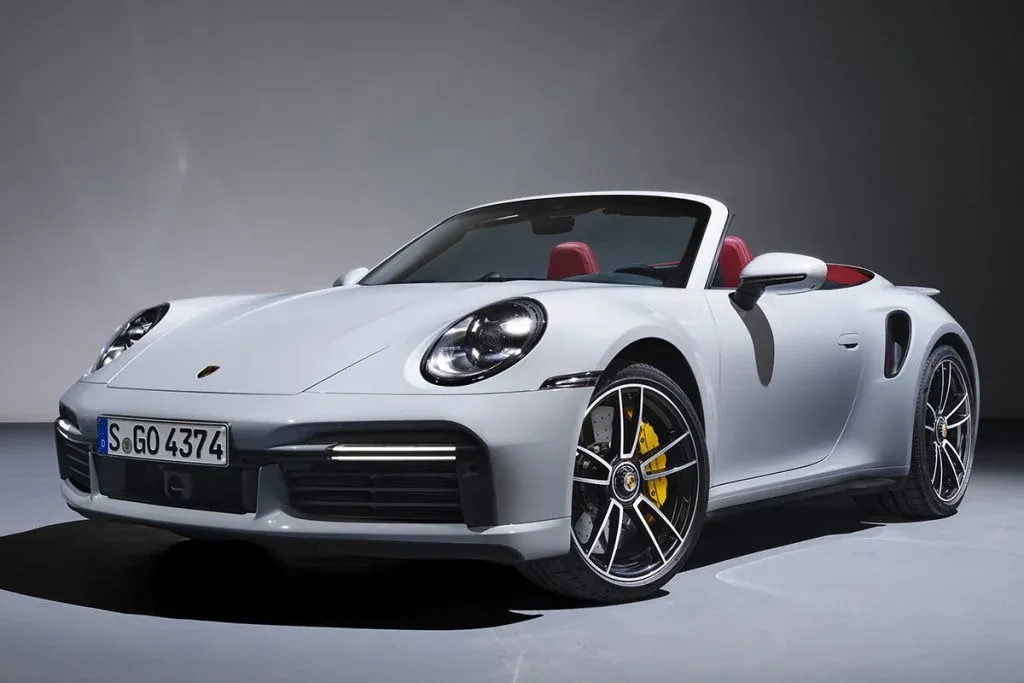
Porsche is expanding its motorsport offering with a new 911 Challenge. The race car is based on the 911 GT3, but it is not intended as a comfortable road-going sports car; instead, it is a stripped-down working tool for the racetrack. The price is $275,000. Porsche is therefore positioning the model as an entry point into professionally organized customer racing — although “entry-level” in this environment should expressly be understood as relative.
The 911 Challenge adopts the basic technical concept of the GT3, but dispenses with everything that is not needed on the racetrack. That means: less everyday equipment, more focus on safety, durability, ease of operation in racing use, and consistent lap times. For buyers, this is a different product than a road-legal 911 GT3. The Challenge is not a collector’s GT for a Sunday drive, but a tool for drivers, teams, and ambitious track-day customers looking for a factory-prepared car with a clear motorsport focus.
What Porsche wants to achieve with the 911 Challenge

The new 911 Challenge closes an important gap between road-legal GT models and more expensive, more specialized racing vehicles. Many manufacturers use such vehicles to introduce customers to racing without immediately pushing them into the most complex and expensive classes. For Porsche, this is especially obvious: the 911 has been a core model in customer racing for decades, and the closeness between production GT3 and racing versions is part of the brand image.
The term “entry-level” should not be misunderstood here. $275,000 is only the purchase price of the vehicle. Depending on the market, taxes, transport, spare parts, tires, brakes, safety equipment, entry fees, support from a team, and ongoing maintenance can cause significant additional costs. Anyone who really wants to use such a car regularly plans not only for the purchase price, but for a complete season budget.
Nevertheless, from a motorsport perspective, the 911 Challenge can be considered a comparatively accessible step. A ready-built race car from the manufacturer removes many development risks for buyers. Instead of converting a road-going GT3 themselves, customers receive a car that is designed from the outset for use on closed circuits. This saves time, reduces setup work, and creates a more uniform technical basis for competitions.
Based on the 911 GT3, but with a different purpose

The closeness to the 911 GT3 is important for enthusiasts. The GT3 is regarded as one of the most direct production cars in the Porsche lineup and already brings many characteristics from the factory that are relevant for circuit use: a strong appetite for revs, precise handling, and a platform designed for heavy loads. The 911 Challenge uses this foundation, but removes comfort and road elements in favor of clear racing logic.
In such a vehicle, different criteria matter than in a road-going sports car. Buyers are less likely to ask about infotainment, sound insulation, or everyday usability, and more about durability, ease of repair, brake costs, tire wear, data analysis, and the availability of spare parts. Ergonomics in the cockpit also change: a race car must be operable while wearing a helmet and gloves, allow quick driver changes or service work, and meet strict safety requirements.
With the 911 Challenge, Porsche has therefore not simply presented a particularly expensive GT3. The car is aimed at a smaller but very valuable target group for the brand: drivers who want to develop further on racetracks, owners of existing Porsche racing vehicles, track-day customers with professional support, and teams looking for a predictable competition tool.
Why the price is still relevant
$275,000 makes the 911 Challenge an expensive car, but in racing the pure list price is only part of the equation. A road-going 911 GT3 is already costly, and a clean conversion for racing use can quickly swallow large sums. In addition, a self-built conversion is not automatically eligible to start in racing series and often entails compromises in service, safety, or resale value.
A factory-related customer race car therefore has a different benefit. It offers a defined specification, a clear spare-parts supply, and better comparability with other vehicles of the same type. For series organizers, this is attractive because tighter technical rules lead to greater sporting comparability. For drivers, it means that talent, setup, and driving practice count more than individual modifications.
The 911 Challenge could also be interesting for collectors, even though its actual purpose is the racetrack. Porsche race cars with a limited field of use often retain attention in the scene, especially when they are used in one-make cups or official customer programs. Nevertheless, potential buyers should remain realistic: a race car ages differently than a garage vehicle. Operating hours, accidents, spare-parts history, and maintenance documentation are decisive in a later sale.
Significance for Porsche and customer motorsport
The 911 Challenge shows how important customer racing remains for Porsche. While many manufacturers are increasingly electrifying their performance strategy or focusing on a few halo models, Porsche is holding on to its classic circuit-racing offering. This is not just image cultivation. Customer racing creates loyalty among particularly committed customers, fills racing grids, and ensures that the brand remains visible across the breadth of motorsport.
For the industry, such a car is also a signal: there is still demand for specialized combustion-engine racing vehicles as long as regulations, circuit operators, and customer programs allow them. At the same time, the economic framework is becoming more challenging. Racetrack operation, noise limits, running costs, and sustainability targets are changing the scene. A new 911 race car must therefore not only be fast, but also reliable, easy to service, and sensibly integrable into existing racing formats.
What buyers should clarify before ordering
Prospective buyers should above all know where and how they can use the 911 Challenge. Key questions concern eligibility to compete, spare-parts packages, technical support, delivery time, safety regulations, and possible updates. The location of the vehicle also plays a role: anyone without their own team needs transport, storage, mechanics, and racetrack support.
Equally important is the distinction from other Porsche models. Anyone looking for an emotional road car is closer to their goal with a 911 GT3 or GT3 RS. By contrast, anyone looking for a car for structured race weekends, driver training, or one-make formats gets a more specialized package with the 911 Challenge. Its appeal lies precisely in the fact that comfort and road approval are not the focus.
The Porsche 911 Challenge does not make motorsport inexpensive, but it lowers the complexity for customers who seriously want to get onto the racetrack. For enthusiasts, it is further proof that the 911 lives not only as a sports-car icon, but continues to serve as a platform for real competition. For buyers, in the end, the headline-grabbing price matters less than the question of whether the car fits into a clearly planned racing program.