Mitsubishi Pajero returns as a true off-road vehicle
Mitsubishi is reviving the Pajero: the large SUV once again relies on a ladder frame, seven seats and Super Select 4WD-II. Depending on the market, the Shogun and Montero names could also return.
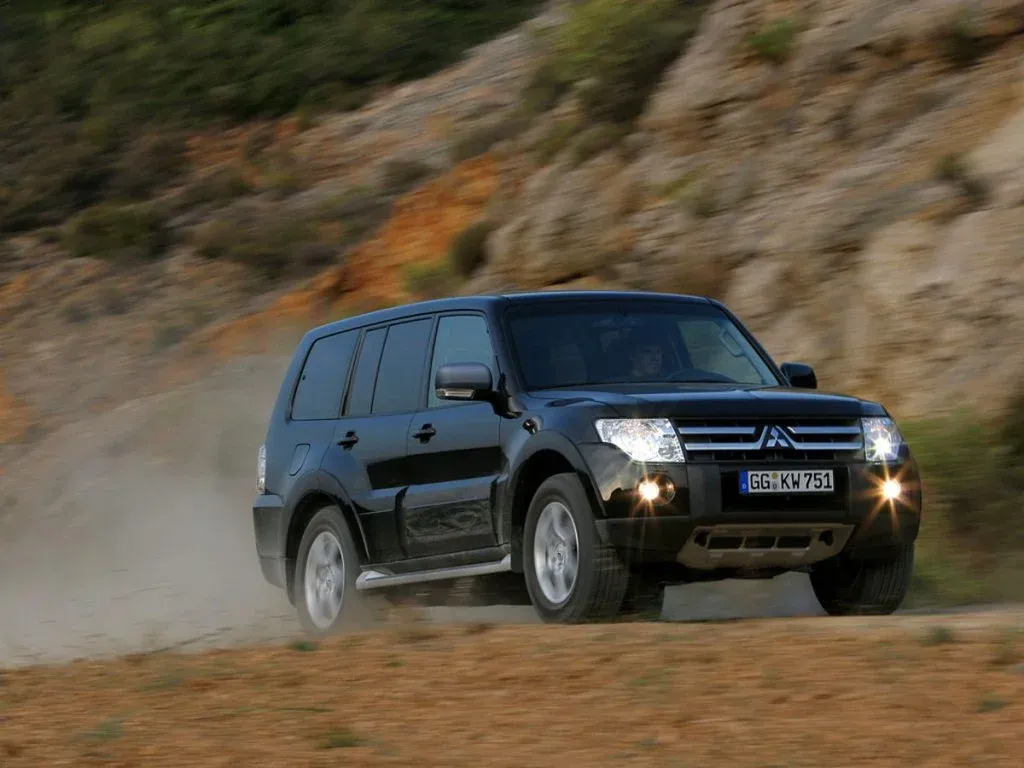
Mitsubishi brings back the Pajero
Mitsubishi has unveiled the new Pajero, bringing one of the brand's best-known names back to the large SUV class. Depending on the market, the model is set to appear under different names: Pajero remains the central model identity, while in certain regions the Shogun and Montero names are also likely to play a role again. This naming question has not yet been conclusively clarified everywhere, because Mitsubishi has traditionally used model designations differently by region.
More important than the emblem, however, is the technical direction. The new Pajero is not a softened crossover with off-road décor, but once again relies on a classic off-road-vehicle architecture. A ladder frame, seven seats and Mitsubishi's Super Select 4WD-II all-wheel-drive system are mentioned. This clearly aims the model at buyers who are looking for a large SUV not only because of the seating height or the design, but because of towing power, robustness and genuine off-road capability.
Ladder frame instead of crossover platform
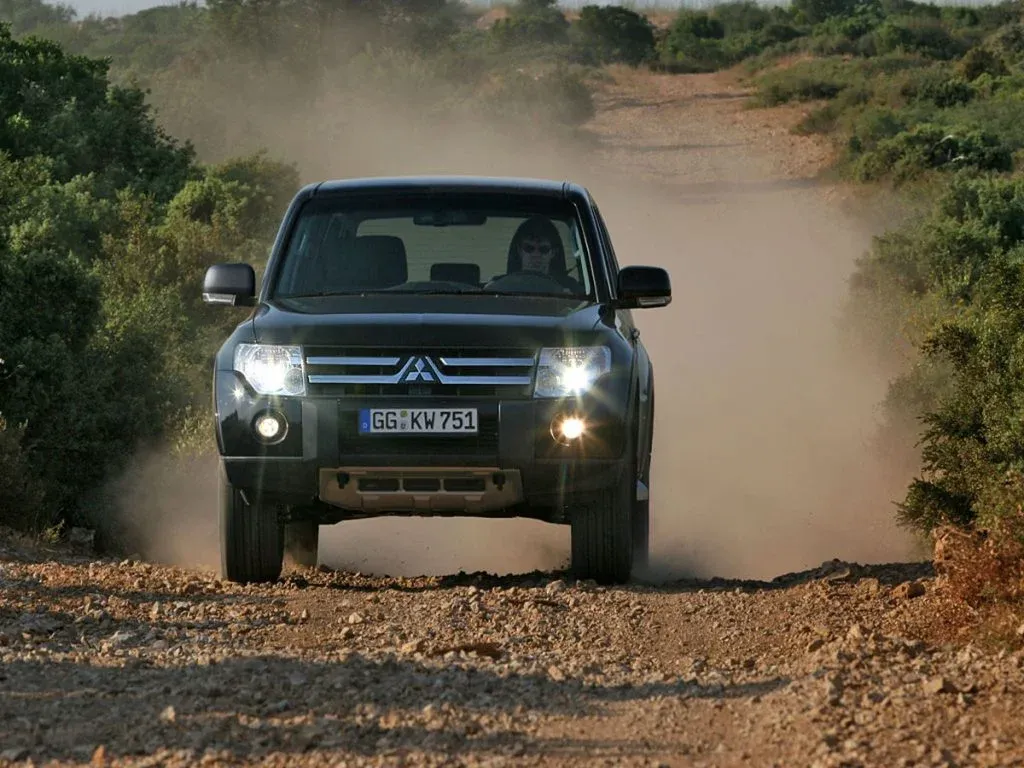
The return to the ladder frame is this model's most important technical statement. While many modern SUVs are based on unibody bodies, the ladder frame remains relevant for heavy off-road vehicles and workhorses. It offers advantages under heavy loads, when towing trailers and when driving on poor tracks. It is precisely in this environment that the Pajero has built its reputation over decades.
For buyers, this means: the new Pajero is likely intended less as a sportily tuned asphalt SUV and more as a durable travel vehicle with practical value. That makes it particularly interesting for families with an outdoor focus, drivers in rural regions, campers, boat owners and anyone who regularly moves trailers or travels away from paved roads.
At the same time, this construction also brings typical compromises with it. Ladder-frame vehicles are usually heavier than comparable crossovers, can be at a disadvantage in terms of fuel consumption and do not always feel as light-footed on the road as SUVs with a passenger-car platform. Whether Mitsubishi convincingly solves these points with suspension tuning, insulation and assistance systems will only be shown by a road test.
Super Select 4WD-II remains a core argument
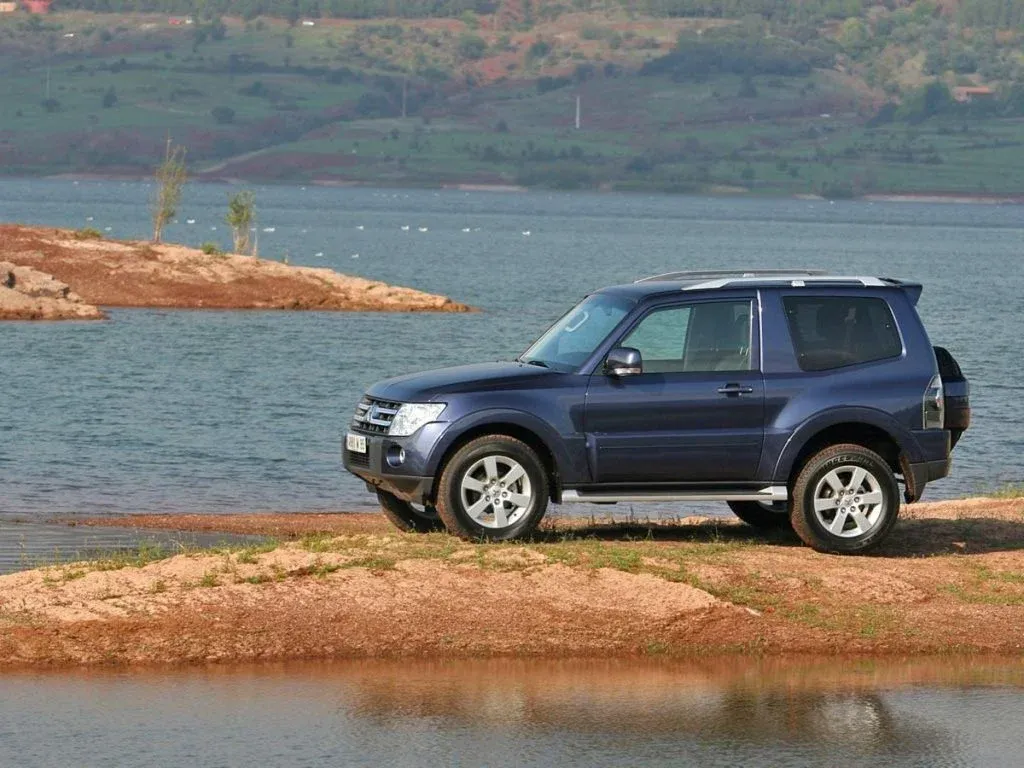
Another central point is Super Select 4WD-II. The system has for years been one of the most important technical features of large Mitsubishi all-wheel-drive models. The advantage lies in its versatility: depending on the configuration, the driver can choose between different drive modes and thereby adapt the vehicle to roads, wet conditions, snow, gravel or off-road terrain.
For enthusiasts, this is a decisive signal. The new Pajero does not merely want to visually recall its well-known predecessors, but ties in with their technical role. At a time when many SUVs look robust but offer hardly more off-road technology than a normal passenger car, that is a clear difference.
This positions Mitsubishi against established models such as the Toyota Land Cruiser. The Land Cruiser also relies on durability, off-road competence and a reputation as a worldwide workhorse. The Pajero is therefore likely to be sold not only through design and equipment, but through trust in technology, durability and everyday usability under tough conditions.
Seven seats and a large digital cockpit
The new Pajero is described as a seven-seater. That fits its role as a large family and travel SUV. For many markets this configuration is important because it positions the car as an alternative to vans, large crossovers and classic off-roaders. The decisive factor will be how usable the third row of seats actually is. In large ladder-frame SUVs, the spectrum ranges from child-suitable extra seats to genuinely usable seats for adults on shorter journeys.
In the interior, Mitsubishi apparently puts significantly more emphasis on modern digital technology than in earlier Pajero generations. Two 14.3-inch screens are mentioned. The new Pajero is therefore likely to receive a broadly laid-out digital cockpit, probably with a driver display and a central infotainment screen.
This is more than just a comfort detail. Buyers of large SUVs today expect robust mechanicals and modern operation at the same time. Navigation, camera systems, smartphone integration, driver assistance and off-road displays are important sales arguments in this class. Especially when maneuvering a large seven-seater or driving off-road, camera perspectives and clearly displayed vehicle data can bring real benefits.
Pajero, Shogun or Montero: one model with several names
The naming situation deserves some context. In many countries, Pajero is the familiar model name. In the United Kingdom, the earlier model was sold for a long time as the Shogun, while in North America Montero was common. The new generation brings this history back, but the exact distribution of the names depends on the respective market.
For buyers, this is not just brand folklore. A familiar name can influence residual values, recognition and trust. Anyone who previously drove a Pajero, Shogun or Montero often associates it with concrete characteristics: a high seating position, robust all-wheel-drive technology, long-distance suitability and the ability to take poor roads seriously as well.
It is still open which markets will actually receive the new large Mitsubishi. Especially in Europe, Mitsubishi's presence varies in strength depending on the country. A return of a large off-road vehicle under the Shogun name would be a strong signal there, but is not secured for all markets. Caution therefore remains advisable regarding availability, engine range, prices and delivery dates.
Why the return matters
The return of the Pajero comes in an interesting phase of the SUV market. On the one hand, electrified crossovers that focus on comfort, efficiency and digital equipment dominate. On the other hand, there continues to be stable demand for true off-road vehicles, especially among buyers who depend on robustness and breadth of use. The success of the Land Cruiser shows that this niche remains relevant worldwide.
For Mitsubishi, the new Pajero is more than just another model. It can serve as an image carrier and recall a time when the brand was strongly associated with all-wheel-drive technology, rally successes and durable off-road vehicles. Even if the model does not achieve large volumes in every market, it can sharpen perceptions of the brand.
For owners of older Pajero generations, the new edition is also relevant. Many of these vehicles are used for a long time because until now there has been no direct successor with a comparable orientation. A new Pajero could for the first time again offer this customer group an obvious new-car option.
What is still missing
Despite the unveiling, important details remain open. Powertrains, fuel-consumption figures, towing capacities, dimensions, exact market launches and prices have not yet been fully clarified. The question of whether hybrid or plug-in hybrid technology will be offered is also decisive for many buyers. Without this information, everyday usability compared with rivals cannot yet be conclusively assessed.
What is already clear, however, is this: Mitsubishi is bringing back a name that carries weight in the off-road-vehicle world. With a ladder frame, seven seats, Super Select 4WD-II and a modern digital cockpit, the new Pajero is recognizably designed as a serious 4x4. If price, drivetrain and market availability are right, it could become one of the most exciting alternatives to the Toyota Land Cruiser for buyers.