Hyundai invests 500 million US dollars in hybrid production in Alabama
Hyundai is expanding its US plant in Alabama for the Tucson Hybrid and new EREV drivetrains. The investment shows how important hybrid technology remains in North America.
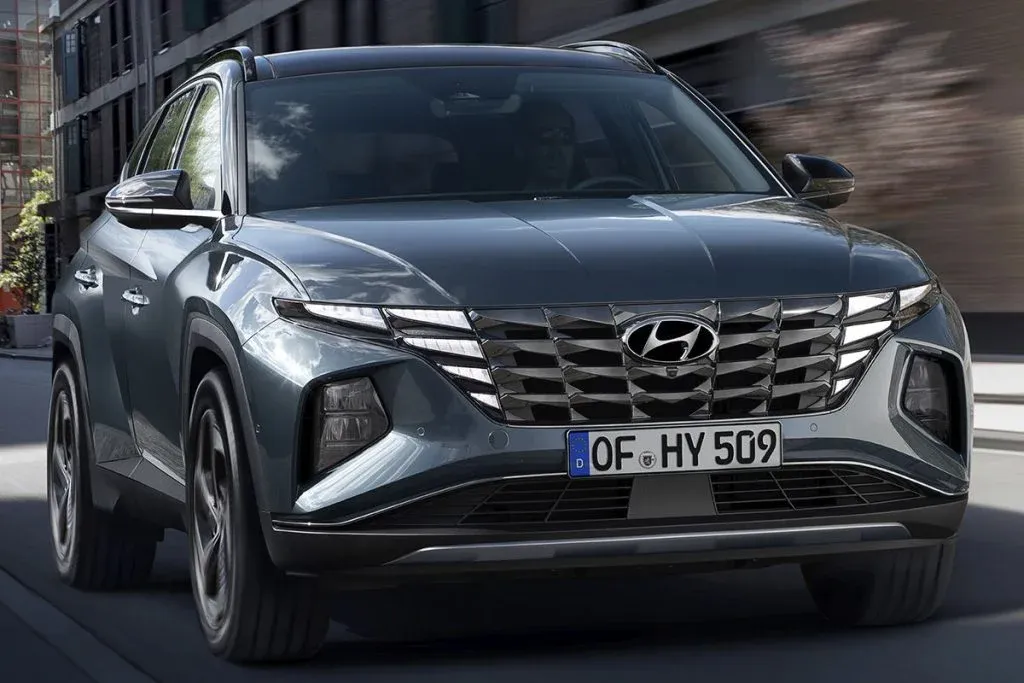
Hyundai Motor is putting 500 million US dollars into its assembly plant in the US state of Alabama. The money is intended to expand production of electrified vehicles and drivetrains for the North American market. The focus is on the Hyundai Tucson Hybrid as well as new EREV powertrains, meaning electrified systems with range extenders.
The investment is more than a single model decision. It shows that in North America Hyundai is not relying only on purely electric cars, but is factoring demand for hybrid vehicles into the market as an important interim step. For buyers, in the medium term this could mean a wider selection, more stable availability and possibly shorter delivery times for electrified models.
Tucson Hybrid moves more strongly into focus

The Tucson is one of Hyundai's most important model lines in the SUV segment. With the additional investment in Alabama, the hybrid version for North America is now being expressly strengthened. That is an understandable step: Compact SUVs remain in strong demand in the USA and Canada, while at the same time many customers want to reduce their fuel consumption without committing fully to a battery-electric car.
A conventional hybrid like the Tucson Hybrid combines an internal combustion engine with an electric motor and a comparatively small battery. Depending on the driving situation, the vehicle can provide electric assistance, recover energy during braking and relieve the engine. In everyday use, this usually means lower consumption, especially in city and commuter traffic. Unlike with a purely electric car, drivers do not have to charge, and unlike with a plug-in hybrid, the efficiency advantage does not depend on whether a power outlet is used regularly.
For Hyundai, local production is strategically important in this context. Vehicles produced closer to the target market are less dependent on long supply chains across oceans. In addition, a manufacturer can respond more quickly to regional demand. If the market demands more hybrid SUVs, additional production capacity in North America is a tangible advantage.
EREV: Driving electrically, combustion engine as backup

In addition to the Tucson Hybrid, the investment package also includes new EREV drivetrains for North America. EREV stands for Extended-Range Electric Vehicle. This refers to vehicles that are primarily driven electrically, but also have an internal combustion engine on board that serves as a range extender. Depending on the technical design, the engine does not drive the wheels directly, but generates electricity for the electric drive or recharges the battery.
Hyundai is not yet naming any specific models, technical data or market launch dates in this context. It therefore remains open which vehicles will receive these drivetrains, how large the battery will be, what electric range is being targeted and whether the systems will be used more in SUVs, larger family vehicles or commercial-vehicle-like models. The only certainty is: The manufacturer is preparing an additional electrified drivetrain family for North America.
This is relevant because EREV concepts can close a gap between plug-in hybrids and fully electric cars. Many drivers are interested in electric driving, but are concerned about charging infrastructure, range in cold weather, towing operation or long highway stages. A range extender can reduce these concerns without giving up the everyday use of an electric drive.
At the same time, EREV technology is not automatically simpler or cheaper. It combines a battery, electric motor, power electronics and internal combustion engine in one vehicle. That can increase weight, cost and complexity. Whether the concept is worthwhile for buyers depends heavily on price, real-world efficiency, electric range and maintenance requirements. Exactly these details are still open at present.
Why Hyundai is now relying on multiple drive paths
The North American market for electrified vehicles is not developing in a linear way. Purely electric cars continue to grow, but encounter different conditions depending on the region. In metropolitan areas with good charging infrastructure, they already work very well for many households. In more rural areas, for renters without their own charging space or for high-mileage drivers, hybrids and other transitional technologies remain attractive.
Hyundai's decision fits a broader industry trend: Manufacturers are keeping several technical options open. Battery-electric vehicles remain central to long-term emissions targets, but hybrid models help reduce consumption and CO2 emissions more quickly in large numbers. They can also introduce customers to electrified drivetrains without requiring their usage behavior to change fundamentally right away.
For the industry, this is also a question of utilization. Plants that can flexibly cover combustion-engine, hybrid and electrified drivetrain components are more resilient to fluctuations in demand. If purely electric vehicles take hold more slowly than expected in individual segments, a manufacturer can maintain volume with hybrids. If demand for electric ranges increases, EREV or plug-in-like concepts can serve as bridge technology.
What can change for buyers
In the short term, the announcement does not yet change the specification of a current Tucson Hybrid at the dealer. Prices, equipment, consumption figures and model-year changes remain separate topics. However, the 500-million-dollar investment indicates that Hyundai is taking hybrid demand in North America seriously and wants to provide more industrial capacity for it.
For prospective buyers, this can be important when choosing between a gasoline model, hybrid, plug-in hybrid or electric car. A more strongly localized Tucson Hybrid could be more readily available in the long term. In addition, Hyundai is signaling that the hybrid is not just a transitional solution on the edge of the lineup, but remains part of product planning for a major market.
Owners of current Hyundai models should also put the announcement into context: New production investments do not automatically mean immediately better spare parts supply or lower maintenance costs. But they can show that the manufacturer continues to support the technology family. With electrified vehicles, confidence in long-term parts supply and service expertise is an important factor.
Significance for enthusiasts and technology observers
For car enthusiasts, the investment is interesting because it broadens Hyundai's next phase of electrification. The brand has already gained attention with fully electric models, but is now also relying on hybrid SUVs and EREV drivetrains at the same time. That points to a pragmatic strategy: not one single drive system for all customers, but several solutions for different usage profiles.
Technically, it remains particularly exciting how Hyundai will position the announced EREV systems. A well-executed EREV can drive electrically a great deal in everyday use and ease charging planning on long journeys. A poorly balanced system, by contrast, can be expensive, heavy and only mediocre in terms of consumption. Efficiency, driving feel, battery capacity and price will be decisive.
A cautious but clear step
The 500 million US dollars for Alabama are not a spectacular promise of a single future car, but an industrial strategic decision. Hyundai is strengthening production of the Tucson Hybrid and preparing new EREV drivetrains for North America. In doing so, the group is responding to a market in which many customers want lower consumption and more electrification, but not everyone immediately wants to buy a purely electric car.
For buyers, what ultimately matters is not the amount of the investment, but what comes out of it in the showroom: available vehicles, understandable prices, reliable technology and real efficiency benefits. That is exactly where it will become clear how strongly Hyundai's Alabama expansion actually changes the hybrid and EREV landscape in North America.