Ford Fathom: Compact electric pickup to start from $28,350
Ford is planning a more affordable electric pickup in the format of the Maverick for 2027. The expected entry price of $28,350 and LFP batteries could significantly change the segment.

A more affordable electric pickup is getting closer
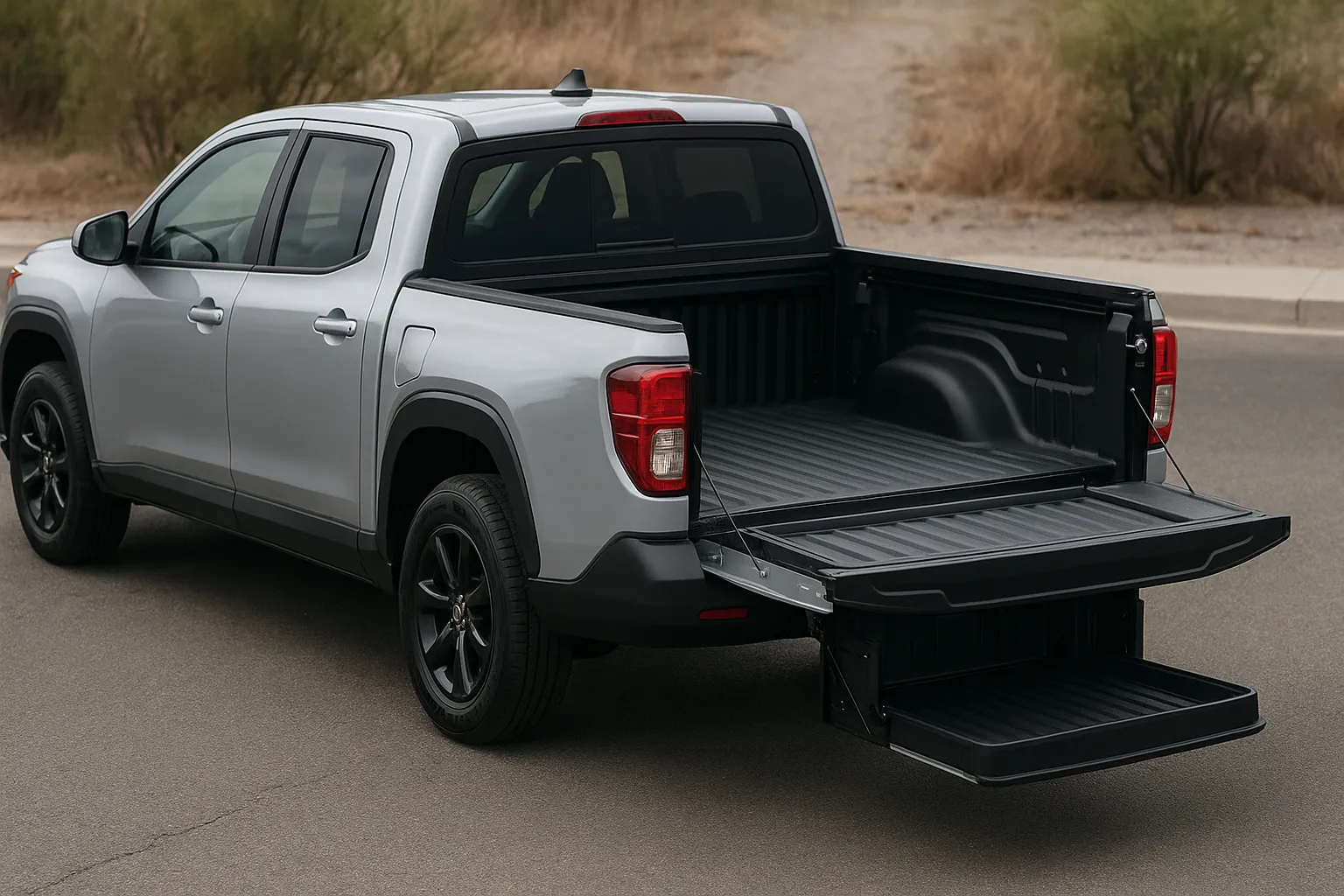
With the Fathom, Ford is apparently preparing a significantly more affordable electric pickup. The compact EV is expected to come to market in 2027 and receive an expected entry price of $28,350. That would push it into a price range that has so far been barely occupied by battery-electric pickups. The format is expected to be oriented toward the Ford Maverick, meaning it will be more compact and suitable for everyday use rather than designed for maximum size and towing power.
For car buyers, this news is relevant because electric pickups have so far often been associated with high prices, large batteries and correspondingly heavy vehicles. A smaller model with a lower base price could reach a different group of buyers: commuters with occasional cargo-bed needs, tradespeople in cities, fleet operators with short daily routes and households for whom a large full-size truck is too expensive or too unwieldy.
What is known so far

The most important key data are the expected starting price, the planned market launch in 2027, the compact classification at roughly Maverick level and the use of LFP batteries. LFP stands for lithium iron phosphate. This cell chemistry is considered more cost-effective and robust in the industry, but compared with some nickel manganese cobalt batteries it usually has a lower energy density. In practice, that can mean lower battery costs and good everyday durability, but potentially less range with the same battery size.
Key technical data are still open. Range, charging power, battery capacity, drive variants, payload, towing capacity, trim levels and final dimensions have not yet been reliably named. There is also an important limitation regarding the price: an expected entry price before market launch is not a final purchase price. By 2027, material costs, currency effects, legal requirements, subsidy conditions and equipment levels can influence the real price.
Why $28,350 would matter

A starting price of $28,350 would be a clear signal for a new electric pickup. Many electric vehicles have become cheaper in recent years, but pickups are often significantly higher because of body size, battery capacity and utility expectations. A compact model could reduce cost pressure: less sheet metal, less weight, possibly smaller batteries and simpler entry-level variants.
For buyers, what ultimately matters is not just the list price, but the overall calculation. An affordable entry point can quickly shrink through expensive options. Anyone who wants all-wheel drive, a larger battery, better charging performance, assistance packages, a tow hitch or higher-quality interior equipment is likely to pay more. Nevertheless, a low base price would be important because it changes the perception of the segment. An electric pickup would then no longer necessarily have to be seen as an expensive specialty vehicle.
Price is also a decisive factor for fleets. Municipal operations, delivery services, smaller trade businesses or campus fleets calculate soberly with acquisition costs, electricity prices, maintenance, downtime and residual value. A compact electric pickup with an LFP battery could be attractive where predictable routes are driven daily and charging can take place overnight.
LFP batteries suit a workhorse
The choice of LFP cells would be logical for a more affordable commercial vehicle. These batteries do without nickel and cobalt and can offer cost advantages in production. They are also well suited to many charging cycles, which is relevant for commercial users and owners with high annual mileage.
The possible disadvantage lies in weight and range. Since LFP cells usually store less energy per kilogram than some other lithium-ion chemistries, Ford has to find a balance: sufficient range for everyday use, but no oversized battery that drives up price and weight. This balance is especially crucial in a compact pickup. Too small a battery would deter buyers; too large a battery could destroy the price advantage.
For many realistic use cases, however, such a vehicle does not have to deliver extreme figures. Someone who drives 50 to 150 kilometers a day, transports tools, makes DIY-store or garden trips and can charge at home or at work has different requirements than someone who regularly tows heavy trailers over long highway distances.
The Maverick format is the key
The success of a smaller electric pickup depends heavily on whether Ford gets the size right. The Maverick has shown that there is demand for pickups that do not have the dimensions of a large full-size truck. A Fathom in a similar class could electrify this approach: short exterior dimensions, a usable cargo bed, easy entry and manageable operating costs.
In this context, the design will be more than cosmetics. Pickup buyers pay attention to bed length, load sill height, cabin layout, storage space, visibility and everyday usability. A futuristic appearance alone is not enough. The Fathom would have to appear robust enough without becoming unnecessarily large or heavy. At the same time, it must not look like a stripped-down compromise if it is to convince new buyers.
Enthusiasts will above all wait for the performance, drive system and utility data. Electric drives can offer strong response even in smaller vehicles. What will be decisive, however, is whether Ford combines this advantage with genuine pickup function: a durable cargo bed, sensible power outlets, hard-wearing interior materials and clear operation.
Pressure on the market
If Ford actually brings the Fathom into series production at this price and in 2027, pressure would arise for competitors. The market for electric pickups has so far been strongly shaped by large, expensive models. A compact entry point could force other manufacturers to also develop smaller and more affordable commercial-vehicle EVs.
For Ford, the Fathom would also be strategically important. The brand has a strong position in the pickup business, but electrification demands more than large premium models. A more affordable electric vehicle can help build volumes, win new customers and gather experience with battery costs, production and software in the lower price segment.
At the same time, the project is challenging. A low price leaves little room for mistakes in material selection, manufacturing, battery procurement and equipment. If Ford saves too much, attractiveness suffers. If Ford installs too much technology, the price rises. It is precisely this middle ground that will determine whether the Fathom remains a niche model or becomes a genuine volume impulse.
What prospective buyers should watch for
Until the market launch in 2027, buyers should above all wait for the final technical data. Real-world range, fast-charging capability, battery warranty, towing capacity, payload and the question of what equipment is actually included in the base model are especially important. Availability will also be decisive: an attractive entry price is of little use if only a few vehicles are built or most dealers primarily offer more expensive variants.
The Ford Fathom could become an important step toward more affordable electric commercial vehicles. Much is still open, but the direction is clear: smaller, cheaper and more strongly oriented toward everyday use. If Ford keeps to the announced key points, the market for electric pickups will for the first time get a model that could seriously appeal not only to technology fans, but also to price-conscious everyday users.