Ford expands engine teardown program to address recall problems
Ford aims to identify quality defects earlier by systematically disassembling problematic engines and comparing the findings with warranty data. Initial analyses apparently show an effect.
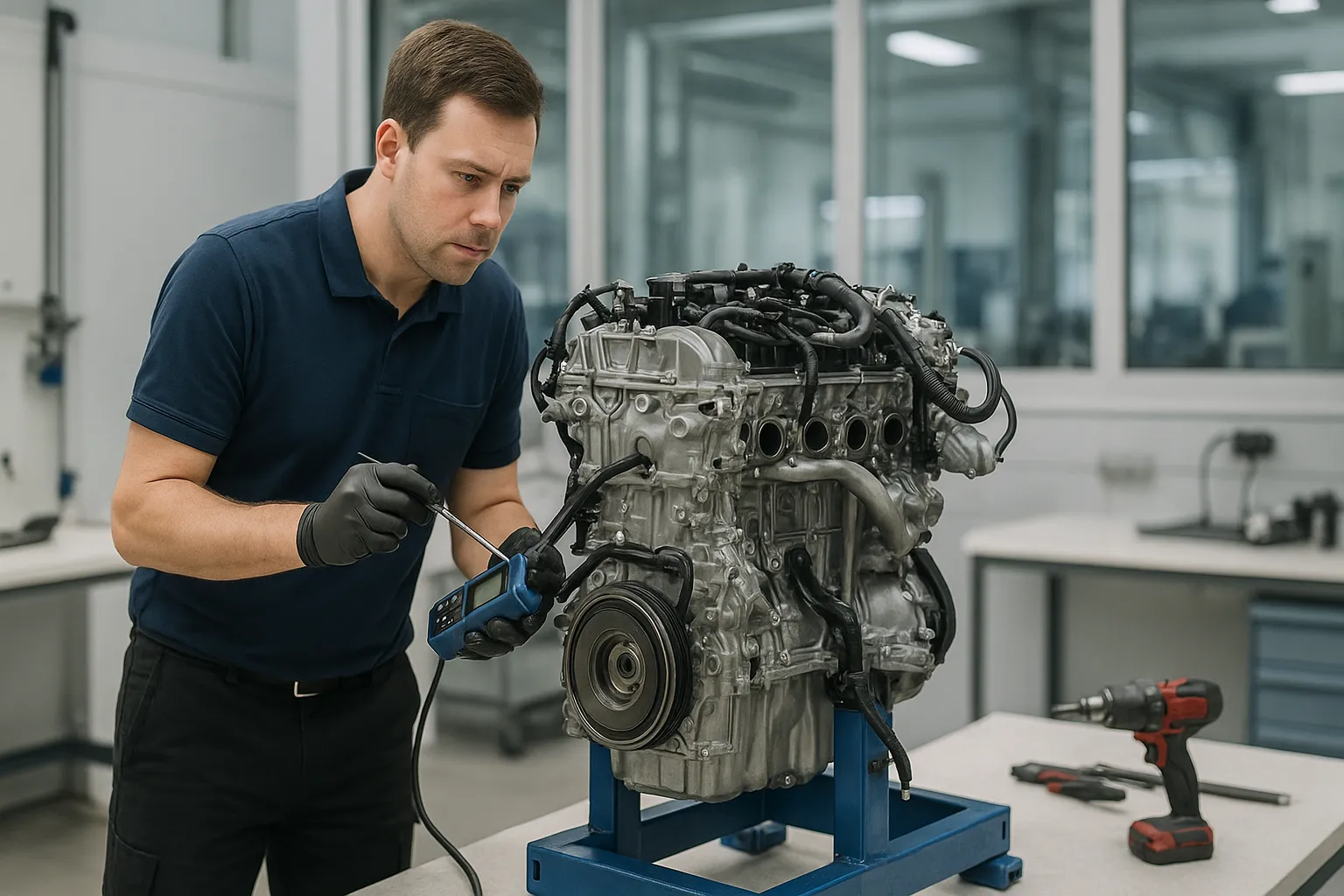
Ford is strengthening a quality program that may sound unspectacular at first glance, but can have significant consequences for customers: the manufacturer is disassembling more engines that have attracted attention in the warranty environment or during internal inspections. The goal is to understand damage patterns earlier, inspect components in a more targeted way, and use the findings to derive measures in development, production, and service more quickly.
The approach is not a classic recall announcement, nor is it an indication of a single newly discovered problem. Rather, it is about a more systematic handling of data and hardware. Ford evaluates warranty cases, identifies recurring patterns, and takes affected power units apart instead of relying solely on diagnostic codes, workshop reports, or supplier documents. According to initial warranty data, the program is already showing measurable improvements.
Why Ford is making this effort
Recalls are expensive for automakers, burdensome for dealers, and frustrating for owners. They cost labor time, spare parts, logistics, and trust. Engine problems are particularly sensitive because they often cause high repair costs and, in the worst case, directly impair a vehicle's everyday usability. While software corrections are increasingly possible via update, a mechanical defect in the drivetrain usually remains a workshop matter.
Ford has been under pressure for years to improve its own quality. In recent years, the group has repeatedly emphasized that warranty and rework costs are a central issue. This affects not only the balance sheet, but also the brand's reputation. If a manufacturer has to carry out many recalls, buyers quickly perceive this as a signal of a lack of reliability – even if individual campaigns are precautionary and not every vehicle actually fails.
An engine teardown program is therefore more than internal troubleshooting. It is an attempt to move the point at which problems are identified further forward. The earlier a pattern becomes visible, the sooner Ford can respond: with changed assembly processes, tighter inspections, different supplier specifications, revised components, or service instructions for dealers.
What actually happens during a teardown
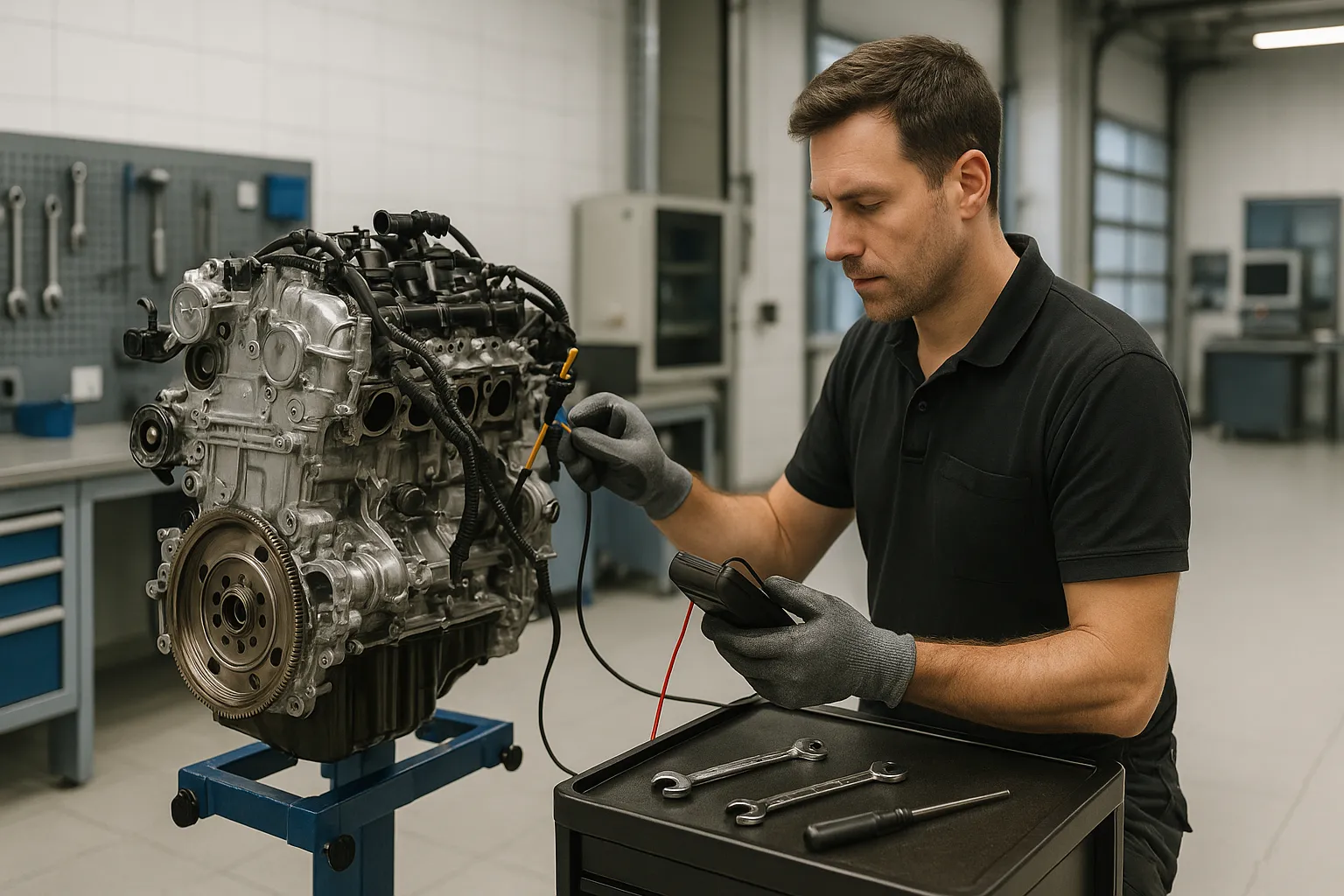
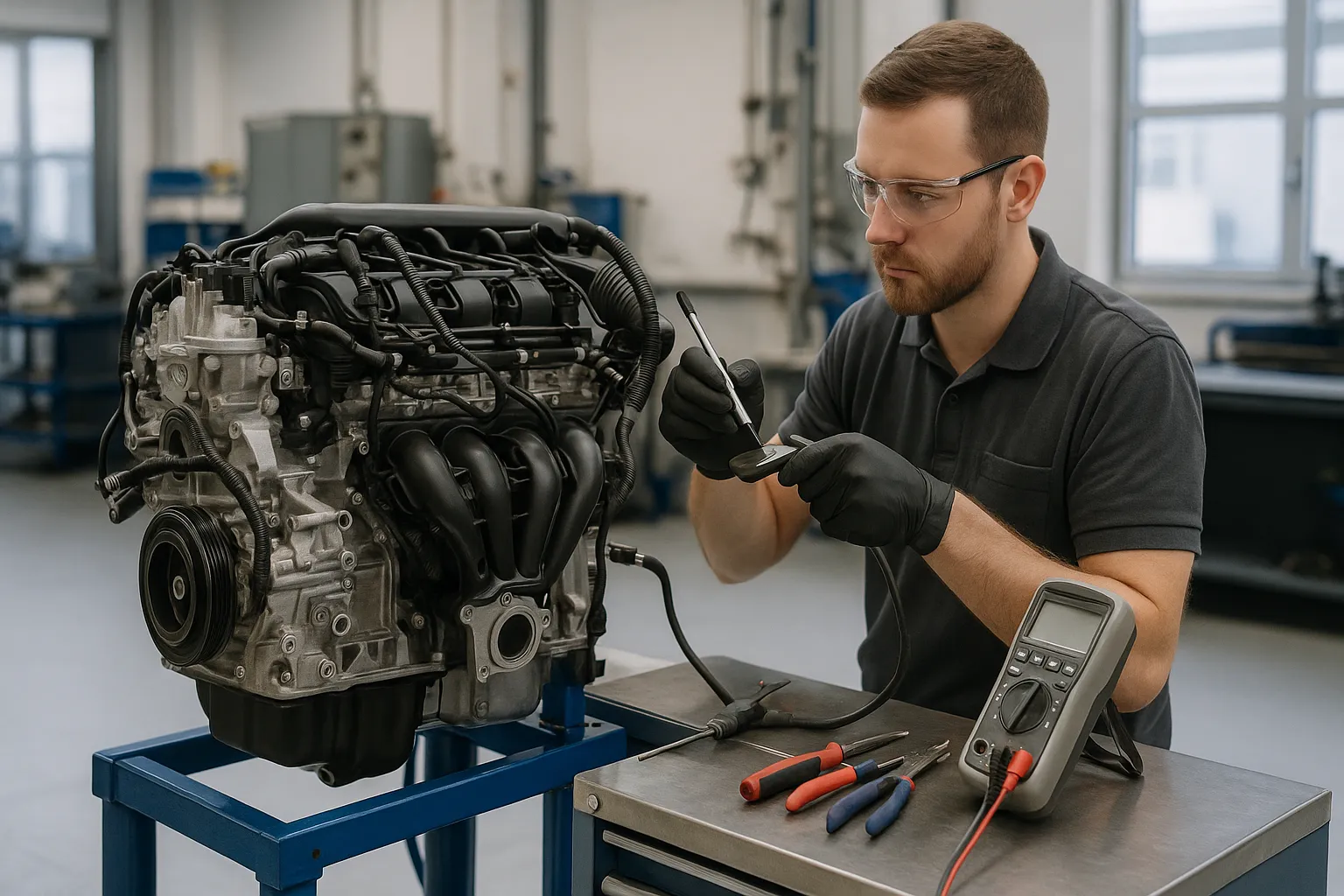
When an engine is disassembled, a power unit is not only opened, but systematically documented. Specialists examine wear patterns, sealing surfaces, bearings, valve train, pistons, cylinder liners, timing components, oil and coolant traces, as well as assembly indicators. The decisive factor is not only which part failed, but why it failed.
One example: A defective bearing can be the result of a material defect, but also of oil supply, contamination, incorrect tolerance, heat exposure, assembly deviation, or a software strategy that adversely affects certain operating conditions. Only when the physical findings are combined with vehicle data, production data, and workshop information does a reliable picture emerge.
This is precisely where the benefit lies for a large manufacturer. Modern vehicles generate a great deal of data, but data alone does not always explain the mechanical cause. The disassembled engine provides the material proof. Conversely, data analysis prevents individual cases of damage from being overvalued. Not every engine failure is a series problem; not every recurring symptom has the same cause.
What could change for owners
In the short term, the program does not automatically mean that owners will have to visit the workshop less often. Vehicles that have already been sold may continue to be affected by service actions, technical bulletins, or recalls if a safety- or emissions-relevant problem is identified. Even a better early-warning system cannot completely prevent defects.
In the medium term, however, the benefit could become noticeable. If Ford identifies a problem earlier, repair instructions can be clearer, spare parts can be adapted more quickly, and dealers can diagnose more precisely. For customers, this can mean shorter downtimes, fewer repeat visits, and a lower likelihood of consequential damage. Especially for high-mileage drivers, fleet operators, and commercial customers, predictable reliability is an important cost factor.
Used-car buyers also benefit indirectly. A brand that addresses technical weaknesses transparently and consistently stabilizes residual values and trust in the long term. However, this only applies if the insights gained actually flow into series changes and service processes. A teardown program alone does not repair a car.
Significance for buyers of new Ford models
For prospective new-car buyers, the news is above all an indication that quality assurance is set to become more data-driven and practice-oriented. Many problems do not occur on the development test bench, but only in real customer use: different driving profiles, temperature ranges, fuel qualities, maintenance habits, and loads can reveal weaknesses that are difficult to reproduce in the laboratory.
If Ford examines engines from the field more consistently, the next production batch can already benefit from the findings. This is particularly relevant for complex drivetrains in which the combustion engine, turbocharging, exhaust aftertreatment, hybrid components, and software work closely together. Small deviations can have major effects.
It remains unclear which engine families and vehicle lines are the focus. Ford has not named a complete public list of which power units are part of the program and to what extent. Therefore, the expansion does not imply that a specific model is acutely problematic. Nor is it guaranteed that recall numbers will decrease significantly in the short term.
Why the industry is watching closely
For the auto industry, Ford's approach is an example of a broader change. Quality assurance no longer ends at the factory gate. Manufacturers combine field data, dealer reports, parts analyses, and production histories in order to understand more quickly what is happening in customer use. This is labor-intensive, but can be cheaper than a later mass recall.
The approach also fits a time in which vehicles are becoming more technically diverse. While pure electric cars have fewer classic engine components, combustion models and hybrids will remain relevant in many markets for a long time to come. Especially for manufacturers with large volumes and many model variants, the ability to recognize early warning signals is a competitive advantage.
For enthusiasts, the topic has another dimension: engines are not just cost centers, but brand identity. Whether EcoBoost, V8, or commercial-vehicle diesel – the perception of a manufacturer depends heavily on whether its drivetrains are considered robust. A consistent analysis program can help regain or secure this credibility.
Not a miracle cure, but an important step
The expansion of the engine teardown program is no guarantee of recall-free years. Recalls will continue to be necessary when safety, emissions, or durability are affected. In some cases, a quick recall is even the right signal because it shows that a manufacturer is taking responsibility.
What matters, however, is whether Ford is less often surprised by problems. If warranty data and physical findings are brought together earlier, individual damage cases can more quickly become a technical pattern – and that pattern can become a correction before a great many vehicles are affected.
For buyers and owners, this is not spectacular news, but it is important. Good quality does not arise only through major announcements, but through hard detail work: removing parts, documenting findings, searching for causes, and changing processes. That is exactly where Ford is now placing greater emphasis.