Volkswagen Shows California Beach and Electric ID. California Cruise
Volkswagen is bringing two camper concepts to the Caravan Salon 2026: a reimagined California Beach and the ID. California Cruise as a preview of electric motorhomes.
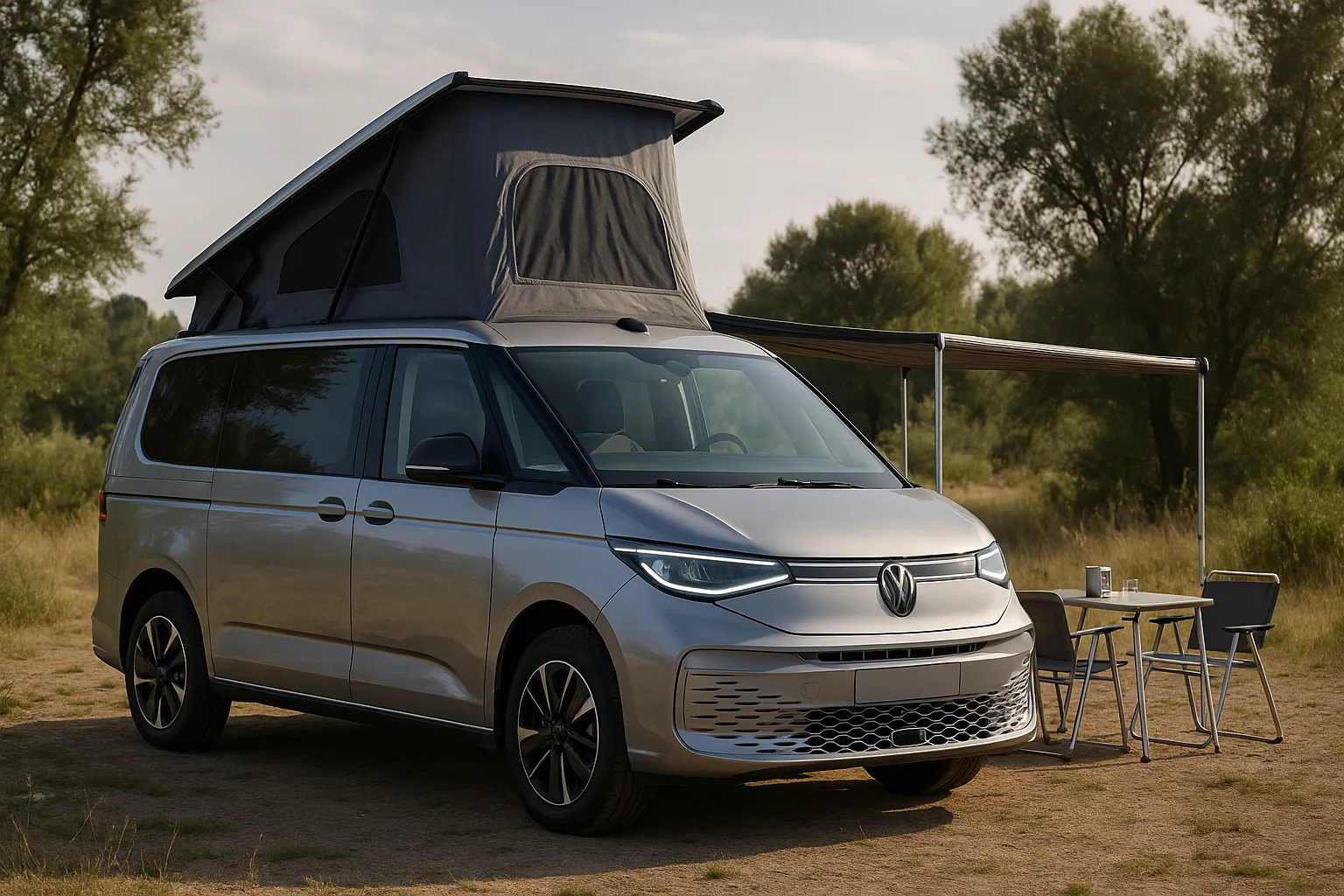
Volkswagen is using the Caravan Salon 2026 for an important preview of the future of its camper model line. At the center are two vehicles that are not yet being presented as production models, but that provide clear indications of the next stage of development for the California family: the Volkswagen California Beach and the ID. California Cruise.
The ID. California Cruise in particular is likely to be interesting for many camper fans. It is announced as the first fully electric California and is based on the ID. Buzz. In doing so, Volkswagen combines two well-known names: the electrically powered van with retro design and the California camper line that has been established for decades.
Two concepts instead of finished production models

The classification is important: Both vehicles are concepts. That means Volkswagen does not yet have to present final production versions, complete price lists, or final technical data at the Caravan Salon. For buyers, this is crucial, because range, charging capacity, battery size, sleeping and storage concept, payload, and the exact camping equipment are not minor details in an electric camper. They determine whether such a vehicle really works in everyday life and on longer journeys.
Nevertheless, the announcement is more than just a design exercise. Volkswagen describes the ID. California Cruise as the basis for a new family of electric campers that is to be introduced gradually by 2028. This gives the long-awaited electric California a more concrete timeframe for the first time.
The California Beach plays a different role. It is intended to reinterpret the campervan concept within the classic California world. Volkswagen wants to collect feedback from visitors at the Caravan Salon in order to influence further development. This suggests that equipment, interior logic, and possible variants have not yet been finalized.
Why an electric California is important
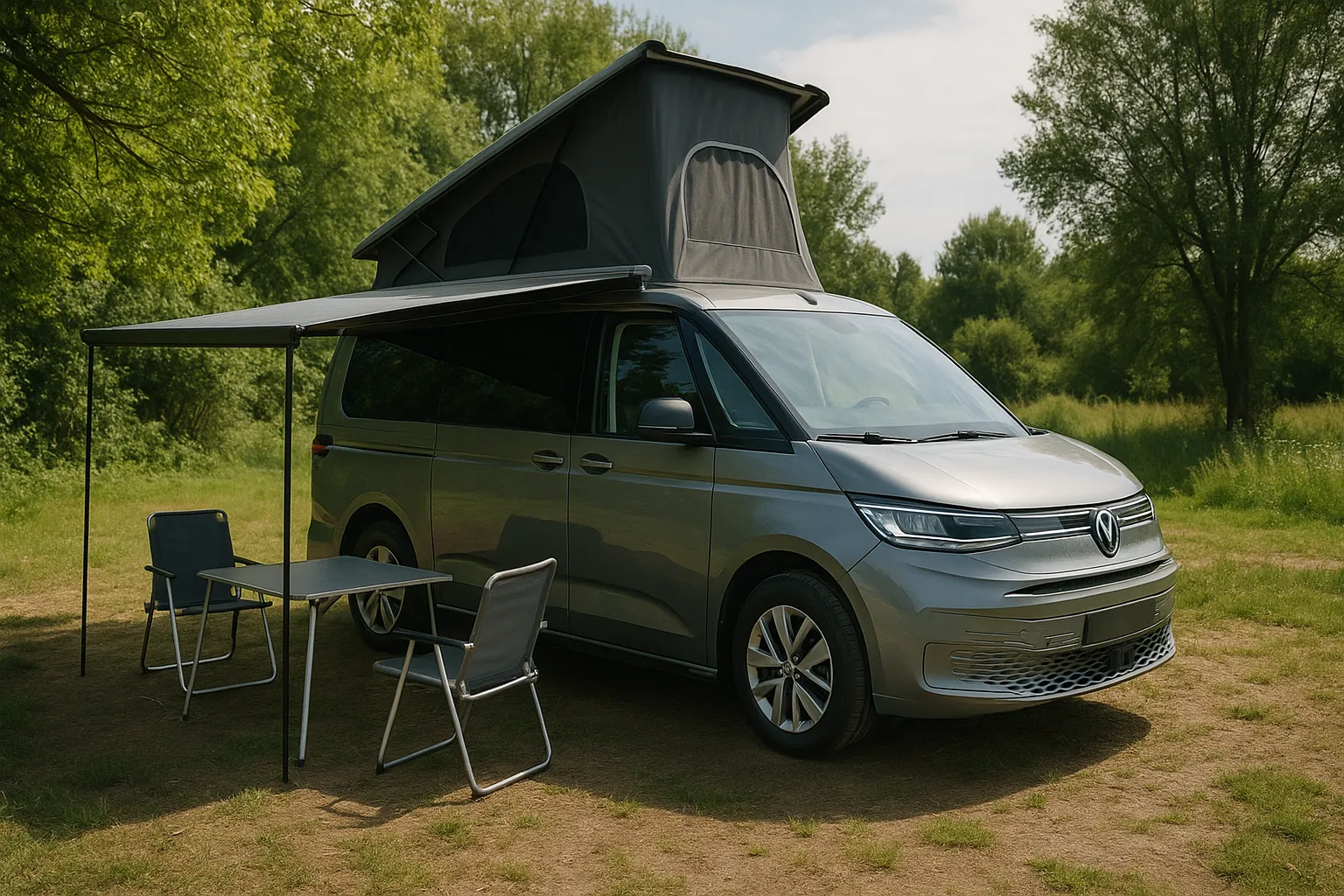
The Volkswagen California is one of the best-known compact camping vehicles in Europe. It is large enough for sleeping and traveling, but remains significantly more suitable for everyday use than a large motorhome. It is precisely this mix that makes the model interesting for families, couples, outdoor fans, and professional users who do not want to use a vehicle only for vacations.
The step toward electric drive is therefore especially relevant. Electric cars have long been established in the passenger car segment, but the situation is more complicated for campervans. A motorhome requires more energy than a normal passenger car: It is heavier, less aerodynamic, and is often driven with additional load, bicycles, roof boxes, or camping equipment. In addition, auxiliary heating, cooling, lighting, cooking, and external devices also consume energy, even if these systems are not always powered directly from the traction battery.
An ID. California Cruise would therefore have to do more than simply drive with zero local emissions. It would have to show that electric mobility also fits spontaneous weekend trips, longer stages, campsites without perfect charging infrastructure, and cooler nights. For potential buyers, it will be decisive whether Volkswagen finds a convincing solution for range, fast charging, and onboard energy.
ID. Buzz as the technical basis
The choice of the ID. Buzz as the basis is obvious. The electric VW van uses the Group's MEB platform and is already known as both a passenger and commercial vehicle variant. For a camper, it offers a high seating position, a variable interior, and a shape that emotionally fits well with the historic VW bus tradition.
At the same time, this basis brings clear challenges. A camper conversion increases weight and complexity. Furniture, bed, pop-up roof, kitchen or cool box, additional batteries, water tanks, and storage solutions have to be integrated into a vehicle that must still remain safe, efficient, and road-legal. The balance between camping comfort and permitted payload is likely to be a central development task for an electric California in particular.
It remains open how close the ID. California Cruise is to a later production version. The name Cruise suggests a more travel-oriented character, but concrete statements on floor plan, sleeping berths, or equipment are not yet finally known. Interested parties should therefore understand the trade fair premiere more as a directional preview, not as a finished purchase announcement.
California Beach as a more flexible alternative
The California Beach is traditionally the simpler, more versatile side of the California family. While fully equipped campers are geared more toward kitchen, storage space, and travel autonomy, the Beach usually focuses on flexible use: everyday passenger transport, sleeping capability when needed, and less permanently installed camping technology.
This makes this variant attractive for many buyers. Not everyone needs a complete kitchenette or maximum autonomy. Anyone who uses the vehicle in everyday life as a family van and only wants to camp occasionally may be better served by a lighter and more variable concept. This is exactly the area where Volkswagen could start with the new California Beach.
The fact that Volkswagen explicitly wants to gather feedback at the trade fair is noteworthy for the industry. Camper customers often have very concrete ideas: Some want more storage space, others more seats, a wider bed, a better awning system, more sockets, fewer fixed installations, or easier cleaning of the interior. A concept vehicle is well suited to gauging such priorities before expensive production decisions are made.
What buyers should know now
In the short term, nothing fundamental changes for prospective buyers. Anyone who needs a camper in the coming months should continue to compare the existing California variants and alternatives in the van and motorhome market. The ID. California Cruise is not yet an orderable production model, and the new California Beach will also initially be shown as a concept.
In the medium and long term, however, the message is clear: Volkswagen wants to expand and electrify the California family. For buyers who are deliberately waiting for an electric camper, the announced timeframe up to 2028 is an important point of orientation. Those who, by contrast, are looking for maximum range, quick refueling stops, and established camping technology are likely to stick with combustion-engine or hybrid solutions for the time being.
The development is also interesting for owners of current California models. If Volkswagen successfully brings the ID. California into series production, that could influence the used market and demand for classic diesel campers. At the same time, well-equipped conventional campers will not automatically become unattractive: On long journeys and in regions with weak charging infrastructure in particular, they retain practical advantages.
Signal for the entire camper industry
Volkswagen's appearance at the Caravan Salon shows where the market is heading. Camping vehicles are to become more suitable for everyday use, more flexible, and increasingly electrified. However, the transformation is more complex than with normal passenger cars. An electric camper must not only drive with zero local emissions, but also credibly cover everyday travel needs.
The ID. California Cruise is therefore an important trial balloon for Volkswagen. If implementation succeeds, the compact electric camper segment could gain significant momentum. The California Beach, in turn, shows that the not purely electric side of the model line is also being further developed. For customers, this dual-track approach makes sense: It opens up more choice between a classic campervan, a flexible leisure solution, and a future electric alternative.
The big question remains how much of the concepts will make it into production. The Caravan Salon 2026 should provide answers — at least as to which direction Volkswagen wants to take in design, interior, and customer approach.