Volkswagen chief warns workforce: restructuring remains central for VW
Volkswagen is sharpening its internal tone: The group leadership describes the situation as extremely tense and is pushing for further cost discipline. For customers, dealers and employees, this is about more than rounds of savings – it is about the brand’s competitiveness in a phase of expensive electrification, weak margins and strong competition.
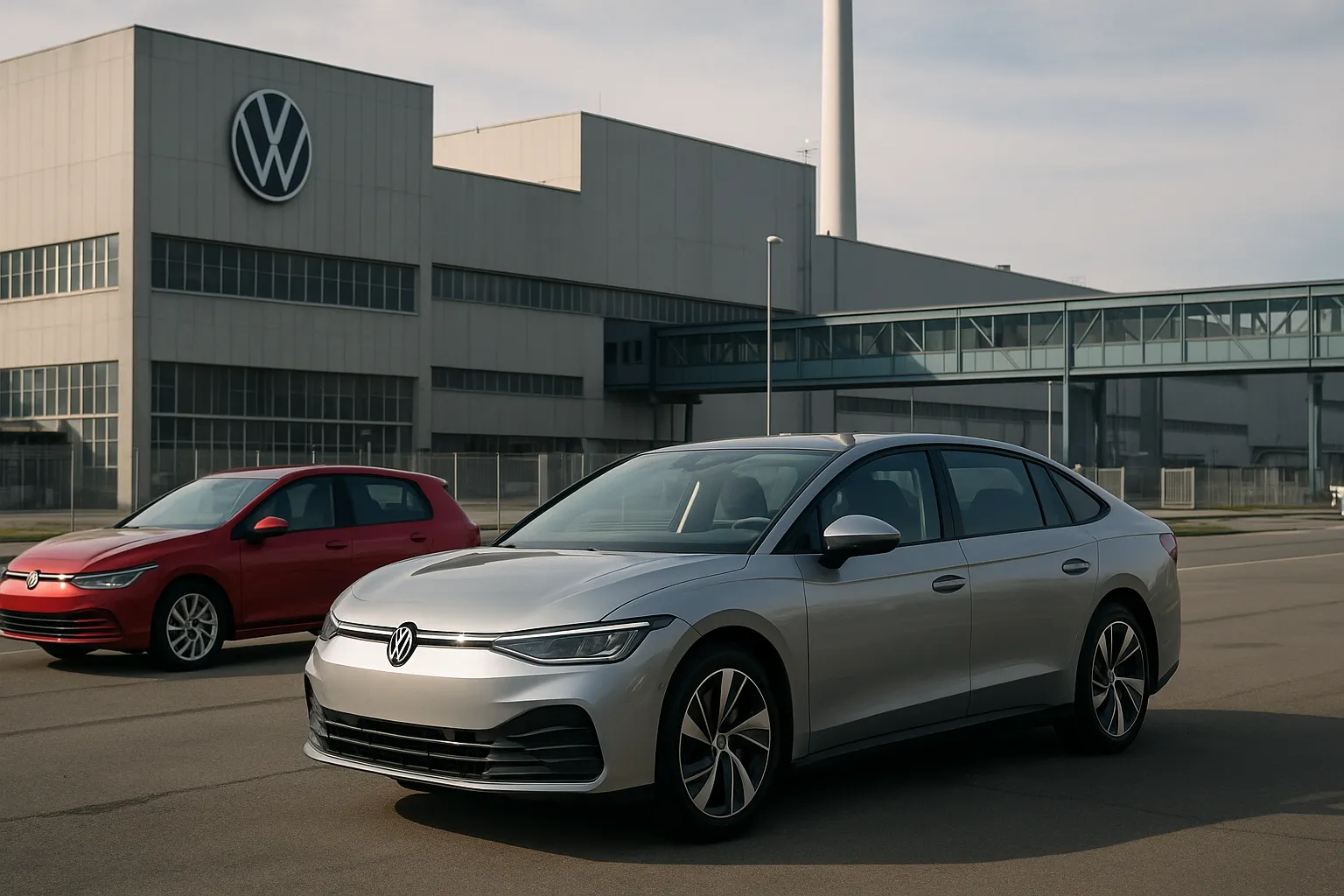
Volkswagen increases internal pressure
Volkswagen is preparing its workforce for a continuing tough restructuring phase. The group’s leadership has internally described the company’s condition as clearly tense and is making it clear that the ongoing restructuring should not be understood as a short-term cost-cutting measure. At its core, the question is whether VW can adapt its costs, development processes and model strategy quickly enough to an automotive world that is simultaneously electrifying, digitalizing and becoming tougher on price in many markets.
The message is unusually direct for Volkswagen, but not surprising. The group has been under pressure for years: In Europe, demand for electric cars remains volatile, in China domestic manufacturers are attacking the traditional brands at high speed, and in North America VW remains significantly smaller than its strongest competitors. At the same time, investments in battery technology, software, new platforms and stricter regulation are enormous.
For the Volkswagen brand, the situation is particularly sensitive. It is the volume center of the group and therefore decisive for how much financial leeway remains for future projects. If the core brand with Golf, Tiguan, Passat, T-Roc and the ID models does not operate profitably enough, the entire group restructuring becomes more difficult.
Why the warning matters now

Volkswagen has already embarked on a deep cost-cutting course. In Germany, comprehensive cuts had previously been agreed, including a socially responsible reduction of more than 35,000 jobs by 2030 and a reduction in production capacity. Development times, administrative costs and complexity in the model range have also been under review for some time.
However, the new internal warning shows: The group apparently does not see the path taken so far as sufficiently secured. Cost reductions alone do not solve the underlying problem if vehicles are produced too expensively, software functions arrive late or new models do not respond quickly enough to market changes. VW must become cheaper, faster and more technologically convincing at the same time – a combination that is difficult to implement in a large industrial group.
Price pressure in the electric segment is particularly critical. New providers, especially from China, are bringing vehicles to market with high equipment levels, short development cycles and aggressive pricing. Volkswagen must respond to this without further eroding its own margin. Discounts can boost sales in the short term, but weaken residual values and profits. Higher prices, in turn, make switching to a VW electric car less attractive for many buyers.
Consequences for car buyers

For customers, the cost-cutting course does not automatically mean worse cars. In the best case, it leads to leaner model lines, faster software development and more competitive prices. A more efficient Volkswagen Group could offer vehicles that have less complexity in the background but work better in everyday life: shorter delivery times, more stable infotainment systems, clearer equipment lines and fewer confusing option packages.
But there are also risks. If cost programs are too strongly geared toward short-term savings, model variety, perceived material quality or service offerings can suffer. Buyers could notice that certain variants are being discontinued, individualization is decreasing or technical innovations are arriving later. With electric cars, it is also crucial whether VW can reduce battery costs quickly enough to offer models below the ID.3 and ID.4 profitably and affordably.
For existing customers, the software side is especially important. In recent years, Volkswagen has learned that modern vehicles must continue to be supported after purchase – with updates, app functions, charging planning and digital services. A more efficient group must not only save money here, but must increase the reliability and speed of digital development. Especially with ID models, trust in software and the charging ecosystem is a key factor for repeat purchases and brand loyalty.
Consequences for plants, dealers and suppliers
The internal pressure does not only affect employees in the plants. Dealers must prepare for an environment in which margins, inventories and model changes are managed more precisely. If VW reduces complexity, this can make things easier for the retail trade. At the same time, fewer discount battles and changed sales models could alter calculations.
For suppliers, the situation is also significant. Volkswagen is one of the most important customers of the European auto industry. If the group bundles platforms, standardizes components or reallocates development budgets, this affects numerous companies – from traditional component manufacturers to software and battery partners. A tougher cost-cutting course can change orders, push down prices and influence investment decisions along the entire supply chain.
The warning is also relevant in terms of industrial policy. Like hardly any other manufacturer, Volkswagen stands for the German automotive model: large plants, strong co-determination, high dependence on exports and a broad supplier base. If VW adjusts its structures, that is a signal for the entire industry. The restructuring shows that even established manufacturers with high unit volumes do not automatically generate enough earnings when markets tip and new technologies change the cost base.
Electric cars remain the key – but not the only one
Electrification remains a central part of VW’s strategy. Models such as the ID.3, ID.4, ID.5, ID.7 and the electric Bulli ID. Buzz have led the brand into the battery age. But the next phase will be more demanding: VW needs cheaper electric cars, better software, high charging efficiency and a clear answer to competitors that launch new models faster.
At the same time, Volkswagen cannot abruptly neglect the combustion engine. In many markets, Golf, Tiguan, T-Roc and Passat remain important earners. This is precisely where the conflict of objectives lies: The group must earn money with traditional models while investing massively in electric platforms and digital services. The weaker the margins in the existing business, the tighter the financial leeway for future projects becomes.
For enthusiasts, this is also interesting. Volkswagen’s identity was shaped for decades by models such as the Golf GTI, R models and practical everyday cars. The restructuring will also help determine whether such emotional variants still have a place in an electrified future – or whether the group will focus its resources more strongly on volume models, efficiency and global platforms.
A warning signal without a simple solution
The sharp internal tone should not be understood as an indication of a single trigger. Rather, it bundles several challenges: high costs in Europe, intense competition in China, expensive transformation to electromobility, software effort and the need to bring new models onto the road faster and more profitably.
For car buyers, the most important question is whether Volkswagen can translate this pressure into better products. If the restructuring succeeds, the next VW generations could become more price-competitive, digitally more mature and more efficient in production terms. If it stalls, longer uncertainty, less model variety and a tougher balancing act between the pressure to save and the need for innovation threaten.
Volkswagen remains one of the decisive manufacturers in the global auto industry. Precisely for that reason, the internal warning is more than a personnel or cost note. It shows how serious the situation has become for traditional volume manufacturers – and how strongly the coming years will decide which brands retain their old strength in the electric and software age.