US authorities review certification of the Tesla Cybercab
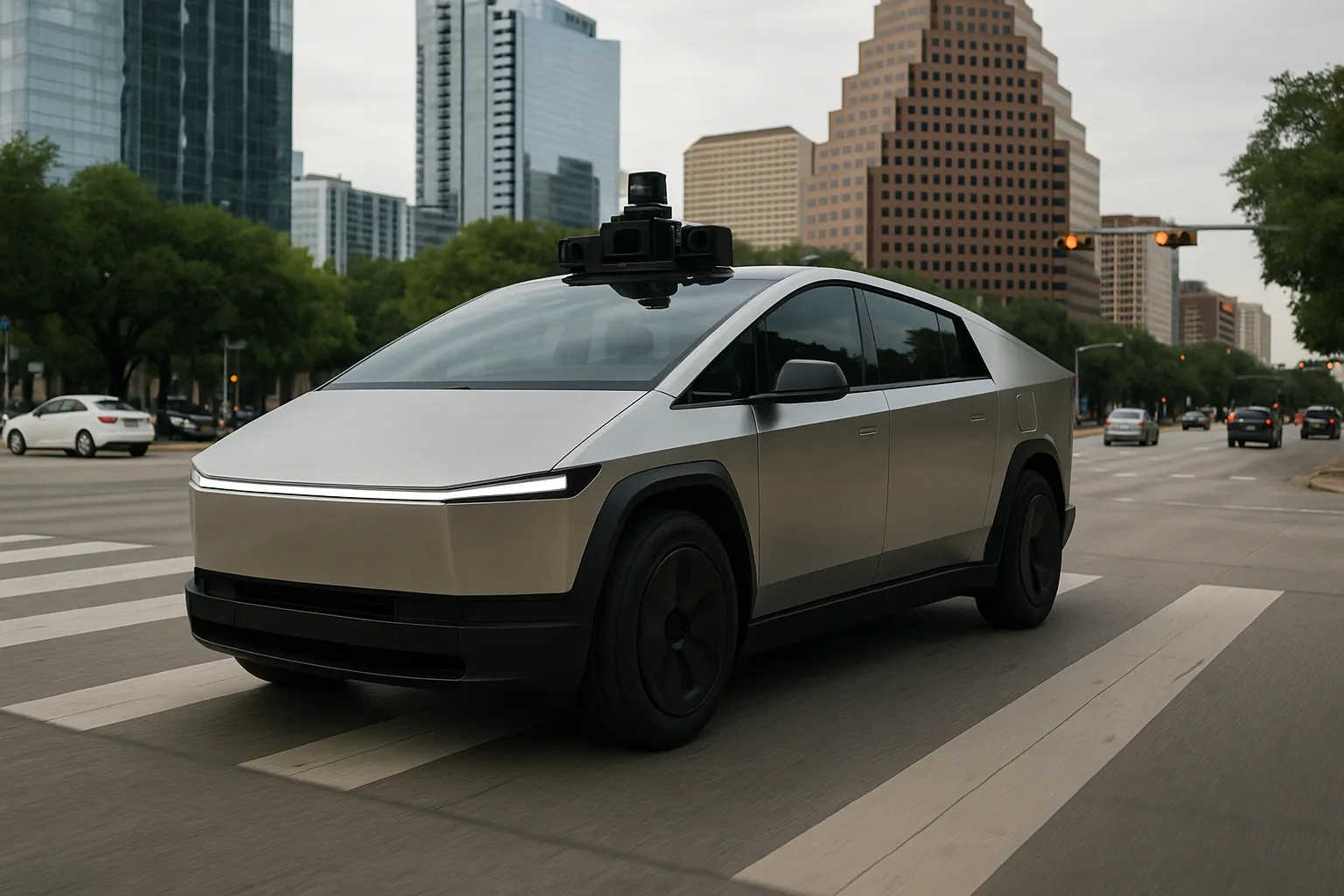
Tesla’s driverless Cybercab has launched in Austin. US regulators are now investigating whether the approval and safety certification of the autonomous electric vehicle is sufficiently documented.
Federal review shortly after the launch
Tesla’s Cybercab has only been on public roads in Austin for a few days, yet the responsible US regulators have already opened an investigation into the certification of the driverless electric vehicle. The focus is on how the Cybercab was secured and formally confirmed for operation in road traffic.
This is more than a formality. In the US, vehicle approval in many areas is based on the principle of self-certification: manufacturers declare that their vehicles comply with the applicable safety standards. Authorities can review these statements, request documents, require tests and take further steps if problems arise. For a conventional car, this process has been established for decades. For a vehicle intended to travel without a human driver, the questions are significantly more complex.
The investigation does not automatically mean that Tesla has violated rules or that the Cybercab is unsafe. But it shows how closely authorities are now looking when a manufacturer brings an autonomous vehicle from demonstration operation into real traffic.
Why the Cybercab is particularly sensitive
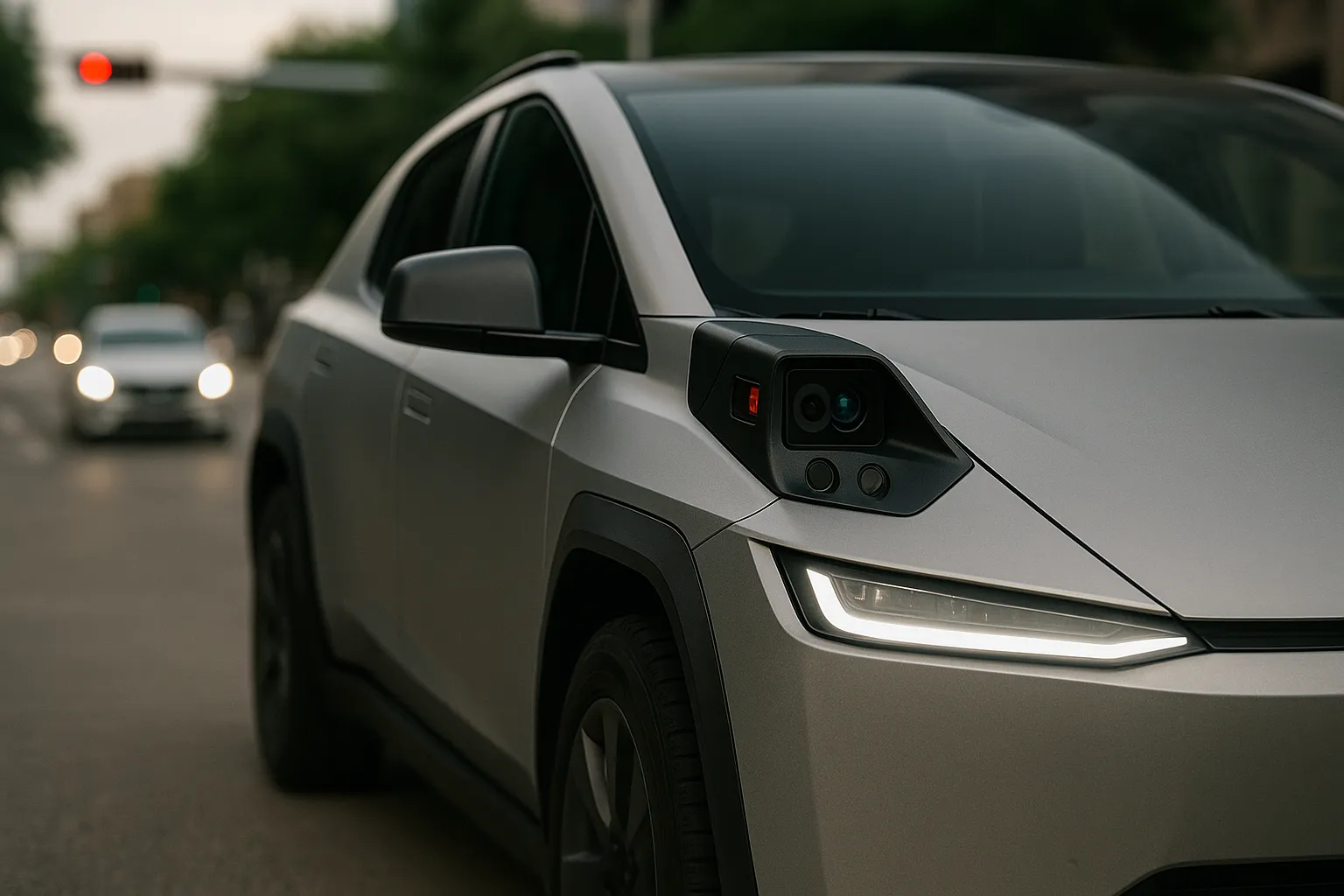
The Cybercab is not an ordinary electric car with additional assistance technology. It represents Tesla’s goal of further automating passenger transport and, in perspective, building a robotaxi service. Such vehicles must not only comply with requirements for brakes, lighting, occupant protection and electrical safety, but also demonstrate how they handle complex traffic situations without human intervention.
Especially in the urban environment of Austin, scenarios arise every day that are demanding for automated systems: turning vehicles, pedestrians at unclear intersections, cyclists, construction sites, emergency vehicles, poorly marked lanes or unexpected maneuvers by other road users. With a robotaxi, responsibility cannot simply shift to a driver who steers or brakes in an emergency. That is why regulators are interested not only in the vehicle as hardware, but also in the software, the operational design domain and the safety architecture.
Certification of a driverless vehicle typically involves several levels: Does the physical vehicle design comply with legal standards? Has the autonomous driving function been validated for the intended area of use? Are there procedures for remote monitoring, emergency management, software updates and accident analysis? And is it clearly documented when and where the vehicle may be operated?
What initially changes for customers
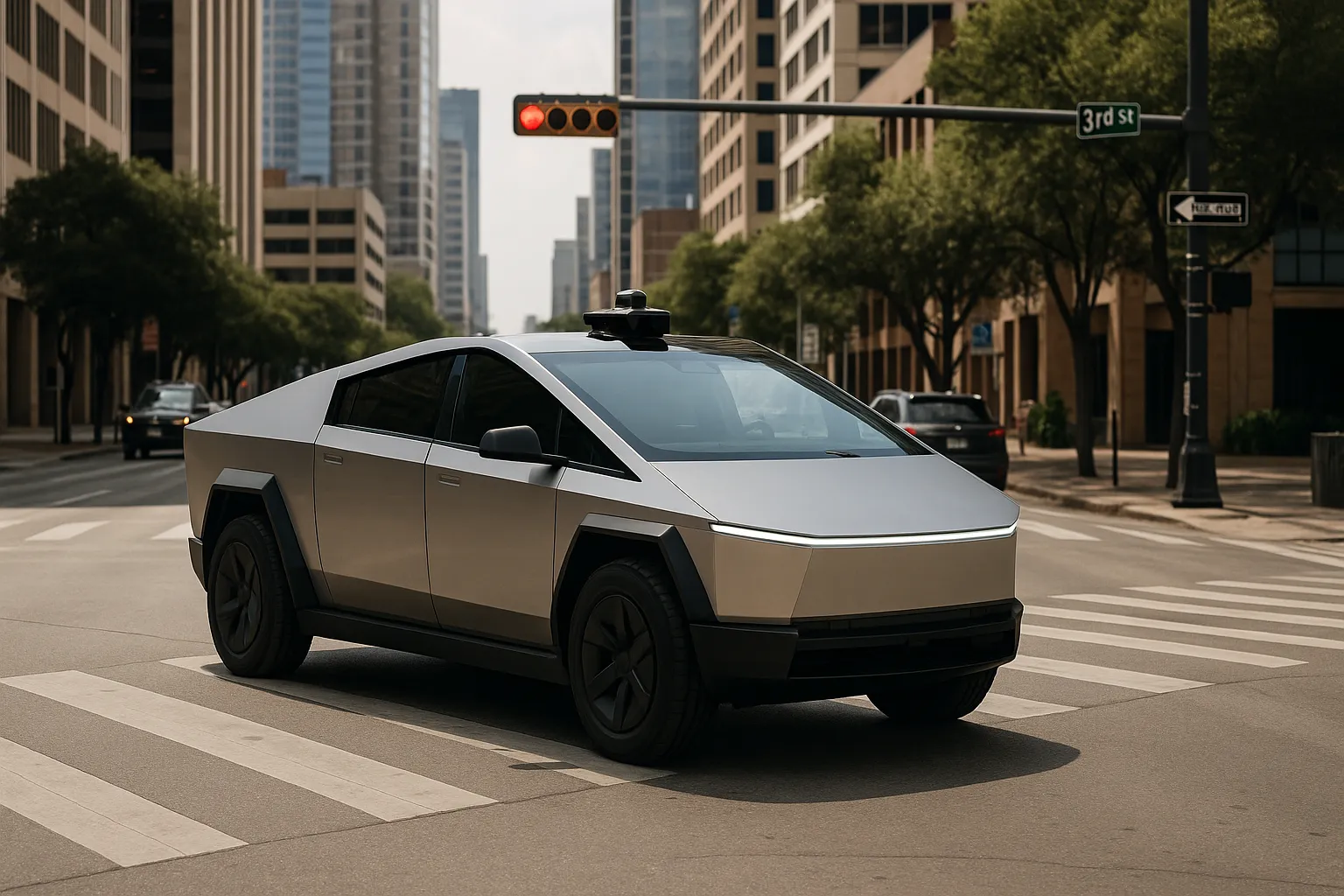
For private car buyers, the investigation has no immediate impact for the time being, as long as the Cybercab is not sold in large numbers as a normal private vehicle. Nevertheless, the development is important. Many buyers watch Tesla not only because of individual models, but because of the promised software and autonomy functions. If authorities demand stricter evidence for driverless programs, this could influence future timelines, feature scopes and market launches.
Owners of current Tesla models should also not confuse the review with a recall or a measure affecting their vehicles. The investigation relates to the certification of the Cybercab. Nevertheless, it may become indirectly relevant if authorities derive fundamental requirements for automated driving functions from the proceedings. Documentation, software releases or operating limits for autonomous systems could then be defined more precisely in the future.
For people who want to use robotaxis, the core question is simple: Is the service not only technically impressive, but also demonstrably safeguarded in everyday use? Trust is not created by demonstration drives alone, but by clear rules, transparent operating limits and a consistent safety culture.
Significance for Tesla
For Tesla, the review comes at a strategically important time. The company has strongly aligned its future narrative with autonomous driving, software revenue and driverless mobility. A Cybercab officially deployed on roads would be a visible step from vision to application. Yet precisely this transition is the most difficult part from a regulatory perspective.
If the authorities request additional information, Tesla may have to explain in detail how the vehicle was certified, which standards were applied and how operation in Austin is controlled. Questions about redundancies, sensors, remote support, data recording and responses to edge cases are also possible. Which specific points the investigation will ultimately cover and whether requirements will result from it is currently open.
For Tesla, a smooth conclusion would be important, because any doubt about the basis for approval can make scaling a robotaxi service more difficult. Cities, states, insurers and fleet partners pay close attention to whether an autonomous vehicle program is on a stable regulatory footing.
A signal to the entire industry
The investigation is not just a Tesla story. It shows that the market entry of driverless vehicles in the US remains under close scrutiny. Manufacturers, suppliers and mobility services can infer from this that technical capability alone is not enough. The decisive factor will be whether companies can document the safety of their systems in a robust way and make it understandable to the authorities.
For the automotive industry, this shifts part of development expertise. In the past, crash structures, engines, chassis and production quality were the main focus. With robotaxis, software validation, scenario testing, data management and operational control are added. A vehicle is no longer just a product, but part of a monitored mobility system.
This can slow the introduction of autonomous services, but it also creates clarity. Binding reviews help sort out weak concepts and give serious providers a robust framework. For consumers, this is positive, even if it can lead to delays in the short term.
The next benchmark for autonomous mobility
The central question now is not whether the Cybercab can drive technically. It is already driving in Austin. What matters is whether Tesla can provide the regulatory evidence for this operation in a way that gives authorities, cities and users confidence in the system.
Until the investigation is completed, several points remain open: Which documents were requested? Which aspects of certification are the focus? Will changes to operations in Austin be necessary? And could the review have an impact on a broader rollout?
But one thing is already clear: The Cybercab is becoming an early test case for how the US deals with a new generation of driverless electric vehicles. For buyers, owners and enthusiasts, this is relevant because today’s rules determine which autonomous functions will actually reach the road tomorrow.