Toyota gains significantly in US electric car registrations
While the US market for electric cars was weaker in April, Toyota's EV registrations rose sharply. The increase shows that even a late and cautious electric strategy can have an impact.
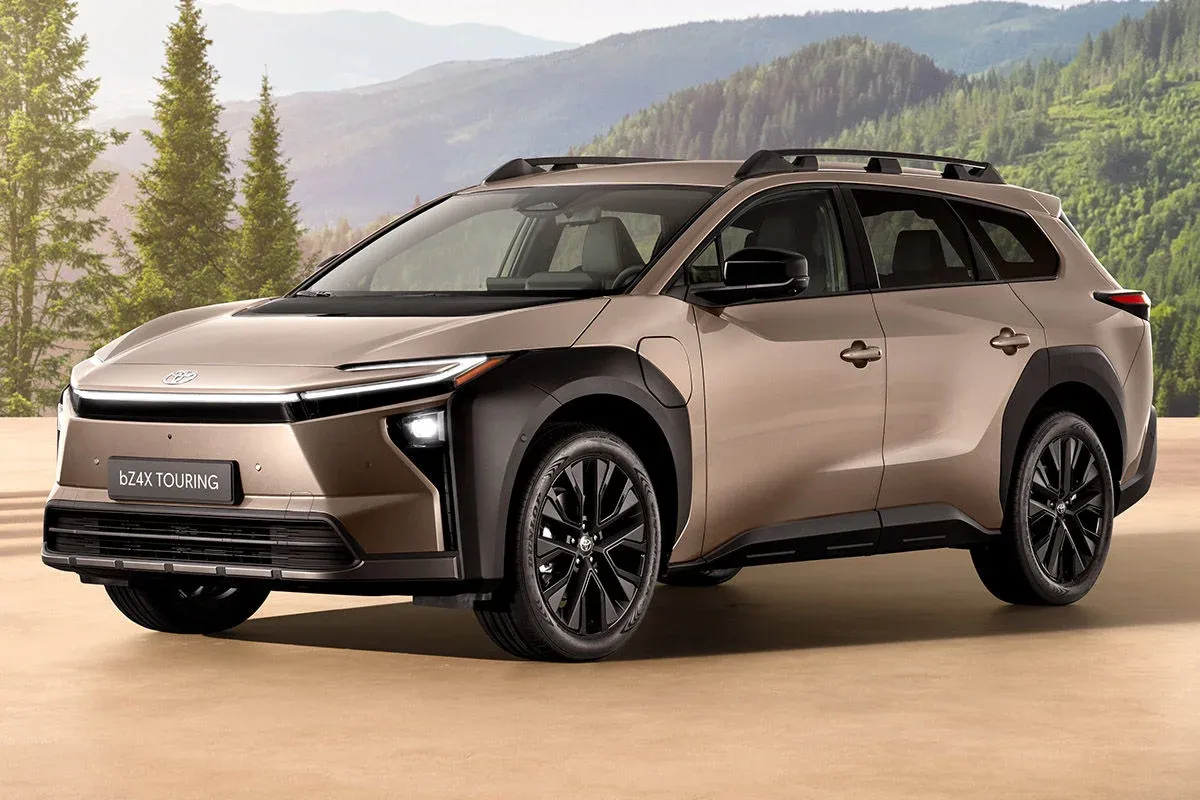
Toyota's electric car business in the USA is showing a remarkable sign of life. In April, registrations of battery-electric Toyota models rose by 225 percent, while the overall US market for electric cars declined during the same period. This is not a sign that Toyota has suddenly become the dominant EV manufacturer. But it does show that the group's long-restrained course could work better in a more difficult market phase than many observers had expected.
The difference is important: registrations are closer to vehicles that have actually reached the road than mere production or delivery announcements. They do not perfectly reflect every market movement, but they give a good indication of which vehicles are actually reaching customers. An increase of 225 percent sounds enormous, but it must be seen in context. Toyota started from a comparatively small base for battery-electric vehicles in the USA. Percentage jumps are therefore larger than for brands that already sell high volumes.
Nevertheless, the timing is striking. After years of rapid growth, the US electric market has lost momentum. Higher financing costs, inconsistent charging infrastructure, political uncertainty around incentives, and greater price sensitivity among many households are slowing demand. Achieving growth in this environment is valuable for any manufacturer — especially for a group that has often been accused of being too hesitant on purely electric cars.
Toyota benefits from a different customer profile

Toyota has long pursued a broader electrification strategy than many competitors. Instead of moving almost entirely to battery cars early on, the manufacturer continued to expand its business with hybrids and plug-in hybrids. This decision was frequently criticized by EV advocates, but it preserved a large customer group for Toyota: buyers who want lower consumption costs but are still hesitant about charging, range, or price.
Precisely this customer group may now be more likely to consider moving into a fully electric model. Anyone already familiar with a Prius, RAV4 Hybrid, Camry Hybrid, or Highlander Hybrid associates Toyota with efficiency and everyday usability. A battery-electric model such as the bZ4X therefore does not have to fight against abstract distrust of the brand. For many buyers, the question is rather whether the price, range, and charging options fit their own daily life.
Toyota's current EV offering in the USA remains manageable. The bZ4X is Toyota's central fully electric model, while the technically related Lexus RZ serves the group's premium side. Compared with Tesla, Hyundai, Kia, Ford, General Motors, or Volkswagen, this is not a broad model range. That is precisely why the rise in registrations is remarkable: it suggests that better availability, adjusted leasing offers, or stronger interest in familiar brands can have a noticeable effect.
The market is becoming less ideological, more practical

For car buyers, this development is more relevant than a simple brand ranking. The EV market is entering a phase in which it is no longer just early technology fans who are buying. More and more customers are comparing electric cars like any other vehicle: price, monthly payment, reliability, dealer network, warranty, resale value, operation, and service experience count more than pure acceleration figures or maximum charging power.
This plays into the hands of established manufacturers with large dealer networks — provided they offer competitive products. Toyota has a very broad dealer presence in the USA and a strong cushion of trust among private buyers. If a customer does not want to order an electric car online, but instead wants to view it, test-drive it, and have it serviced locally, that can be an advantage. At the same time, the challenge remains to prepare dealers and workshops for EV customers. Advice on charging options, battery warranties, and real winter range is crucial.
For owners of conventional Toyota models, the increase could mean that the manufacturer is taking battery cars more seriously without abandoning its hybrid strategy. This is not an abrupt change of direction, but rather a gradual expansion. Toyota can continue to sell hybrids in large numbers while also learning which EV offers work for mainstream customers.
Price and incentives remain decisive
Price remains a central point. Many electric cars appear more expensive in list price than comparable gasoline cars or hybrids. Incentive rules in the USA are complex, and not every imported model benefits at purchase from the same tax incentives as vehicles from North American production with locally suitable battery components. Leasing can partly ease this situation because different rules may apply and manufacturers can more easily build discounts into monthly payments.
For buyers, this means: do not compare only the list price. What matters are the effective lease payment, purchase price after discounts, home electricity costs, public charging prices, insurance, tire wear, and expected residual value. A Toyota EV can be attractive for a household if the total costs are right and the driving profile is mostly predictable. Anyone who regularly drives long distances without good fast-charging coverage should continue to examine very carefully whether a hybrid or plug-in hybrid is more practical.
What the increase means for competitors
For the industry, Toyota's growth is a signal that EV competition will not be decided solely by maximum model variety or spectacular performance data. Brand trust, dealer access, and affordable offers can be just as important in a more mature market. Manufacturers that invested heavily in electric cars early on must now fight harder for customers who are less willing to compromise than the first generations of buyers.
That does not mean Toyota already has all the answers. The group needs more fully electric models in important segments, competitive charging performance, clear price positioning, and a credible production strategy for the North American market. Software, route planning, and charging integration are also areas in which buyers today have high expectations. A single strong month is no substitute for a long-term model offensive.
At the same time, the April figure shows that Toyota should not be written off in the EV market. The brand does not necessarily have to carry out the loudest transformation in order to win buyers. In a market that is moving from euphoria into a more sober phase, a cautious, cost-conscious strategy can have advantages — especially when it is supported by a well-known name and a large service network.
Why this matters for buyers
For consumers, the most important message is: more competition improves choice. If Toyota plays a stronger role in electric cars, pressure increases on other manufacturers to make prices, equipment, warranties, and leasing terms more attractive. At the same time, Toyota customers who have so far stayed with hybrids get a more obvious EV option within the familiar brand world.
The US electric market will not automatically return to a steep growth phase as a result. But Toyota's increase shows that demand has not disappeared. It is shifting toward offers that seem understandable for ordinary households. That is exactly where the next phase of electric car competition will be decided: not only at the charging station, but in the monthly budget, in the dealer conversation, and in owners' everyday lives.