Tesla Semi: European specification to be unveiled in September
Tesla is bringing the electric Semi to Europe. The technical data for the local market is expected to follow at IAA Transportation in Hanover.
Tesla prepares the Semi for Europe
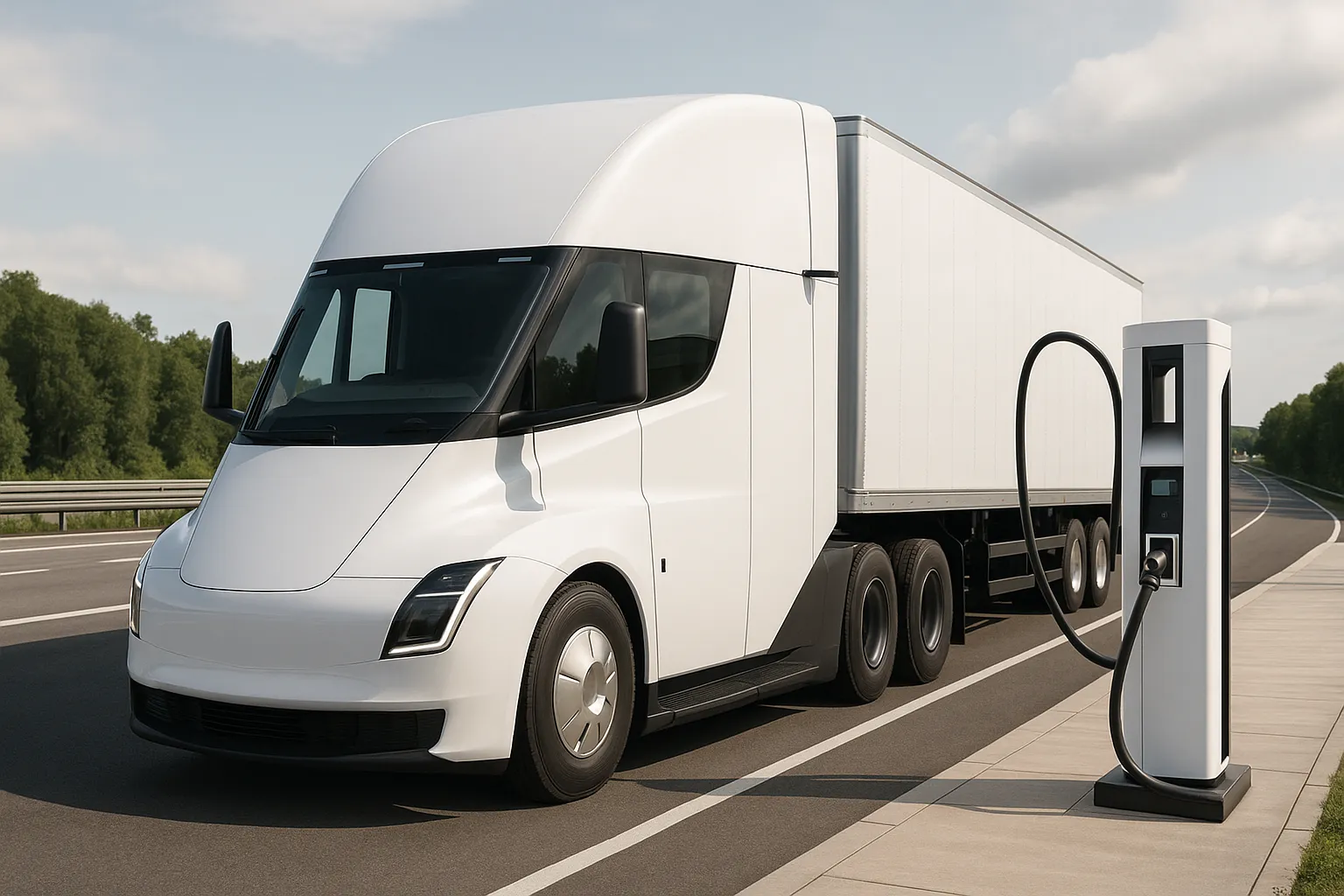
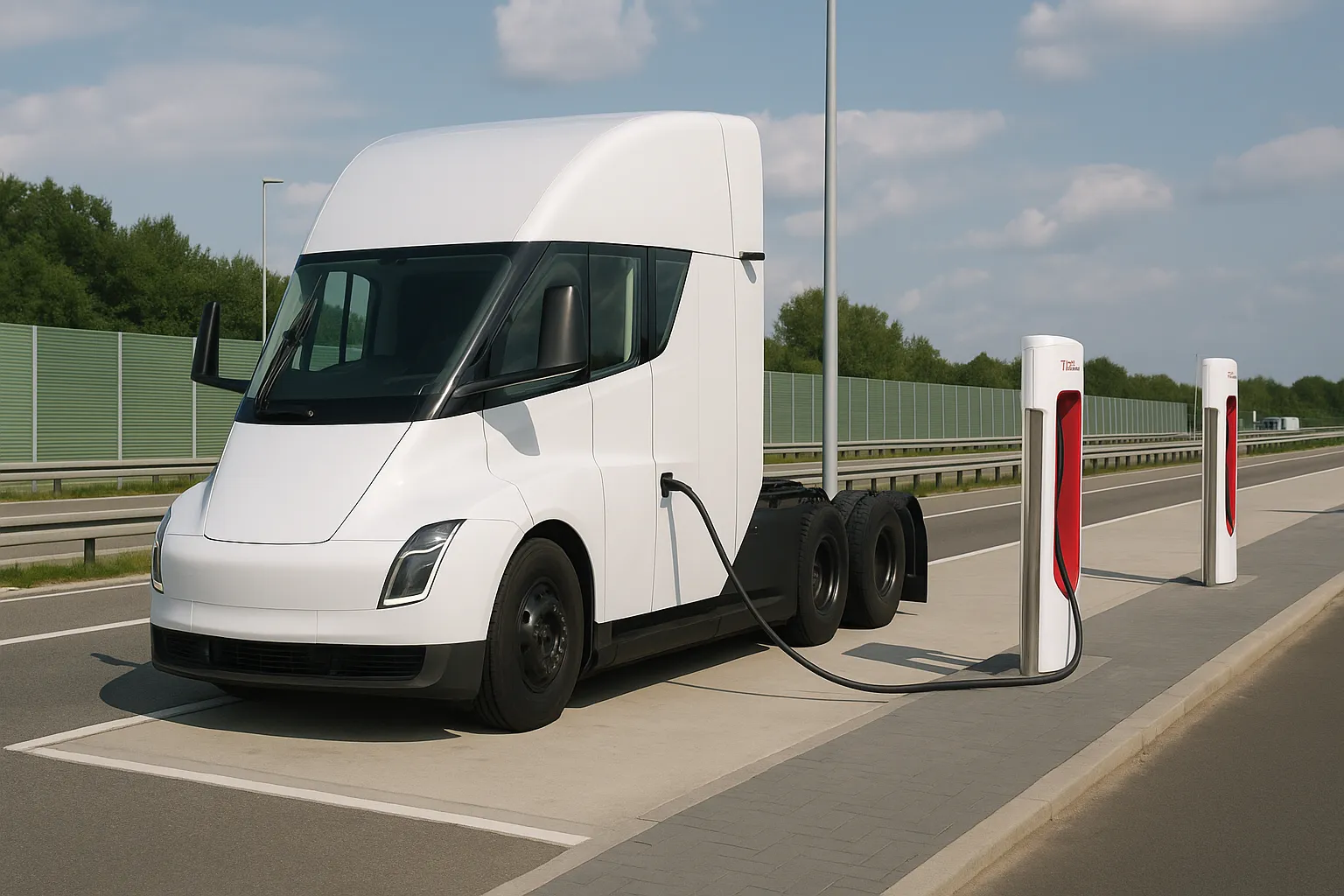
Tesla is moving closer to the European market with its electric heavy-duty truck. The technical data of the Tesla Semi intended for Europe is set to be presented in September at IAA Transportation in Hanover. This will make it clearer for the first time how the tractor unit developed in the US will be adapted to European regulations, usage profiles and fleet requirements.
The Semi is Tesla's largest production vehicle to date and is not aimed at private customers, but at freight forwarders, large fleet operators and logistics companies. Nevertheless, the European premiere is also relevant for car drivers and EV enthusiasts: heavy commercial vehicles are an important lever for decarbonizing road transport, and the charging infrastructure required for them can also influence the long-term development of particularly powerful fast-charging networks.
What is known so far about the Tesla Semi
In North America, the Tesla Semi is offered in two range variants. The standard version uses a battery with 548 kWh capacity and is expected to achieve up to 300 miles, or around 480 kilometers. The Long Range version has a significantly larger battery with 822 kWh and is specified with a range of up to 500 miles, equivalent to about 805 kilometers.
These figures are particularly important for European fleets because long-distance transport is strongly shaped by plannable daily routes, driving times and charging windows. A truck that can cover a large part of typical long-distance legs on one charge is easier to integrate into existing operations. At the same time, the maximum range alone is not decisive, but also how consistently it can be achieved under real conditions with a high payload, changing weather and motorway speeds.
Three electric motors on the rear axle are used for propulsion. System output is stated at 1,073 bhp, which roughly corresponds to 1,088 PS. The Semi is designed for high gross combination weights and can move up to 37 tonnes. This places it in a range that is relevant for many long-distance applications, even though European axle-load, length and weight regulations will be decisive for how the vehicle can actually be approved and used here.
European data is more than just converted US figures
The presentation in Hanover is therefore significant because the European specifications cannot automatically be derived from the US data. European tractor units often differ from American trucks in terms of dimensions, cab concept, approval requirements and operating environment. The question of which battery variant will be offered in which countries is also still open.
The large 500-mile version in particular is likely to be in focus. It would be attractive for long-distance logistics, but because of the large battery it also raises questions about weight, payload and legal framework conditions. For the British market, it is also possible that not every variant may be available. Reliable details on this are only expected with the European specification.
For fleet customers, this uncertainty is not a minor issue. An electric truck is not bought in isolation, but assessed together with charging planning, depot infrastructure, route analysis, service concept and residual value forecast. Whether a version can achieve 300 or 500 miles can determine whether the truck is used only in regional distribution transport or is also economically viable in cross-border long-distance transport.
Charging at up to 1.2 megawatts
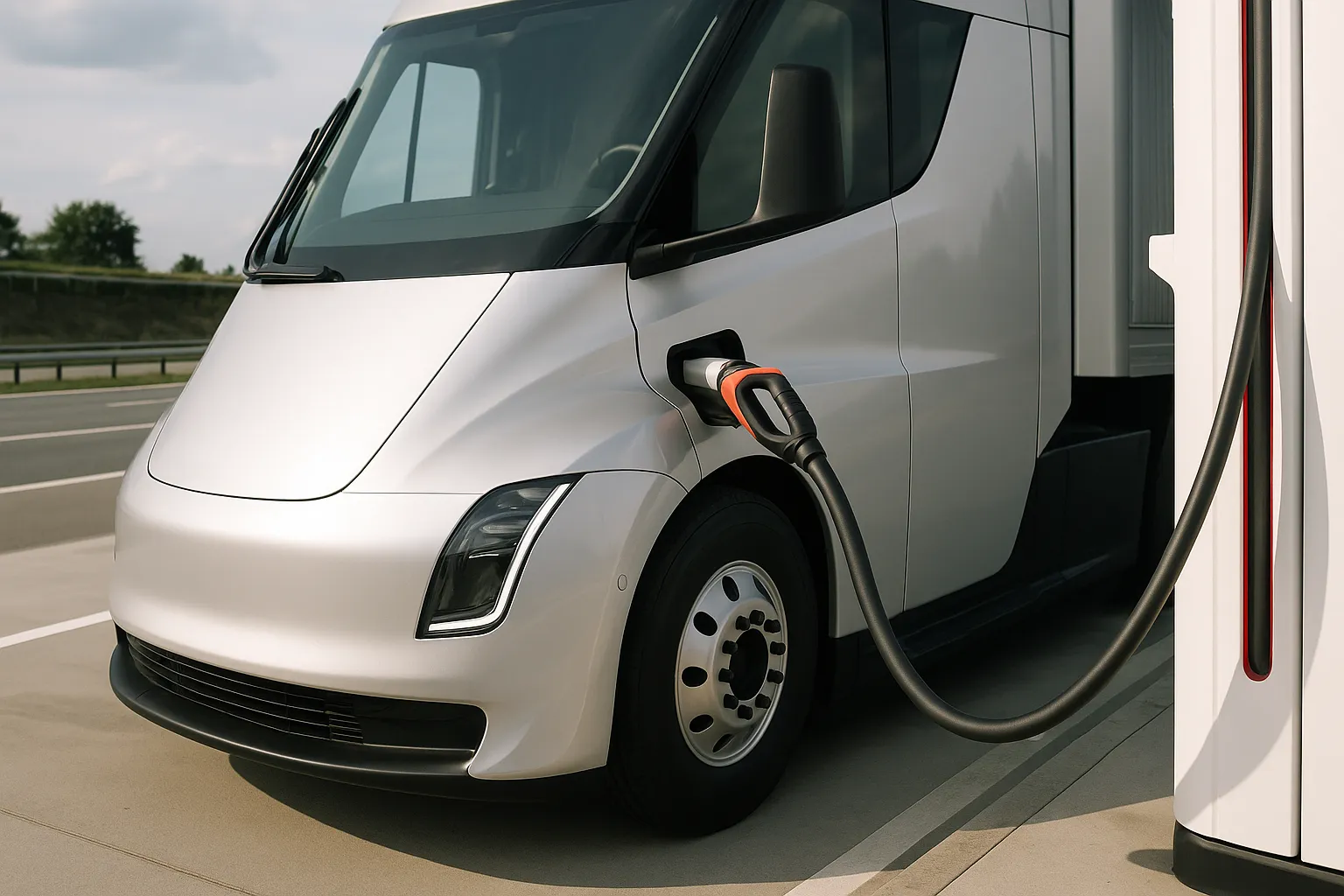
A central technical feature of the Tesla Semi is its 1,000-volt architecture. It enables charging power of up to 1.2 megawatts, or 1,200 kW. This should allow a substantial part of the battery capacity to be recharged in a short time; for North America, an increase of 60 percent in less than half an hour is mentioned.
Such values are far outside the norm in the passenger car sector and show how different the requirements are in heavy-duty transport. A truck earns money when it is driving. Long downtimes reduce productivity, even if electricity can be cheaper than diesel. Megawatt charging is therefore not a comfort feature, but a central component of the business model for electric long-distance trucks.
However, the highest charging power requires suitable infrastructure. Tesla is relying on so-called Megachargers for this. These charging points are to be combined with large stationary battery storage systems in order to provide high peak power while at the same time relieving the electricity grid. For Europe, it will be crucial how quickly such locations are built and whether they become available only at depots or also along important transport corridors.
Why the Semi is important for the industry
The market for electric heavy trucks is developing more slowly than the passenger car market, but with growing strategic importance. Many manufacturers are working on battery-electric tractor units, while hydrogen trucks continue to be discussed for certain long-distance applications. With the Semi, Tesla is bringing a vehicle into this environment that is positioned primarily through large batteries, high performance and very fast charging.
For established commercial vehicle manufacturers, a European Semi increases competitive pressure. However, it will not be technical peak performance alone that is decisive. Freight forwarders pay attention to total operating costs, workshop network, spare parts supply, charging access, leasing models and reliability. An electric truck can offer advantages in operation if electricity prices, maintenance costs and utilization are right. But it can also be expensive and impractical if charging windows, infrastructure or payload do not match the usage profile.
For cities and residents, the electrification of heavy trucks could also have noticeable effects. Electric drives reduce local exhaust emissions and can lower noise levels, especially when pulling away and in urban traffic. In long-distance transport, tire and wind noise remain relevant at higher speeds, but in the immediate vicinity of logistics centers and distribution routes, the difference can be more pronounced.
What buyers and operators should now wait for
The most important open points concern European approval, the available variants, prices, delivery times and service coverage. It is also still open how Tesla will sell the Semi in Europe and which markets will be supplied first. The United Kingdom in particular could play a special role if not all range versions are offered there.
Fleet operators should therefore view the presentation in Hanover not just as a model premiere, but as a starting point for concrete deployment calculations. Relevant factors include real-world ranges with cargo, charging times at available locations, warranties on battery and drive system, maintenance concepts and possible subsidy programs. Only from this will it become clear whether the Semi is economically convincing compared with modern diesel tractor units or competing electric trucks.
For enthusiasts, the Semi is further proof that electric mobility has long since ceased to be limited to passenger cars. For the industry, it is a test case: if a battery-electric heavy-duty truck with long ranges and megawatt charging works in everyday European use, it could increase the pace of transformation in long-distance transport. The technical unveiling in September will therefore be more than a model presentation. It will show how seriously Tesla takes the European commercial vehicle market and what role the Semi could play in the coming decade.