Tesla Cybertruck Becomes $15,000 More Expensive: Entry Price Rises Despite Weaker Demand
Tesla has raised the price of the cheapest Cybertruck by 15,000 US dollars within around six months. For buyers, this significantly changes the calculation.
Significant Increase for the Cheapest Cybertruck
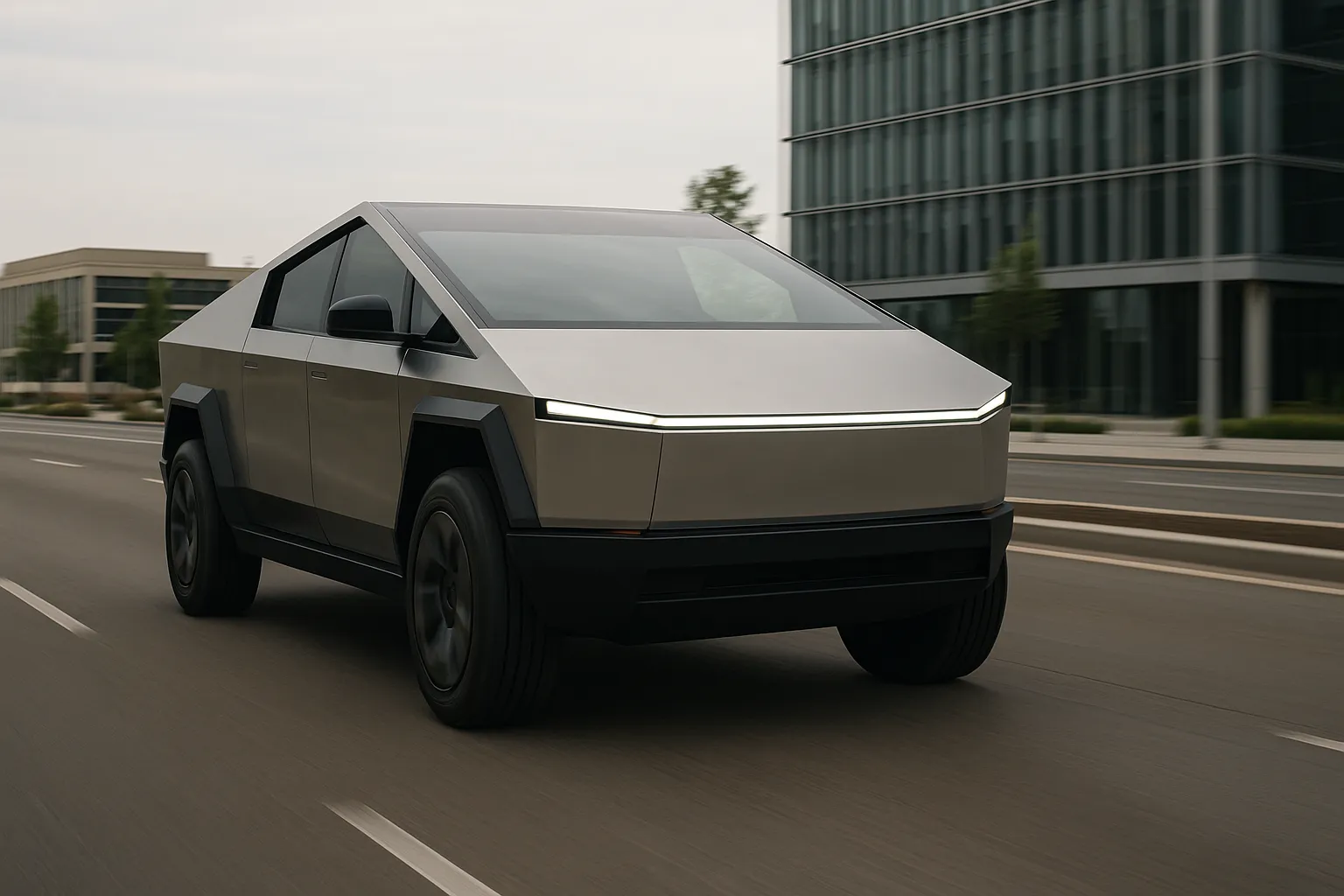
Tesla has made entry into the Cybertruck lineup noticeably more expensive. The cheapest orderable Cybertruck in the US market now costs 15,000 US dollars more than it did around six months ago. This pushes the angular electric pickup even further into a price range where, for many interested buyers, the purchase decision is no longer determined by technical data alone, but by financing, insurance, residual value, and everyday usability.
The move is noteworthy because demand for the Cybertruck has recently no longer shown the momentum of the early delivery phase. This is not unusual, especially for vehicles with polarizing design and high public attention: after the initial rush from reservation holders, brand fans, and technology enthusiasts, it has to become clear how large the broader buyer base really is. A higher entry price does not make this test any easier.
What Specifically Changes for Buyers

The most important point is simple: anyone calculating the Cybertruck as a new car must now plan with a significantly higher minimum budget. An increase of 15,000 dollars is not just a number on the price list in this class. It can significantly raise the monthly payment, change the down payment, and noticeably shift the total costs over the holding period.
Buyers who see the Cybertruck not purely as a prestige or leisure vehicle, but as a utility vehicle with electric drive, are particularly affected. Pickups are often used professionally in North America, frequently with strict cost accounting. If the entry price rises, the electric Tesla has to compete more strongly against conventional pickups, other electric trucks, and larger SUVs. Range, charging speed, towing capacity, cargo bed utility, and proximity to workshops therefore become even more important.
It remains unclear whether Tesla links the higher price to changed equipment, production costs, model mix, or strategic demand management. A clearly communicated technical upgrade that explains the entire increase is not, as things currently stand, at the center of the change. For customers, this means that before placing an order, it is worth taking a close look at the configurator, because Tesla’s prices and equipment scopes can change at short notice.
The Cybertruck Is Becoming More of a Premium Product

The Cybertruck was never an ordinary pickup from the outset. Its stainless-steel body, extreme wedge design, electric architecture with modern vehicle electrical system solutions, and technologies such as steer-by-wire position it more as a technology statement than as a classic work tool. The new price gap reinforces this impression.
For enthusiasts, this is a double-edged sword. On the one hand, the Cybertruck remains one of the most unusual production vehicles on the market. It offers a high level of recognition and stands for Tesla’s willingness to bring radically different vehicle concepts into series production. On the other hand, the model is moving further away from the idea of a more affordable electric pickup for a broad customer base.
This is especially relevant because pickups traditionally function across several price tiers. Many buyers start with a simpler variant and only opt for more powerful motors, larger batteries, or luxury equipment if needed. If even the cheapest version becomes significantly more expensive, the group of impulse buyers and price-conscious switchers shrinks.
Why Tesla Could Raise Prices Despite Weaker Sales
At first glance, a price increase amid declining sales seems contradictory. In the automotive industry, however, it can still have several reasons. Manufacturers may try to increase profitability per vehicle if volumes do not grow as expected. They can steer production toward higher-margin variants or deliberately position a model above a certain price level. Rising costs for components, manufacturing, logistics, or warranty coverage can also play a role.
In Tesla’s case, another factor is that the company traditionally adjusts prices very flexibly. Unlike many established manufacturers, Tesla works with direct online ordering and frequently changes list prices, leasing conditions, and equipment without a classic model-year rhythm. For buyers, this is both an opportunity and a risk: those who wait can occasionally benefit from price cuts, but likewise run the risk of having to pay more after an increase.
The current Cybertruck increase shows that Tesla’s pricing policy does not only work downward. This is an important message for the market, because in recent years many observers have associated the brand primarily with aggressive discounts and price cuts on the Model 3 and Model Y.
Effects on Owners and Residual Values
For existing Cybertruck owners, a higher new-vehicle price is not automatically bad. In the short term, it can support used values because a new Cybertruck becomes more expensive and nearly new used vehicles appear comparatively more attractive. This applies especially to well-equipped examples with low mileage.
In the long term, however, residual value does not depend only on the price list. What matters are real demand, reliability, parts supply, repair costs, software maintenance, and the development of competing electric pickups. If higher new-vehicle prices limit the number of potential buyers, this can later also weigh on the used market. Owners should therefore not automatically assume that the increase guarantees permanently higher resale prices.
Insurance and repairs also remain an issue. The Cybertruck is unusual in its construction, and special body structures or specific components can cause different costs in the event of damage than with conventional pickups. A higher vehicle value can also influence premiums and financing costs.
Signal for the Electric Pickup Market
The price jump is more than just Tesla news. It shows how difficult the electric pickup segment remains. Large batteries are expensive, high towing capacities and long ranges place enormous demands, and many pickup buyers expect robust utility at competitive prices. At the same time, electric trucks are expected to offer modern software, fast charging performance, and high performance.
For the industry, the Cybertruck is a test case: How great is the willingness to pay for a radically different electric utility vehicle? Is brand strength enough to enforce high prices despite cooling demand? And how convincingly does an electric pickup have to perform in everyday use for buyers not to choose cheaper combustion-engine models, hybrids, or more conservative electric alternatives?
Conclusion: More Price Discipline Needed for Interested Buyers
The entry price, now 15,000 dollars higher, does not automatically make the Cybertruck unattractive, but it changes the calculation. Those who want the vehicle because of its design, technology, and Tesla ecosystem may accept the increase. Those who calculate soberly based on cost per mile, utility value, and resale risk should compare more carefully than before.
For buyers, it is now especially important to document offers, check financing conditions, and consider not only the list price but the total costs. For Tesla, the increase is a clear signal: the Cybertruck is apparently intended to continue functioning as a high-priced, brand-defining product. Whether this strategy works amid declining demand will become clear from the upcoming order and delivery figures.