Porsche 911 Carrera S: Manual transmission returns to North America in 2027
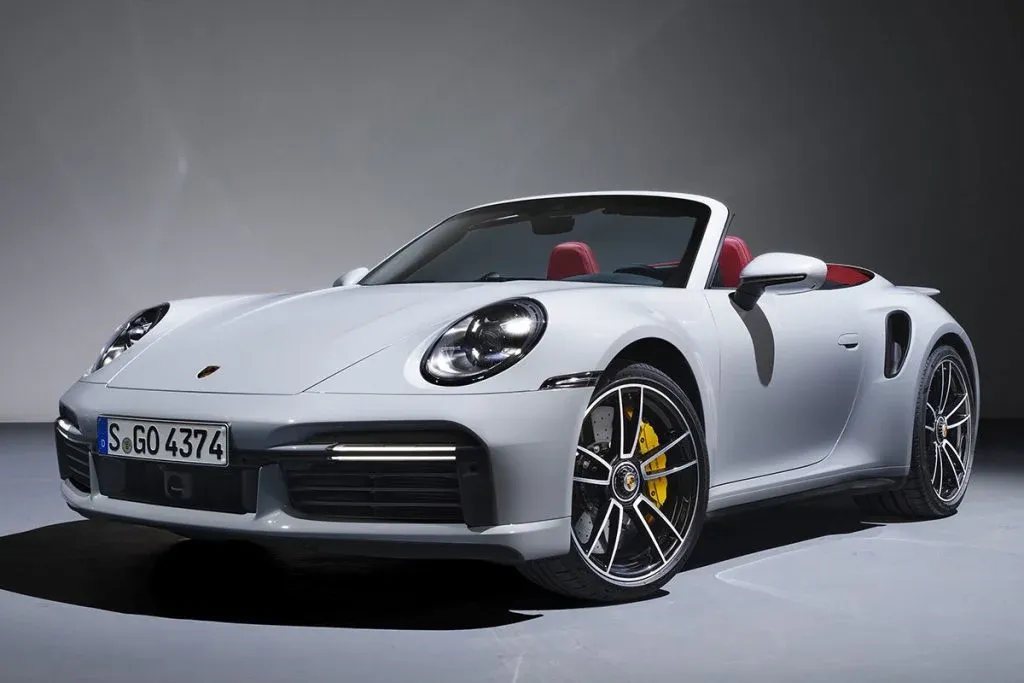
Porsche is bringing back the 911 Carrera S with a six-speed manual transmission for the 2027 model year in North America. The variant combines 473 hp with a deliberately more analog driver role.
The Carrera S gets a clutch pedal again
Porsche is bringing the 911 Carrera S back with a manual transmission for the 2027 model year in North America. The return of the manual gearbox therefore affects a particularly important market for the brand and a particularly emotional variant of the 911 model range. The Carrera S receives a six-speed manual transmission and remains at 473 hp. Converted, that corresponds to around 480 PS, depending on the respective standard specification.
The decision is more than just an additional transmission option. At a time when many sports cars are increasingly relying on dual-clutch transmissions, hybridization and software-supported driving programs, a manually shifted 911 Carrera S is a clear signal to drivers who see involvement in the drivetrain as part of the experience. Porsche had initially positioned the Carrera S in the more recent model update without this option; now it is returning at least for North America.
What changes technically

The core of the news is the six-speed manual transmission. This distinguishes the new North American version from the automatically shifting Carrera S versions and is aimed at customers who want to control gear selection, clutch engagement point and rev matching themselves. Output remains at 473 hp, a level that clearly positions the Carrera S above the regular Carrera.
In the 911 program, the Carrera S has traditionally been the variant for buyers who want more power and a sportier basic orientation without going straight to the even more powerful or more specialized models. Precisely in this middle ground, a manual transmission is especially relevant: it does not necessarily make the car faster, but it changes the way power is called upon.
Porsche links the manual version to an extensively equipped package for the North American market. Specific pricing and equipment details may vary depending on the market and final model configuration. The crucial point is: the manual transmission has not been announced as a worldwide standard option, but as a North American solution for the 2027 model year.
Why Porsche is striking a chord

The 911 is one of the few sports cars in which the transmission is still part of the brand identity. Modern automatic and dual-clutch transmissions shift faster, are more comfortable in everyday use and usually deliver reproducibly better lap times on the racetrack. Nevertheless, demand for manual transmissions remains stable among part of the customer base, because this is not solely about lap times.
A manual transmission forces the driver to make decisions. The right gear before the corner, clean clutch engagement when accelerating out, dealing with revs and load changes: all of this makes the car slower in terms of absolute efficiency, but often more intense in the driving experience. For many 911 customers, that is exactly the point.
The fact that Porsche is bringing this variant back also shows how valuable enthusiasts remain for sports car brands. Even if the sales share of manual transmissions is smaller than it used to be, such models can shape the perception of a brand. A 911 Carrera S with a manual gearbox is a car that people talk about because it represents a deliberate counterproposal to full automation.
Significance for buyers in North America
For North American prospects, the choice is noticeably expanded. Anyone who previously wanted a Carrera S had to come to terms with the available automatic solution or switch to other 911 variants if a manual transmission was a priority. With the 2027 model year, the combination of Carrera S performance and manual gear selection is available again.
This can also change the purchase decision within the 911 model range. Some customers prefer the Carrera S because it seems more suitable for everyday use and less extreme than sharper derivatives. If these customers also want a manual transmission, a more suitable configuration is now available again. The car could therefore be especially interesting for drivers looking for a weekend car, a long-term garage resident or a classic sports car with modern performance.
The return is also relevant for existing owners. Vehicles with manual transmissions often enjoy special attention on the used market in the 911 cosmos. That does not automatically mean that every manual version will increase in value or is a safe investment. But limited availability, regional exclusivity and an enthusiastic target group can support demand for well-preserved examples.
No global comeback announced
The regional limitation is important. The new manual Carrera S version is intended for North America. For European or other international markets, a parallel introduction cannot automatically be inferred from this. Buyers outside North America should therefore not assume that the same configuration will be offered at the same time or at all.
This market separation is not unusual in the automotive industry. Homologation requirements, fleet targets, demand profiles and internal production planning can lead to individual variants being sold only in certain regions. Especially with niche versions such as a powerful manual-transmission car, a manufacturer can offer it specifically where expected demand is strongest.
For European enthusiasts, the news remains interesting nonetheless because it shows that Porsche has still not completely abandoned the subject of manual shifting in the 911. Whether further variants will follow from this later remains open.
What the decision says about the sports car market
The manual Carrera S fits into a broader debate: how much classic mechanics does a modern sports car still need? The industry is moving toward electrification, driver assistance, connected functions and ever faster automated drivetrains. At the same time, many buyers in the upper price segment are looking for vehicles that not only feel technically superior, but also unmistakable.
A manual transmission can provide this differentiation. It is not the most modern solution in the narrow technical sense, but it creates a direct connection between human and machine. For brands like Porsche, this is important because the emotional bond with the product is an essential part of the business model.
The return of the manual 911 Carrera S is therefore not a nostalgic aside, but a strategic addition. Porsche is serving a customer group that deliberately chooses a less automated driving experience and may set aside the comfort or performance advantages of an automatic transmission for it.
A 911 for drivers, not just for numbers
With 473 hp, the Carrera S is already fast enough to offer far more performance in everyday life and on winding roads than can be legally exploited on a sustained basis. The manual transmission shifts the focus of perception: less maximum acceleration optimization, more control over the process.
For buyers, that means a clearer choice. Anyone looking for the most efficient, most comfortable or fastest way will continue to find good reasons for an automated 911 version. Anyone who understands the 911 Carrera S as an actively driven machine and sees shifting as part of the appeal will again get a suitable option in North America in 2027.
With this, Porsche confirms a simple but important insight for enthusiasts: not every further development has to consist of taking the driver further out of the process. Sometimes an additional pedal is enough to make a familiar car newly desirable.