Polestar 4 SUV: Rear window and straighter roof bring more everyday practicality
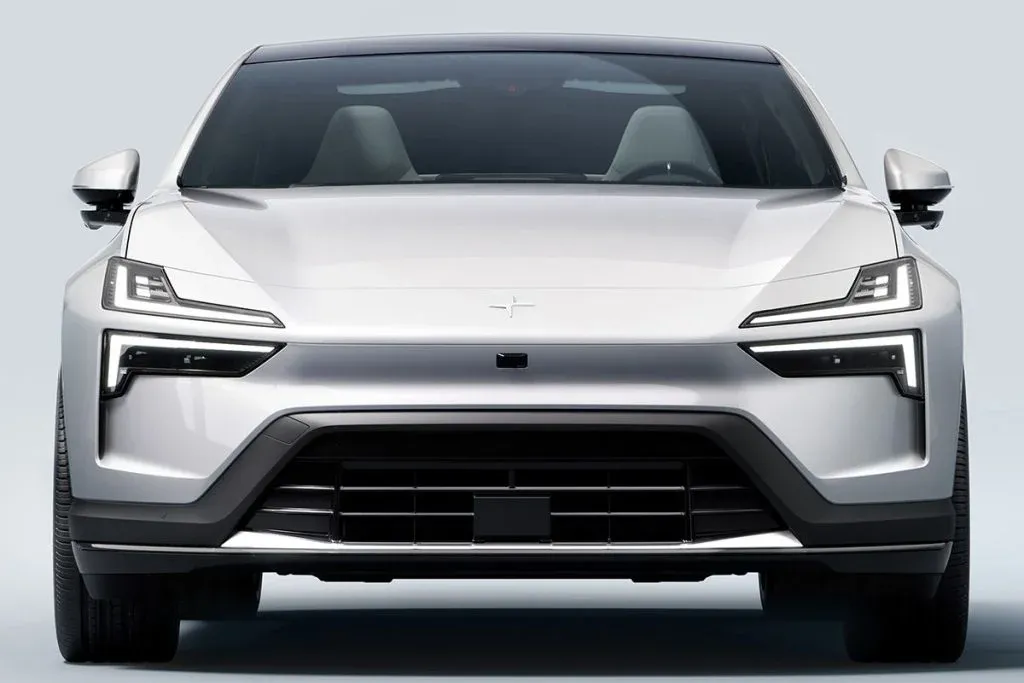
Polestar is revising the concept of the 4: The new SUV layout once again gets a classic rear window, a straighter roofline and more storage space – while still offering up to 544 hp.
Polestar moves the 4 closer to classic SUV customers
The Polestar 4 is one of the more striking electric cars of the recent past – not because of extreme gullwing doors or exaggerated performance figures, but because of an unusual design decision: The SUV coupé dispensed with a classic rear window. Instead, a camera system took over the view to the rear and displayed the image on a digital rearview mirror. Now comes a new SUV layout of the Polestar 4 that takes a significantly more conventional path. It gets a real rear window, a straighter roofline and more cargo space.
With this, Polestar is not necessarily correcting a mistake, but the step shows that design experiments are assessed differently in everyday use than on a motor show stage. For buyers, what matters is not only whether an electric car looks futuristic. Visibility, utility, trust in the technology and the feeling of being able to get into a new vehicle without an acclimatization phase are also decisive.
Classic rear window instead of purely digital rear visibility

The most noticeable change is the return to a conventional rear window. In the previous Polestar 4 concept, the absence of glass at the rear was a central feature. The solution enabled a very distinctive design and was intended to benefit the interior as well as aerodynamics. At the same time, it required drivers to rely on a camera display in the rearview mirror.
Such systems can have advantages: They work independently of headrests, rear passengers or luggage that blocks the view. In addition, the camera can provide a wider viewing angle than a normal mirror. But not every driver likes the digital display. Some find the depth perception unfamiliar, while others do not want to depend solely on sensors and a camera unit in rain, snow or heavy soiling. A real rear window is technically less spectacular, but intuitive.
For fleet customers, families and drivers who frequently switch between different cars, this familiarity can be a purchase argument. Especially in the upscale electric SUV segment, ease of use is an important factor: A vehicle may be modern, but it should not require explanation in every everyday situation.
Straighter roof, more utility

In addition to the rear window, the SUV version gets a straighter roofline. This is more than a stylistic correction. In SUV coupés, the roofline often ends early and flat, which looks dynamic but can limit rear headroom and trunk volume. A steeper roof that continues farther back improves space utilization in the rear area.
Polestar combines the new shape with additional storage space. Specific liter figures have not yet been stated, but the direction is clear: The SUV layout is intended to become more practical than the more coupé-like variant. This is likely to be particularly relevant for buyers who view an electric car not just as a design object, but as a primary vehicle for everyday life, travel and family.
More trunk space sounds unspectacular, but in the EV market it is a hard competitive factor. Electric SUVs often compete against established combustion-engine SUVs, wagons and large crossovers. Anyone transporting dogs, loading strollers or traveling with four people pays attention to load sills, opening width, height under the tailgate and usable depth. A more pleasing roof shape can achieve more here than an additional screen in the cockpit.
Performance remains at a high level
Despite the body being designed more strongly for everyday use, the Polestar 4 SUV is still to be offered with up to 544 hp. This keeps the model in the high-performance range of electric mid-size to upper-class SUVs. The figure indicates that Polestar does not see the practical approach as a retreat from its performance ambitions.
For enthusiasts, this is important because Polestar positions its identity between Scandinavian design, electric drive and a claim to driving dynamics. A straighter roof and a rear window do not automatically make the car boring. On the contrary: A vehicle that combines high performance with better utility can be interesting to more buyers than a more radical niche concept.
However, several important details currently remain open. Battery capacities, ranges, charging power, weights, market launch, prices and the exact positioning within the Polestar 4 family are not fully known. It is also not yet possible to conclusively assess how much driving performance and efficiency change due to the new body shape. A straighter roofline can bring more interior space, but it can also have aerodynamic disadvantages if it is not carefully integrated.
Why the change is relevant for the market
The move is also interesting from an industry policy perspective. Many electric cars from the first major model wave relied on deliberately futuristic solutions: large touchscreens, reduced cockpits, new operating concepts and unfamiliar body ideas. It is now becoming apparent that buyers want innovation, but do not accept every departure from the familiar.
Polestar's decision fits a broader trend: Electric cars are becoming more mature. They no longer have to prove solely that they are different. They have to convince in direct comparison with familiar vehicle concepts. This includes range and charging power, but also visibility, space, trunk and operating logic.
The rear window in particular is a good example. A digital mirror can be technically convincing, but for many users it remains a compromise if it is the only rear visibility. A normal pane removes this mental hurdle. It makes the car more accessible to drivers who are fundamentally interested in electric mobility but have no desire for unnecessary readjustment.
A less radical, possibly stronger Polestar 4
At first glance, the new SUV layout of the Polestar 4 appears more conservative. But conservative does not have to be meant negatively here. Polestar retains the high drive output, but improves those characteristics that count in daily operation. The result could be a car that provides less talking point, but convinces more people.
For buyers, this means: The Polestar 4 will likely be able to compete more easily against classic electric SUVs. For owners and prospective buyers of the coupé-like variant, the original concept remains a distinctive statement. For the brand itself, the change is a sign of pragmatism. Not every bold idea has to be retained for every body version.
Whether the Polestar 4 SUV ultimately becomes the more convincing Polestar 4 depends on price, range, charging power and the real gain in space. But it is already clear: With a rear window, straighter roof and more trunk space, the focus shifts from the pure design idea toward a more everyday-friendly electric SUV.