Mitsubishi is bringing a pickup back to the USA – with help from Nissan
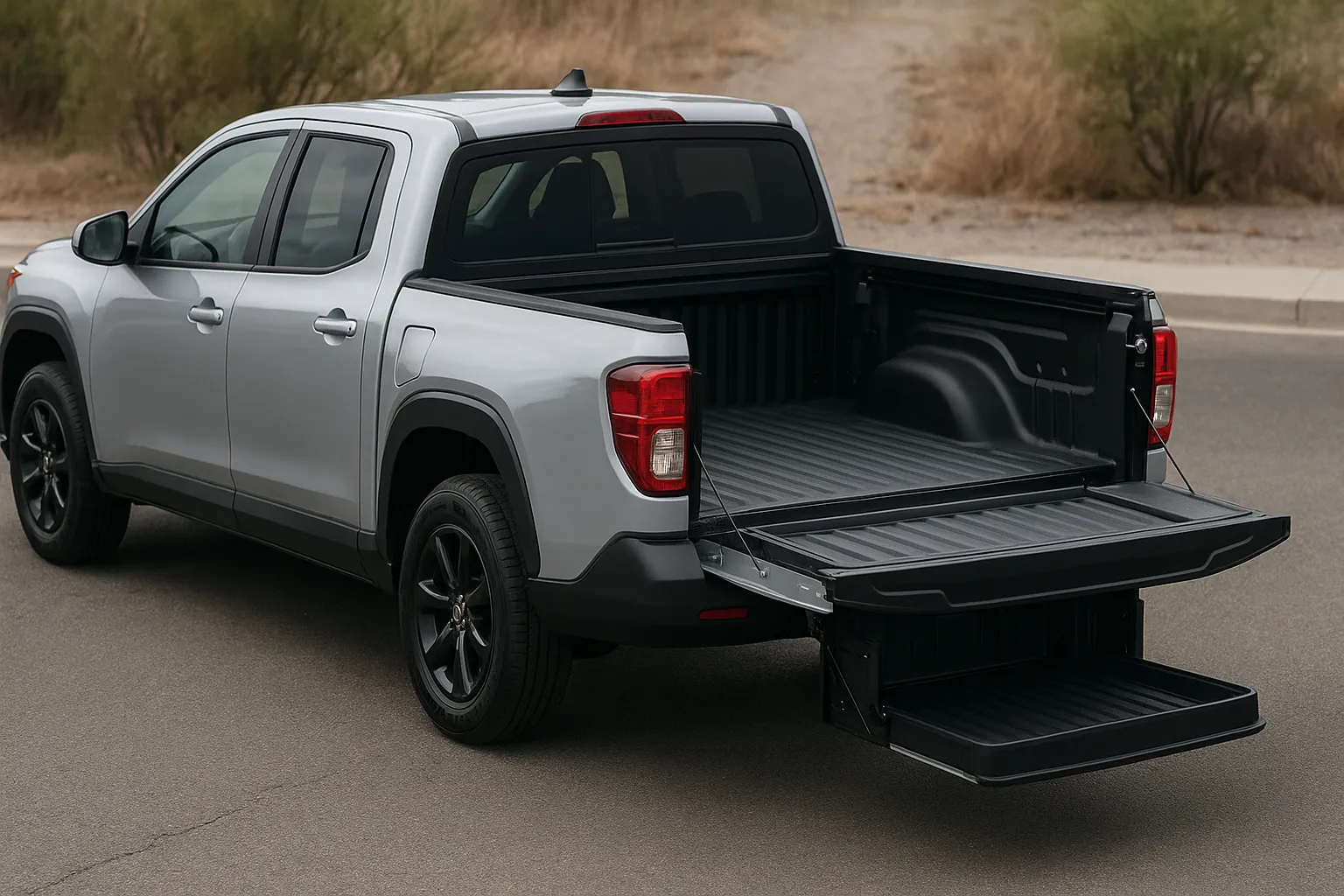
Mitsubishi is returning to the American pickup market after more than 15 years. Instead of the globally sold Triton, the new model is set to emerge from cooperation with Nissan.

Mitsubishi ventures back into an important segment
Mitsubishi is once again planning a pickup for the US market. This brings the brand back after more than 15 years to a segment that is competitive in North America, but especially visible for dealers and buyers. The key point: the new Mitsubishi pickup will not simply be a US version of the Triton, which the brand sells in numerous international markets. Instead, the model is being developed with support from Nissan, Mitsubishi's alliance partner.
For Mitsubishi, this is more than just an additional body style. In the USA, the brand has for years been present mainly with crossovers and SUVs. A pickup could significantly broaden the range, appeal to new customer groups and give dealers a vehicle that can be equally relevant in everyday use, leisure activities and for commercial buyers.
No Triton for America

Internationally, the Mitsubishi Triton, also known as the L200 in some markets, has been an important name for decades. It is sold in many regions and stands there for robust commercial-vehicle technology, all-wheel-drive expertise and comparatively compact dimensions. Even so, this very model is not expected to make its way directly to the USA.
That is understandable. The US market has its own requirements for safety, emissions, equipment, towing capacities, comfort and customer preferences. In addition, the competition in North America is strongly shaped by local factors: Toyota Tacoma, Chevrolet Colorado, GMC Canyon, Ford Ranger, Nissan Frontier, Honda Ridgeline and Jeep Gladiator serve different interpretations of the midsize pickup market. A global pickup cannot automatically be transferred into this environment without extensive adaptations.
The decision against a pure Triton variant suggests that Mitsubishi is taking a pragmatic approach to its re-entry. A Nissan-based model could reduce development effort, accelerate the market launch and draw on existing US experience. Official technical data, a model name, a production location, powertrains and an exact sales launch are currently not confirmed.
Why Nissan plays a key role

Mitsubishi and Nissan have been working together for years within an alliance. This cooperation allows shared platforms, shared development costs and coordinated production strategies. For a pickup, this is particularly relevant because such vehicles are expensive to develop. Frame construction, chassis, drivetrain, towing capacity, payload, crash structure and off-road durability all have to be coordinated with one another.
In the USA, Nissan already sells the Frontier, a classic midsize pickup with a ladder frame. It is therefore natural to think that a future Mitsubishi pickup could be closely related to Nissan technology. However, only the partnership with Nissan has been confirmed, not the specific technical derivation. Buyers should therefore not yet assume that equipment, wheelbase, engine or body variants will be adopted one-to-one from the Frontier.
For the industry, the cooperation is nevertheless an interesting signal. Smaller brands can hardly still compete in the pickup market on their own when development costs and regulation are rising. Platform sharing is not a flaw, as long as design, chassis tuning, warranty package, pricing and dealer experience create an identity of their own.
Mitsubishi has pickup history in the USA
The re-entry ties into a past that many younger buyers hardly know anymore. Mitsubishi sold compact commercial vehicles in the USA for decades, including models such as the Mighty Max. Later came the Raider, a pickup based on the Dodge Dakota. This model disappeared from the market at the end of the 2000s and remained without a direct successor.
Since then, the segment has changed significantly. In the past, compact and midsize pickups were often simple work tools. Today, they are frequently lifestyle vehicles, family cars, off-road toys and tow vehicles all in one. Buyers expect modern driver-assistance systems, large displays, comfortable seats, good noise insulation, smartphone integration and genuine utility at the same time.
That is exactly where the challenge lies for Mitsubishi. A new pickup must not only be inexpensive or robust. It has to provide a reason why customers should choose it over an established Tacoma, Ranger, Colorado or Frontier.
What this could mean for buyers
For car buyers, more competition is generally positive. An additional provider can put pressure on prices, equipment packages and warranty coverage. Mitsubishi is traditionally not positioned as a premium provider in the USA, but rather as a brand with value-oriented offerings. If this strategy is transferred to the pickup, the model could be particularly interesting for buyers who are looking for a solid truck but do not want to pay for every luxury feature.
The move could also be relevant for owners of existing Mitsubishi models. Anyone who currently drives an Outlander or Outlander PHEV and needs more towing or load capacity has had to switch brands. A pickup would create a new step-up opportunity within the dealer network.
For enthusiasts, attractiveness depends heavily on the details. Key factors will include all-wheel drive, ground clearance, underbody protection, locking differentials, tire sizes, towing capacity and possible off-road trim lines. With Pajero, Montero and rally history, Mitsubishi certainly has credibility in the off-road environment. Whether the new US pickup will draw on this tradition remains open.
Many important questions are still unanswered
It is still unclear whether Mitsubishi will position the pickup as a work vehicle, leisure truck or more highly equipped lifestyle pickup. Cab forms, bed lengths, engines, transmissions, hybridization and price level are also still open. A possible electrified drive system is also not confirmed. In view of stricter fuel-consumption requirements and Mitsubishi's experience with plug-in hybrid technology, electrification would be conceivable in the long term, but it is not currently substantiated.
The name is also interesting. Mitsubishi could revive a familiar historical name or choose a new designation that better fits the current model range. A Triton name would be obvious globally, but the technical origin via Nissan could make different marketing sensible.
Production questions will also be important. A model manufactured in North America could have logistical advantages and better suit regional requirements. Without official information, however, this point remains speculation.
A small step with major strategic significance
Mitsubishi's return to the US pickup market is not merely a nostalgia project. Pickups shape the American automotive landscape more strongly than almost any other type of vehicle. Even in the midsize segment, which is smaller than the full-size market, brand image, dealer traffic and customer loyalty can be noticeably influenced.
For Mitsubishi, the plan is an opportunity to be perceived more broadly again. For Nissan, the cooperation can help make better use of development and production capacity. For buyers, an additional competitor could bring more choice to a segment that has recently become more expensive and more richly equipped.
In the end, success will depend on how independently Mitsubishi designs the truck. A pure badge-engineering model with a different emblem would likely have a hard time. By contrast, a sensibly positioned pickup with its own look, a good warranty, attractive prices and genuine usability could fill a gap. Until Mitsubishi provides further details, the main takeaway remains: the brand wants to return to a segment it had left for a long time – and it is not doing so alone, but with Nissan as its technical partner.