Mazda CX-5 Remains Without Plug-in Hybrid
Mazda is not planning a plug-in hybrid for the CX-5. For buyers, this means fewer charging options than with the Toyota RAV4, but possibly lower complexity and costs.
Mazda Draws a Clear Line with the CX-5
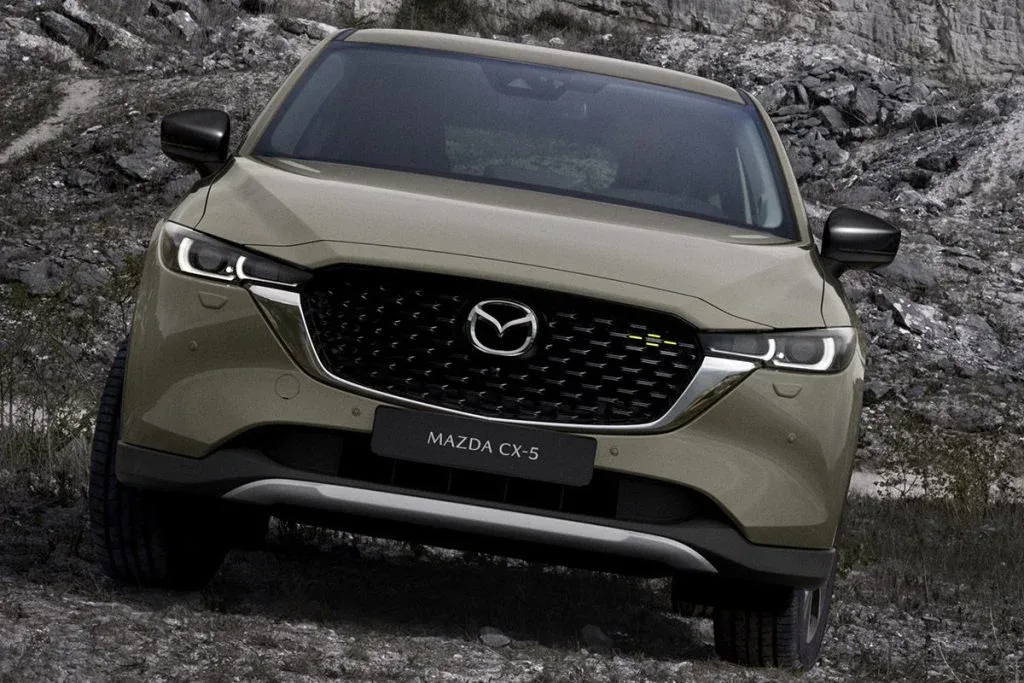
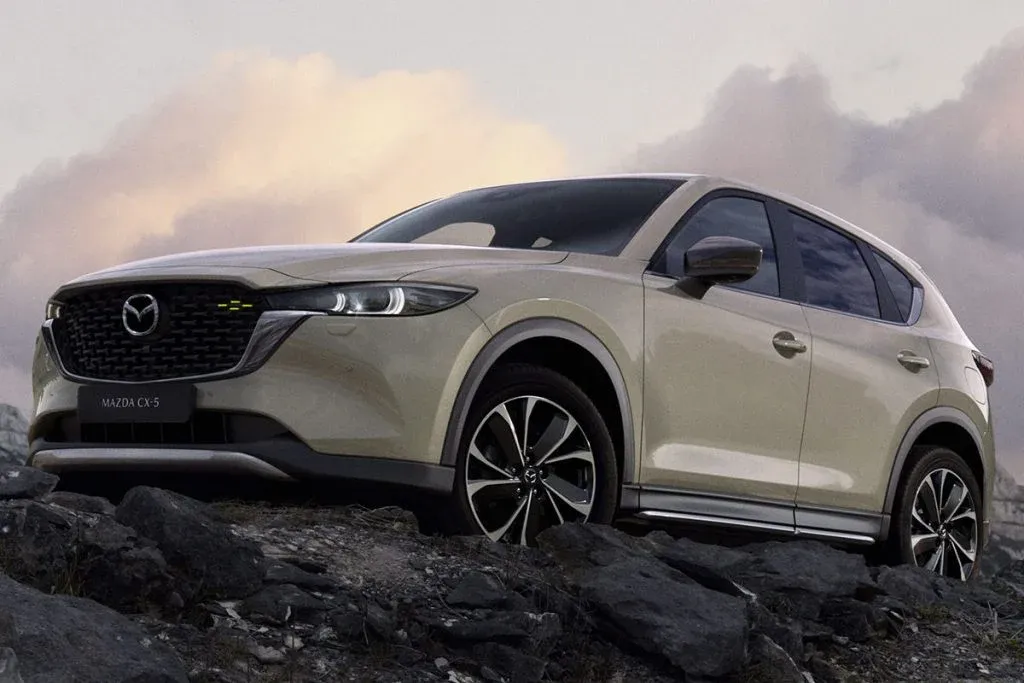
Mazda will not offer the CX-5 as a plug-in hybrid. This deliberately sets the compact SUV apart from several important competitors, above all the Toyota RAV4, which is also available in many markets as a particularly powerful plug-in hybrid. For Mazda, the CX-5 remains a central volume model, but electrification in this model series concept is not intended to take place via an externally chargeable battery.
The decision is notable because plug-in hybrids are moving more strongly back into focus in several markets. For many buyers, they are considered an interim solution: drive locally on electric power, but continue on long journeys without charging planning. Manufacturers are increasingly using precisely this combination to reconcile stricter CO2 requirements, customer expectations, and range concerns. Nevertheless, Mazda apparently does not see the CX-5 as a suitable model for this technology.
Why Mazda Avoids the PHEV Route
A plug-in hybrid is technically much more complex than a conventional combustion engine or a hybrid that cannot be charged externally. It needs a larger battery, additional power electronics, a charging system, and a powertrain layout that efficiently combines the combustion engine and electric motor. This increases weight, costs, and development effort. Especially for a model like the CX-5, which in the midsize class of compact SUVs relies heavily on price, everyday usability, and global unit volumes, this calculation can become difficult.
Packaging is another factor. A PHEV battery must be accommodated in the vehicle floor or another suitable location without overly compromising interior space, luggage compartment, fuel tank size, or crash structure. On platforms that were not designed from the outset for large high-voltage batteries, this can lead to compromises. Mazda does have plug-in hybrid experience in larger models, but that does not automatically mean the same technology can be transferred to every SUV in an economically and spatially sensible way.
Usage also plays a role. Plug-in hybrids achieve their best consumption figures only when they are charged regularly. Anyone who mainly drives the car without electricity from the socket is often driving a heavier vehicle with more complex technology and, in reality, only a limited efficiency advantage. Mazda may therefore have concluded that a conventional hybrid or a more efficient combustion engine is more predictable for the typical CX-5 customer base.
What This Means for Buyers
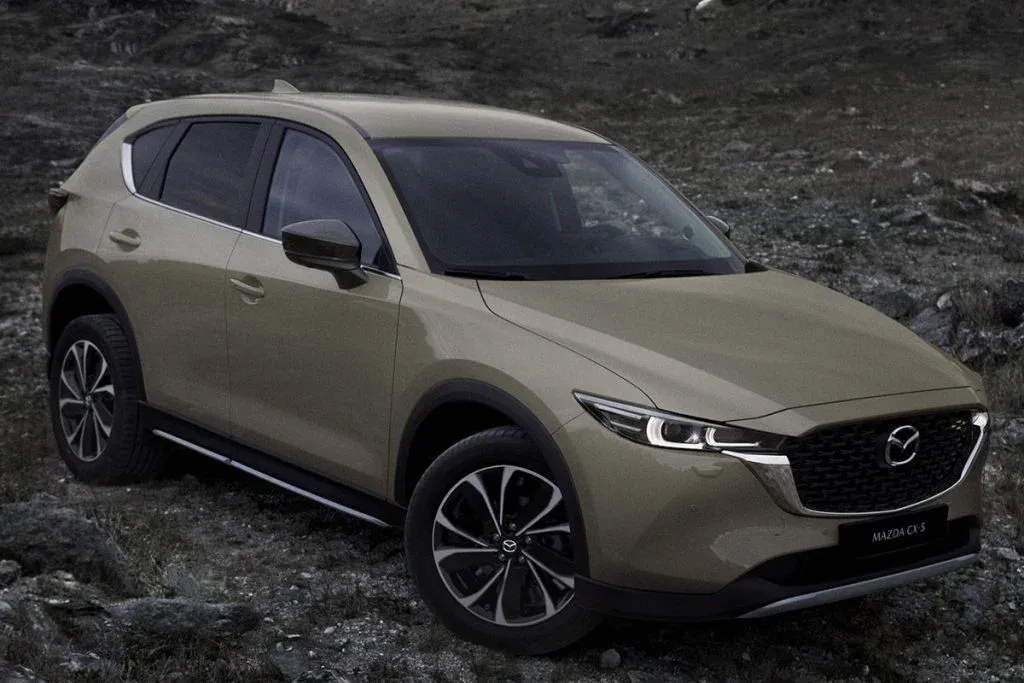
For interested buyers, the message is simple: anyone hoping for electric everyday range with a charging plug in the next CX-5 should not plan on it. Commuters with their own wallbox who want to cover daily routes as electrically as possible will have to look at other Mazda model series or at competing models. In Europe, depending on the market, larger Mazda SUVs with plug-in hybrid powertrains may be options; in other regions, the offering sometimes differs significantly.
For many traditional CX-5 buyers, however, doing without a PHEV does not have to be a disadvantage. A non-rechargeable hybrid or an efficient gasoline engine can be cheaper to buy, carry less weight, and remain easier to operate. There is no charging cable, no charging times, and no dependence on home or public charging infrastructure. This can be particularly attractive for customers who live in apartment buildings, have no charging option of their own, or frequently drive their SUV on longer routes.
The disadvantage lies in cities and commuter profiles with short daily journeys. There, PHEV models can save a great deal of fuel when used consistently. In addition, plug-in hybrids benefit in some countries from tax advantages, company car regulations, or access privileges. However, these advantages depend on the market and have already been reduced in some regions or more closely tied to real electric range.
The Toyota RAV4 as the Benchmark in the Segment
The comparison with the Toyota RAV4 is obvious because Toyota has held a strong position in the hybrid segment for years and also offers the RAV4 as a plug-in hybrid. This model combines strong system output with practical electric range for everyday use and has therefore shown that a compact to midsize SUV as a PHEV can work for many buyers.
Mazda, however, is choosing a different role for the CX-5. The brand traditionally positions itself more strongly through driving feel, design, interior quality, and comparatively independent technical solutions. A direct powertrain race with Toyota would be expensive and would lead Mazda into a field where larger manufacturers have advantages through economies of scale. Instead, Mazda seems to be aligning the CX-5 more closely with the needs of a broad, global customer group looking for a well-balanced SUV and not necessarily requiring a charging plug.
But that also means: on the spec sheet, the CX-5 will not be able to keep up with PHEV rivals in terms of electric range and official consumption figures. For fleet customers, company car drivers, and technology-oriented buyers, this can be decisive in the purchase decision. For private customers who place greater weight on total price, reliability, space, and uncomplicated operation, the assessment may be different.
Consequences for Owners and Resale
Current CX-5 owners do not have to fear that their vehicle will suddenly seem technically outdated because of the decision. If Mazda does not bring a PHEV successor, the gap between existing models and future CX-5 variants in terms of charging remains manageable. Used-car value will depend more on condition, mileage, equipment, fuel prices, and local environmental regulations than on a suddenly introduced plug-in top model.
In the long term, however, the lack of a PHEV option may play a role if city centers introduce stricter emission zones or buyers increasingly look for electrified powertrains. Mazda must therefore be able to explain what efficiency advantages the future CX-5 powertrains actually offer. What will matter is not the badge on the rear, but real-world consumption, the CO2 balance, maintenance costs, and the everyday experience.
In Industrial Policy Terms, a Sign of Selective Electrification
Mazda’s decision shows a broader trend: not every manufacturer electrifies every model in the same way. While some brands are expanding plug-in hybrids as bridge technology, others are focusing more strongly on full hybrids, mild hybrids, battery-electric models, or efficient combustion engines for certain markets. The strategy depends on platforms, production costs, regulation, customer profiles, and regional charging infrastructure.
For the industry, this is relevant because plug-in hybrids are often presented as a universal answer to the transition phase toward electric mobility. In practice, however, they are not equally sensible for every vehicle concept. A PHEV can be an excellent fit if customers charge regularly and the additional price is accepted. But it can also be an expensive compromise if the battery is too small, the vehicle is too heavy, or the charging habits are unsuitable.
A Sober but Important Product Decision
The CX-5 therefore remains an SUV without a plug. That does not automatically make it outdated, but it limits its appeal for buyers specifically looking for electric commuting routes. Mazda is opting for a different balance of costs, weight, packaging, and everyday usability. Whether this calculation works out depends on how efficient the upcoming powertrains turn out to be and how strongly customers in the respective market actually ask for plug-in hybrids.
For car buyers, the practical consequence is: before making a decision, the powertrain designation should not be the only thing that counts. Anyone who can charge and drives many short trips should seriously compare PHEV alternatives. Anyone looking for an uncomplicated SUV without charging infrastructure could still find the CX-5 suitable. Mazda is foregoing a trend, but not without a strategic reason.