Major EV Battery Study: Batteries Last Longer Than Many Buyers Expect
A global analysis of more than 500,000 battery tests shows: Most electric car batteries lose comparatively little capacity in the first 50,000 kilometers. Charging behavior, battery capacity, and the variation between individual vehicles remain decisive, however.
Electric car batteries are losing their scare factor
The durability of electric car batteries remains one of the biggest questions when buying an EV. A new global analysis of more than 500,000 battery tests now provides a much more nuanced picture: EV batteries do age measurably, but the loss of capacity in the first years and kilometers is often lower than many skeptics expect.
Battery data from 20 widely used electric car models from North and South America, Asia, Australia, and Europe were examined. The testing period ranges from 2022 to 2026. The focus was on the so-called State of Health, or SoH for short. This value describes how much usable capacity is still available compared with new condition. Put simply, a battery with 80 percent SoH can only provide around 80 percent of its original range — regardless of whether the car is still technically fully roadworthy.
The most important result: In none of the 20 models examined was the average SoH loss within the first 50,000 kilometers more than ten percent. That does not mean that every single vehicle remains almost as good as new. But it does show that modern electric car batteries are, on average, more robust than some debates about expensive battery replacements would suggest.
Why 50,000 kilometers matter

The 50,000-kilometer mark is particularly relevant for buyers and owners. Many vehicles reach this point after three to five years, precisely when lease returns, young used cars, and first private sales come onto the market. If the average capacity loss remains below ten percent by then, a used electric car can still be suitable for everyday use for many households.
An example: An EV with an originally realistic range of 400 kilometers would, at 90 percent SoH, still have a calculated usable range of about 360 kilometers. In practice, factors such as weather, tires, driving profile, and speed are added. Nevertheless, such a loss is less dramatic for many users than feared — especially if the car is used mainly for commuting or everyday regional driving.
For the used car market, this is an important signal. Uncertainty about battery aging still weighs on residual values for many electric cars. The better the condition of a battery can be tested and documented, the easier it becomes for buyers to assess prices realistically and limit risks.
Charging behavior remains a central factor

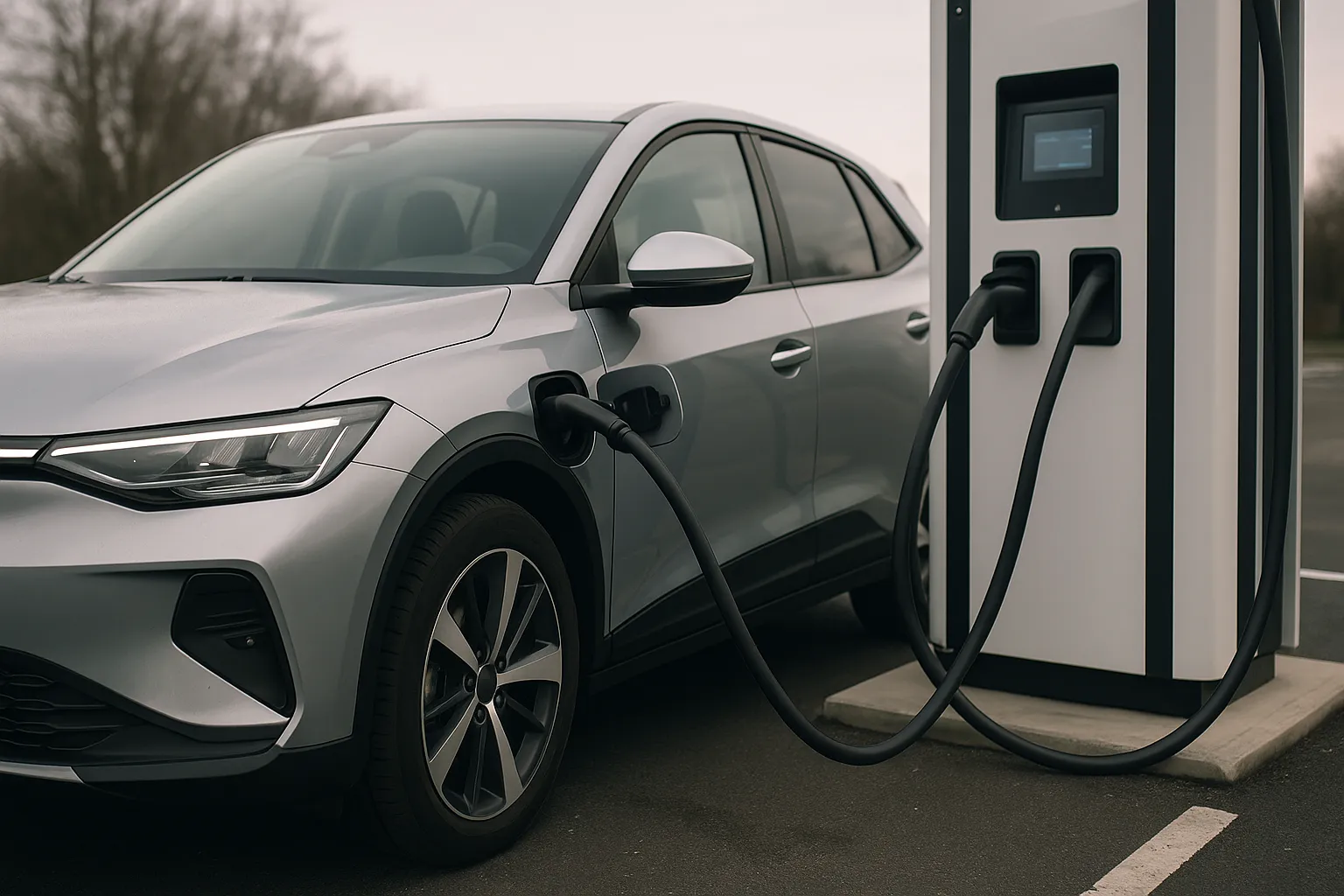
At the same time, the analysis shows that mileage and age alone do not determine battery condition. Charging habits play a significant role. Frequent charging, especially when batteries are regularly driven very full or very empty, can accelerate aging. A high proportion of fast charging can also affect the battery more strongly than slow AC charging at home or at work, depending on the vehicle, battery thermal management, and cell chemistry.
This does not mean that fast charging is fundamentally harmful or should be avoided. Modern electric cars have battery management systems, temperature control, and charging limits that protect the battery. For long-distance journeys, DC fast charging remains indispensable. But anyone who permanently treats their car like a smartphone — constantly charging to 100 percent, leaving it standing fully charged for long periods, and often driving it down close to zero percent — is more likely to risk measurable losses.
For owners, this results in a simple rule of thumb: In everyday use, a charging window between about 20 and 80 percent is often battery-friendly, provided the full range is not needed. Before long journeys, charging to 100 percent is unproblematic if the car is used shortly afterward. Many vehicles offer adjustable charge limits for this, which buyers and drivers should use consciously.
Major differences between individual cars
The variation is particularly important. The data show not only differences between models, but also between individual examples of the same model. Two vehicles of the same age with similar mileage can therefore have significantly different battery health. Reasons can include climate, charging history, driving style, software version, battery size, and usage patterns.
This is decisive for used car buyers. Mileage alone is not enough to assess the condition of an electric car. An EV with 80,000 kilometers and a gentle charging history can have a better battery than a vehicle with lower mileage that was mainly charged in hot conditions, quickly, and to 100 percent. That is why a reliable battery test is becoming more important — similar to a complete service history for combustion-engine cars.
Battery capacity itself can also play a role. Larger batteries are often discharged less deeply in everyday use because the same commuting route uses only a smaller share of the total capacity. This can reduce the load per cycle. Smaller batteries are cheaper and more efficient, but with identical use they may experience larger charging swings more often.
What buyers should check now
Anyone who wants to buy a used electric car should not only ask about range and charging performance. Specific information on battery condition is becoming more important. This includes a current SoH value, information about the warranty, previous software updates, and ideally a documented charging history. Not every manufacturer openly provides all data, and on-board computer values are not always directly comparable. An independent battery test can therefore be helpful, especially for higher-priced EVs or vehicles outside the new-car warranty.
Buyers should also clarify how the battery warranty is worded. Many manufacturers cover the battery for several years or up to a certain mileage, often with a minimum capacity as the threshold. What matters, however, is which measurement method applies, which components are included, and whether the warranty claim may be restricted for imported or poorly documented vehicles.
For new-car customers, the message is also relevant. Fear of an early, expensive battery defect should not be the main reason against an electric car. More important is whether the vehicle suits one's own charging profile: Is there a charging option at home or at work? Is the real winter range sufficient? Is the car regularly driven on the motorway at high power? These questions influence satisfaction and battery use more than abstract durability debates.
Significance for manufacturers and the industry
For the auto industry, the analysis confirms a trend: Batteries are not only becoming larger and more powerful, but also better monitored. The State of Health is likely to become a central value in a vehicle's life in the future — for leasing companies, dealers, insurers, and residual value forecasts. The more transparently this value is available, the more stable the used market for electric cars can become.
At the same time, pressure is growing on manufacturers to provide battery information in a more understandable way. If buyers check oil changes, timing belts, and emissions standards on a combustion-engine car, they will increasingly compare SoH, charging performance, and cell condition on EVs. Models that protect their batteries well and display their condition transparently could achieve higher residual values in the long term.
The conclusion
The global data analysis takes much of the fear out of battery degradation without downplaying it. Modern electric car batteries lose less capacity on average in the first 50,000 kilometers than many buyers fear. At the same time, the wide variation shows: The specific condition of an individual vehicle matters more than blanket statements about a brand or model.
For interested buyers, this means: Do not compare only range and price, but check the battery as well. For owners, it means: Use charge limits, avoid extreme states, and make sensible use of fast charging. Then there is much to suggest that the battery will last longer than the oldest prejudices about electric cars would lead one to believe.