Lucid recalls nearly all Air sedans over fire risk
Lucid must make fixes to almost all Air sedans built so far. For owners, what matters most now is whether their vehicle is affected and what repair is planned.
Nearly the entire Air fleet must be inspected
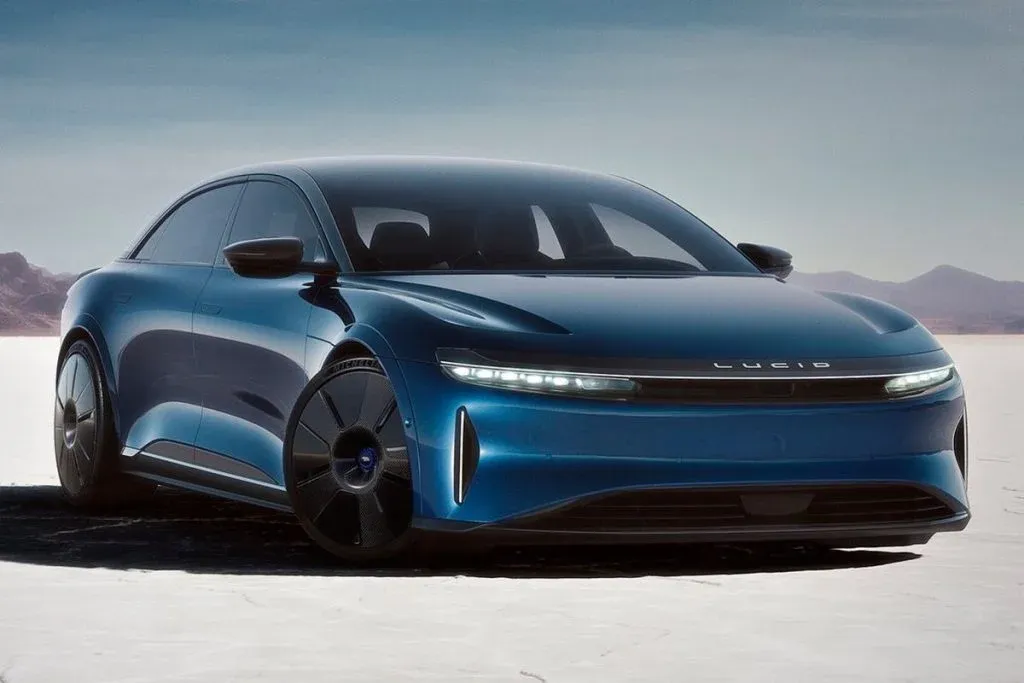
Lucid is launching an extensive recall for the Air sedan. According to the information known so far, nearly every example of the electric car built or delivered to date is affected. The reason is a possible fire risk that makes a technical inspection and presumably a remedy on the vehicles necessary.
For Lucid, this is a particularly visible recall because the Air is not only the brand's core model, but also its technological flagship. Since its market launch, the sedan has stood for long ranges, powerful drivetrains and a highly efficient electric architecture. Precisely for that reason, a safety-related recall of this scale is being watched closely: it does not affect a niche model or a small equipment line, but the majority of the customer base.
Specific technical details about the component that triggered the recall, the final repair method and possible restrictions by model year or variant have not yet been fully classified publicly. What is clear, however, is this: a recall due to fire risk should be taken seriously by owners, even if such a step does not automatically mean that every affected vehicle is immediately dangerous.
What owners should do now
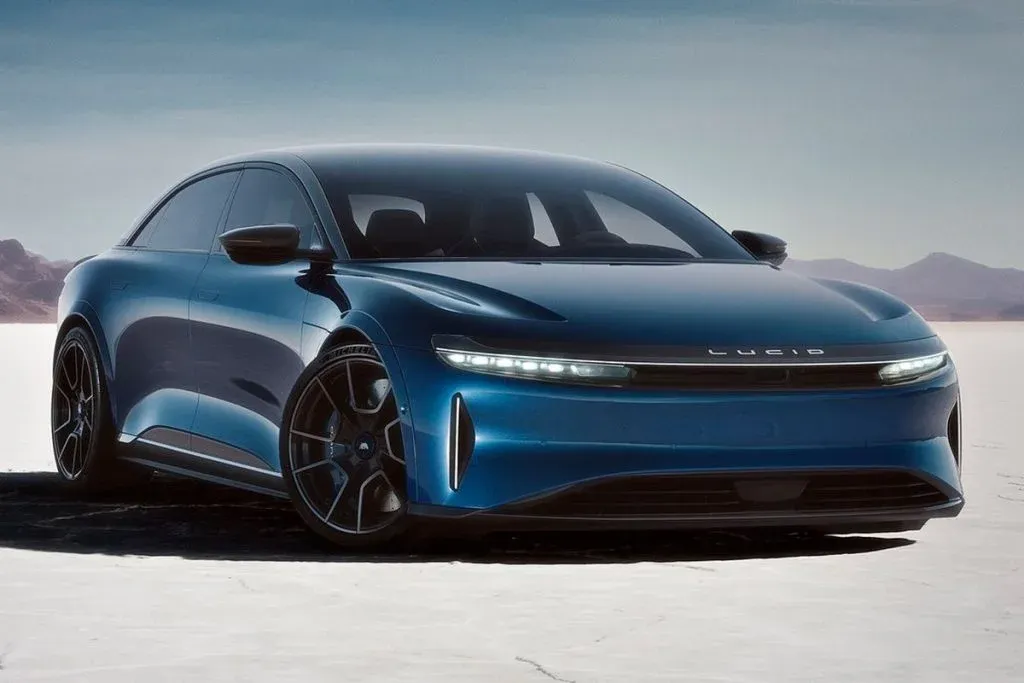
Anyone driving a Lucid Air should first check whether their own vehicle identification number is part of the campaign. Recalls are usually matched using the vehicle identification number, or VIN for short. This can be found in the vehicle documents, on the windshield or in the vehicle's digital account. As soon as the recall data has been fully entered in the respective market, it can be used to determine whether a specific car is affected.
Owners should also watch for notices from the manufacturer, the responsible authority or the service partner. In many markets, owners are contacted directly, often additionally via app, email or customer account. Especially with young electric-car brands, digital communication is often the fastest way to initiate an appointment or a software update.
Until a repair has been carried out, cautious handling of all manufacturer instructions is recommended. If Lucid issues specific parking, charging or usage instructions, these should be followed. Without such instructions, the recall notice alone does not imply that every vehicle must be taken out of service immediately. The crucial point is not to postpone the inspection and to have the official remedy carried out.
Why fire risk in electric cars is particularly sensitive

Fires in electric vehicles are statistically a complex topic and must not be assessed in sweeping terms. Electric cars do not necessarily catch fire more often than combustion-engine vehicles. However, when high-voltage batteries, power electronics or charging hardware are involved, possible thermal events receive particular attention because they can be difficult to extinguish and generate strong public attention.
A fire risk can have various causes. Possible causes include faults in high-voltage components, defective connectors, problems with battery modules, inadequate insulation, overheating of individual components or software logic that does not activate protective functions in time. Which of these categories actually plays a role in the Lucid Air cannot be clearly derived from the currently available key data. It would therefore be irresponsible to name the trigger without reliable technical information.
For customers, speculation about the cause is less important than the concrete question: Will the car be inspected safely, will a faulty part be replaced, or will a monitoring or protective function be adjusted via software? In modern electric cars, recalls can include both traditional workshop work and over-the-air updates. Some campaigns combine both, such as a diagnosis via software and a subsequent repair only for vehicles showing anomalies.
Significance for Lucid as a brand
The recall hits Lucid at a stage in which the brand is still fighting for trust, production stability and broader acceptance. The Air is a technically ambitious vehicle, but compared with established manufacturers Lucid is still a small provider. As a result, every major service campaign carries more weight because it affects a higher share of the fleet and directly touches the brand promise.
At the same time, recalls are not an unusual event in the automotive industry. Major manufacturers also regularly recall vehicles over safety-related issues. What matters is not only that a problem occurs, but how transparently, quickly and customer-friendly it is resolved. For Lucid, it will be crucial to organize spare parts, service appointments and customer communication so that owners have as little downtime as possible.
For the industry, the case shows how demanding the industrialization of high-quality electric cars remains. Range, charging performance and driving dynamics are important sales arguments, but safety and quality assurance are at least just as relevant for buyers. Particularly in the premium segment, customers expect a vehicle not only to be fast and efficient, but also to be reliably supported over the years.
Effects on prospective buyers
Anyone currently considering a new or used Lucid Air should include the recall in the purchase check, but should not automatically treat it as a deal-breaker. What matters is whether the specific vehicle is affected and whether the remedy has already been completed. For used cars, proof of completed recalls should be part of the documents.
When buying a new car, the following applies: dealers or the manufacturer should be able to confirm before delivery whether the vehicle is listed as open in a recall campaign. If the repair has not yet been completed, buyers should clarify when it will take place and whether use is subject to restrictions until then. Possible waiting times for parts or service appointments can also be relevant to the purchase decision.
For lessees and fleet customers, predictable availability also matters. If many vehicles have to go to the workshop at the same time, appointments can become scarce. The faster Lucid scales the measure, the lower the burden on customers will be.
A test of trust
The Lucid Air remains one of the most technically interesting electric sedans in the luxury segment. A major recall does not automatically change that, but it does set a clear test: customers want to see that safety risks are addressed consistently and that communication is unambiguous.
For owners, the most important recommended action is: check the vehicle identification number, follow official instructions and do not delay the repair. For prospective buyers, the rule is: have the recall status documented and only then decide. For Lucid, the task now is to work through a serious safety issue professionally and thereby show that the brand can not only develop innovative technology, but also reliably support a growing vehicle fleet.