Land Rover and Stellantis bring Defender production to North America
Land Rover plans to build the Defender in North America in the future with support from Stellantis. For buyers, this could mean shorter delivery routes and a more robust supply – but concrete details on the plant, volume and prices are still pending.

An unusual production move for an important off-roader
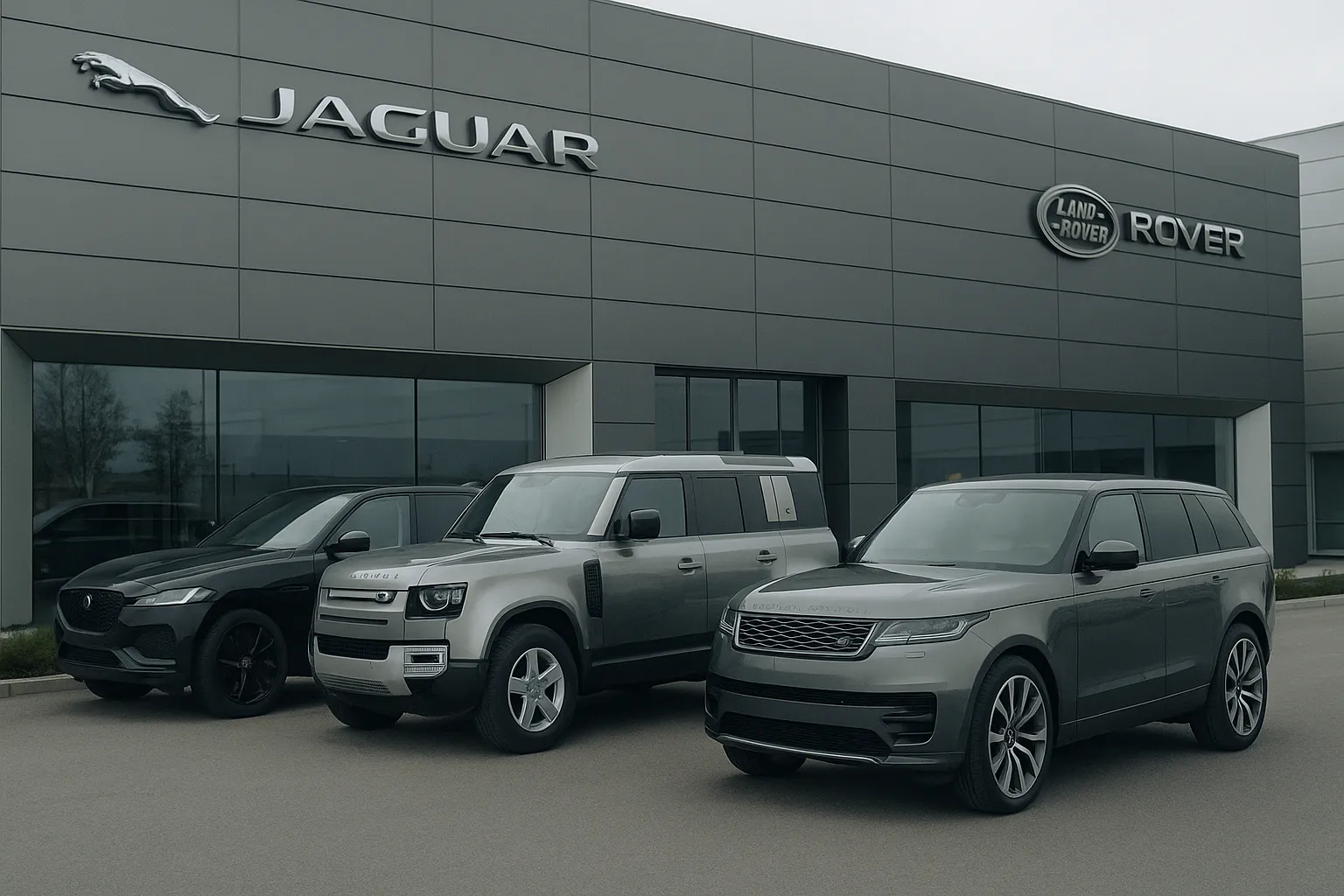
Land Rover plans to build the Defender in North America and is working with Stellantis to do so. This brings one of the brand’s best-known models closer to one of its most important sales markets. The move is noteworthy because two major manufacturers are cooperating on the production side, while otherwise competing with each other in many sales segments.
So far, only the core of the decision is clear: The Defender is to be manufactured in North America with support from Stellantis. Which facility will be used, when production will start, which body variants will be affected and what volumes are planned have not yet been specified. There are also no reliable details on prices, equipment scopes or possible changes for individual model years. That is precisely why the news should be understood less as a short-term buying recommendation and more as a strategic signal.
Why the Defender is a plausible choice for this

For Land Rover, the Defender is far more than a niche model. The current generation has shed the classic ladder-frame image of earlier Defenders and uses a modern architecture, while remaining clearly recognizable as a boxy, off-road-capable luxury SUV. In North America, this mix of adventure styling, all-wheel-drive capability and premium equipment sells particularly well. The market is large, high-margin and SUV-friendly.
For Land Rover, local or regional production is therefore an obvious step. A vehicle like the Defender is large, heavy and available in numerous variants. Long transport routes tie up capital, increase complexity and make supply more vulnerable to disruptions. If part of production is closer to US, Canadian or Mexican customers, this can bring long-term advantages – even if it does not automatically make the car cheaper.
What buyers can expect – and what they cannot

For car buyers, the most important question is: Will North American production make the Defender cheaper or faster to deliver? The cautious answer is: possible, but not guaranteed.
Production in the region can shorten supply chains and give dealers more planning certainty. Especially for high-demand variants, this could help reduce waiting times or improve the availability of certain equipment. Exchange rates, logistics costs and possible trade barriers also play a role with imported vehicles. If these risks are partly mitigated, a manufacturer can respond more flexibly.
At the same time, modern vehicle prices depend on many factors: material costs, wage levels, equipment strategy, demand, regulation, warranty provisions and brand positioning. A locally built Defender therefore does not automatically have to receive a lower entry-level price. Premium manufacturers often use regional production first to stabilize supply and profitability, not necessarily to reduce list prices significantly.
For existing customers, little will change at first. Warranty, service intervals, software supply and spare parts supply do not automatically depend on where a vehicle was assembled. In the longer term, however, a stronger regional manufacturing base could have positive effects on parts logistics and the dealer network, provided that corresponding component flows are also established.
Why Stellantis is an interesting partner
Stellantis has a broad industrial base in North America, experience with large SUVs and pick-ups, and well-established supplier relationships. For Land Rover, cooperation can therefore be faster and lower-risk than building a production facility of its own from scratch. The automotive industry is increasingly using such models when capacity, investment costs or market access are difficult for a single company to justify on its own.
For Stellantis, such an agreement can also make sense. Production facilities are expensive and need to be utilized. If free or future available capacity can be filled with an external model, that improves the profitability of a site. At the same time, it remains open how deep the cooperation will go: It can range from contract manufacturing and joint logistics to more strongly integrated production processes. Without concrete plant and contract details, any further assessment would be speculation.
A sign of a more pragmatic industry
The cooperation shows how pragmatically manufacturers now handle production. Brand identity and production location are no longer as rigidly linked as they once were. What matters is whether quality, costs, delivery capability and regulatory requirements are met. Especially with complex models with many powertrain and equipment variants, regional production can be a strategic advantage.
This is particularly true in North America. The market is large, but politically and economically demanding. Trade rules, tariff issues, incentive conditions and local value-creation requirements can affect business models. Manufacturers that can produce flexibly are less dependent on individual export routes. For Land Rover, Defender production in North America could therefore also be a safeguard against future uncertainties.
Which questions are still open
Several points remain decisive for customers and dealers. First: Which plant will handle assembly? A site in the US would have different trade-policy and logistical implications than production in Canada or Mexico. Second: Which Defender versions will be built there? The Defender 90, 110 and 130 serve different customer groups, and not every variant necessarily has to be manufactured regionally. Third: Will only vehicles for North America be produced, or could production also supply other markets?
The powertrain question is also important. Depending on the market, the Defender is offered with different engines, including electrified variants. Future emissions regulations and demand for plug-in hybrid or other electrified versions could influence which versions make sense in North America. Without official technical details, however, it is not yet possible to say whether the new production agreement also means a larger change in the powertrain strategy.
Significance for enthusiasts
Defender fans will look closely to see whether production quality, material feel or model character change. A different production location does not have to be a disadvantage. Many global vehicles are now built on several continents without customers noticing a clear difference in everyday use. What matters is process control: panel gaps, paint quality, electronics testing, sealing and final inspection are just as important in a premium SUV as the actual off-road technology.
For purists, the Defender remains an emotional model anyway. The fact that it could in future be built partly in North America does not necessarily change its basic technical idea. But it does show that Land Rover is treating the Defender more strongly as a global volume and profit model – not only as an icon rich in tradition.
Conclusion
The planned cooperation between Land Rover and Stellantis is an interesting industrial-policy move and potentially relevant for buyers. If it is implemented well, it can improve supply to the North American market, shorten supply chains and give Land Rover more flexibility. However, the details that will determine the practical benefit are still missing: plant, start date, variants, volumes and possible price effects.
For those interested in the Defender, this means: Anyone looking to buy in the short term should not count on an immediate price reduction or a quick change in dealer inventory. Anyone planning for the long term should watch developments. North American production could make the Defender easier to obtain in the region in the future – and it shows how strongly even brands rich in tradition are adapting their manufacturing strategy to the reality of a global, uncertain car market.