Kia Telluride: Lawsuit puts battery drain in focus
Several Kia Telluride owners report drained 12-volt batteries and causes that are difficult to trace. A new lawsuit is now increasing the pressure to define the problem more transparently.

Battery trouble with the large Kia SUV
The Kia Telluride is at the center of a new lawsuit due to repeatedly reported battery drains. Affected owners are those who, after periods of parking, were confronted with a dead 12-volt battery. What appears to be particularly problematic is not only the failure itself, but also the troubleshooting: workshops are said to have difficulty reliably identifying the specific trigger.
This is not about the high-voltage technology of an electric car, but about the classic starter or onboard electrical system battery of a large combustion-engine SUV. If it fails or is discharged, the vehicle cannot start despite intact engine and drivetrain technology. Comfort and safety functions, door locking, control units and telematics systems also depend on the 12-volt network.
A lawsuit is initially neither a technical nor a legal finding. However, it shows that some owners no longer view their experiences merely as normal battery aging or an isolated case. The decisive questions will be whether a systematic defect can be proven, which model years or equipment versions could be affected, and whether Kia provides technical remedies, software changes or service instructions.
Why a dead 12-volt battery is more than an annoyance
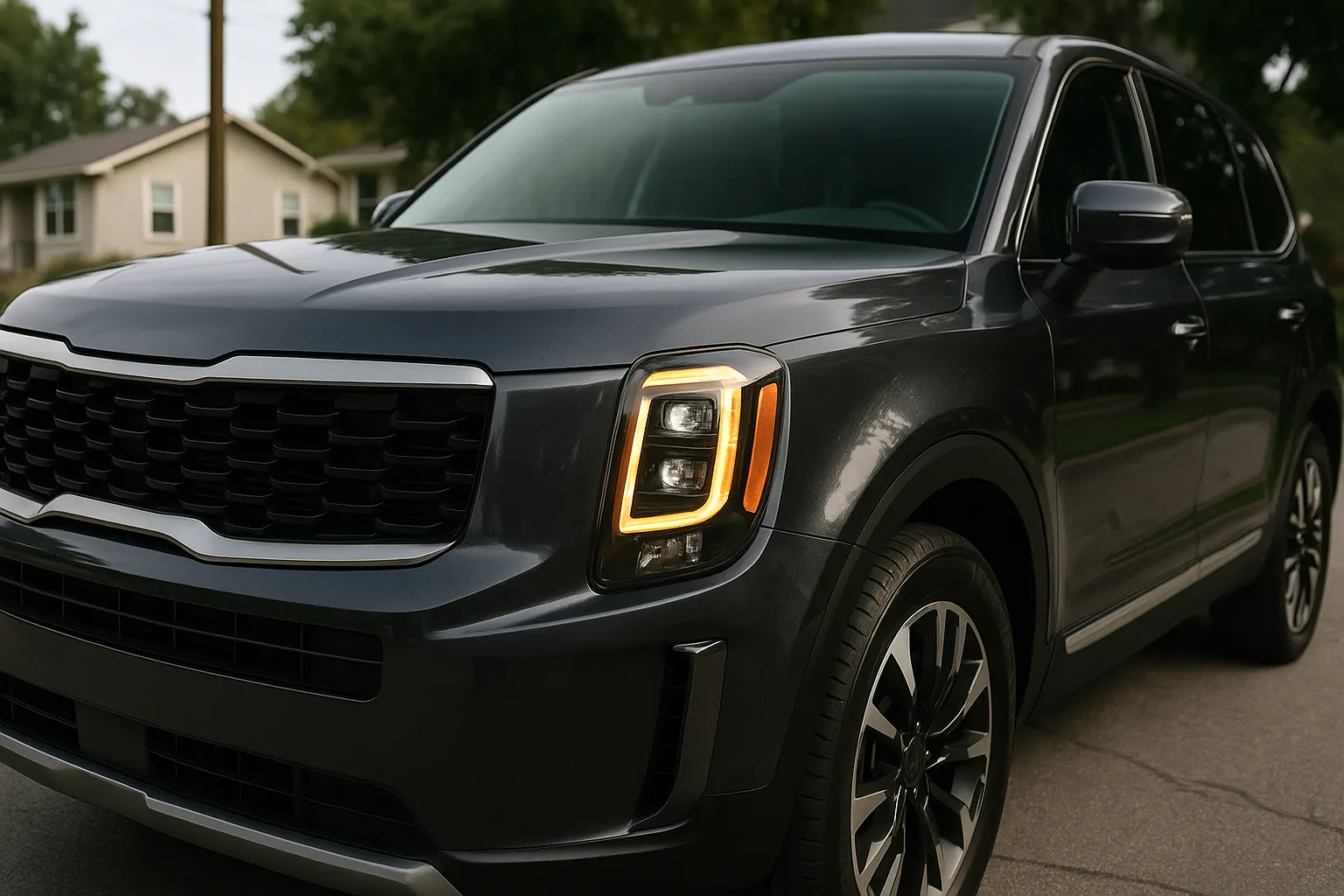
A discharged starter battery initially sounds like a comparatively simple problem. In practice, however, it can have significant consequences. Anyone who cannot drive off in the morning misses appointments, has to arrange roadside assistance or switch to a replacement vehicle. For families, commuters and people who rely on a large SUV as their main vehicle, reliability is not a secondary aspect.
In addition: modern vehicles do not remain completely inactive even when parked. Control units monitor the alarm system, keyless access, connected services, software modules and, in some cases, comfort functions. A certain quiescent current is normal. But if too much energy is drawn, or if a control unit does not properly enter sleep mode, the battery can discharge faster than expected.
That is precisely why such faults are difficult to diagnose. A new battery can help in the short term, but it does not necessarily solve the cause. If only the battery is replaced while a consumer continues to draw power, the problem may recur. For owners, this is frustrating because they have to go to the workshop multiple times without receiving a clear explanation.
What is known about the cause – and what is not

The exact technical trigger is currently not conclusively clarified publicly. The reports describe discharged batteries and difficulties in finding the cause. Whether a specific control unit, a software logic, accessories, a faulty sensor, the telematics system or another consumer is responsible cannot be stated clearly on the basis of the known information.
It is also important to distinguish this from normal wear. 12-volt batteries age, especially with short-distance driving, heat, cold or long periods of parking. A single failure is therefore not yet proof of a design defect. It becomes notable only when comparable symptoms occur in several vehicles, when new batteries are repeatedly discharged or when workshops cannot find a plausible explanation.
For the legal assessment, a central question will be whether Kia provided sufficient information about a possible problem before the sale or during use, and whether the repairs offered have a lasting effect. For the technical assessment, by contrast, what matters is whether a reproducible quiescent-current fault or a recurring pattern in the workshop data can be demonstrated.
Significance for current Telluride owners
Owners of a Kia Telluride should not panic, but they should carefully document repeated battery problems. It makes sense to record the date, mileage, parking duration, outside temperature, warning messages, jump-start events and workshop visits. Invoices, diagnostic logs and battery tests may later become important if warranty, goodwill or legal questions arise.
Anyone who has already had a dead battery several times should not have the workshop check only the battery condition. What is crucial is a quiescent-current measurement after a sufficient waiting period, when all control units should have switched into sleep mode. Software versions, known service notices and retrofitted accessories should also be checked. Dashcams, GPS trackers, OBD plugs, chargers or alarm systems can also draw current and distort the diagnosis.
For vehicles within the warranty period, owners should insist on a written fault description. Phrases such as “battery charged” or “no fault found” are of only limited help if the problem occurs again. A traceable test report is better: measured battery voltage, test result, quiescent-current value, software updates performed and the workshop’s assessment.
What used-car buyers should pay attention to
The Telluride is primarily a model shaped by the North American market and is not a typical high-volume SUV in Germany. For import buyers, expatriates or readers looking at the US market, the topic is nevertheless relevant. When buying used, the battery history should be specifically requested. Was the 12-volt battery replaced unusually early or multiple times? Were there starting problems after just a few days of parking? Were control units updated?
A test drive alone often does not reveal such problems. An independent pre-purchase inspection is better, with the battery, charging system and quiescent current examined. A look at maintenance records can also help. Repeated entries regarding jump-starts, battery checks or electrical diagnostics are not automatically an exclusion criterion, but they should prompt further questions.
Buyers should also clarify how warranty claims are handled for imported vehicles. Manufacturer warranties can be limited depending on the market, vehicle history and import route. A supposedly attractive purchase price can lose its appeal if later electrical diagnostics or battery replacements have to be paid for entirely out of pocket.
Why the case matters for the industry
The case illustrates a broader problem with modern cars: reliability has long since stopped depending only on the engine, transmission or chassis. Connected services, comfort electronics, assistance systems and software modules make vehicles more capable, but they also increase complexity. A small fault in the energy management system can be enough to immobilize an otherwise functional car.
For manufacturers, this is a sensitive issue. Customers accept many digital functions in modern vehicles, but they expect a parked car to start reliably after a few days or weeks. If workshops cannot quickly find the cause, trust in the brand and model suffers. At the same time, dealers need clear diagnostic procedures and technical information so that they do not merely treat symptoms.
For Kia, there is also the fact that the Telluride is positioned in important markets as a family-friendly, well-equipped SUV. In this segment in particular, reliability, predictable operating costs and straightforward service matter greatly. An open technical clarification would therefore be important not only for the affected owners, but also for the perception of the model.
What matters next
In the short term, it remains to be seen whether the lawsuit reveals new technical details or whether Kia communicates a specific remedy. Possible measures could include more precise diagnostic guidelines, software updates, replacement of certain components or a clearer classification of when a battery problem counts as normal wear and when it counts as an unusual fault.
Until then, the rule for owners is: document repeated failures, do not accept premature diagnoses and specifically ask the workshop about quiescent current, software version and known service information. For buyers, the issue is an additional inspection point, but not a blanket judgment on every Telluride. What matters is the specific vehicle condition, the service history and whether a possible fault has been resolved in a traceable way.