Jeep Grand Cherokee: another recall over possible coil spring problems
Certain Jeep Grand Cherokee and Grand Cherokee L vehicles from model years 2021 to 2023 must return to the workshop again. The focus is on rear coil springs that can come loose if incorrectly installed — in some cases also on vehicles that were already inspected in an earlier campaign.
Another workshop campaign for the Grand Cherokee
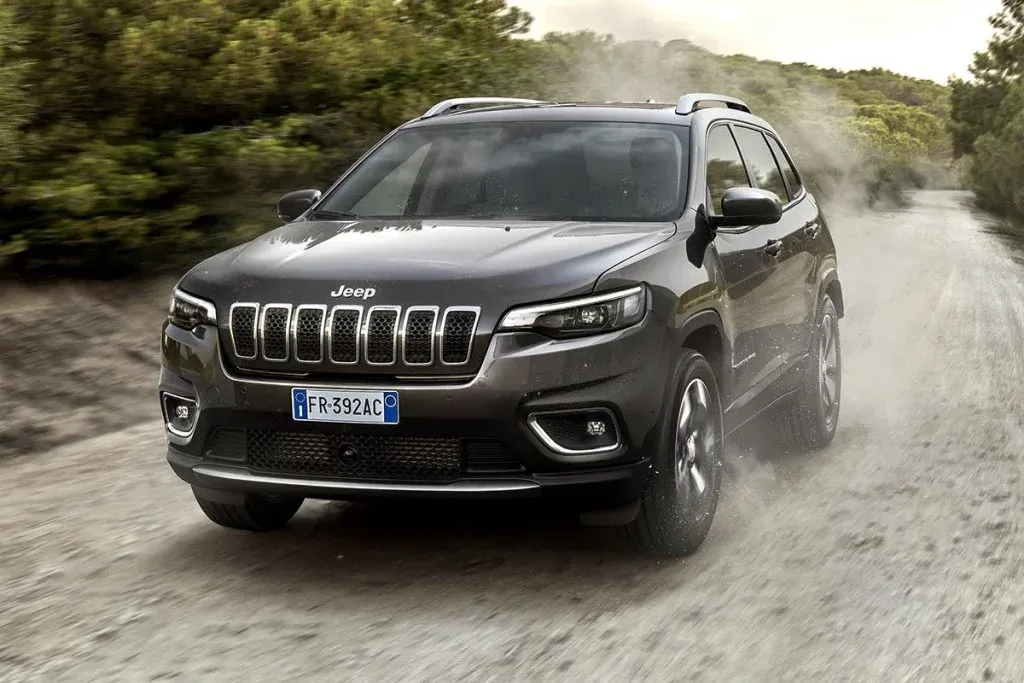
Jeep must once again recall a large number of Grand Cherokee models to workshops in the USA. Around 328,000 vehicles from model years 2021 to 2023 are affected, including both the two-row Grand Cherokee and the three-row Grand Cherokee L. The reason is a known problem with the rear coil springs that has apparently not been fully resolved.
The recall is noteworthy because it does not only include vehicles that have not yet been addressed. SUVs that are said to have already been inspected or repaired as part of earlier measures may also be affected again. For owners, this means: a workshop visit already completed is not a guarantee in this case that the vehicle is no longer part of the issue.
What the technical issue is

The focus is the rear suspension. On certain vehicles, a rear coil spring may not be seated correctly or may not be sufficiently secured. In an unfavorable case, the spring can come loose from its position. That is not only a problem for the affected vehicle itself, but also for other road users if a component fully separates from the vehicle while driving and ends up on the roadway.
A loose or incorrectly seated spring can also affect driving behavior. Depending on the situation, noises from the rear area, a changed vehicle height at one corner, unusual knocking, or an unstable feeling while driving could be possible indications. Such symptoms do not necessarily have to be connected with this recall, but in a heavy SUV they should generally be checked promptly.
The models of the current Grand Cherokee generation use different suspension configurations depending on the version. The recall relates to the affected vehicles within the stated model years, not across the board to every single example. The specific vehicle identification number is therefore always decisive.
What owners should do now

Owners of a Jeep Grand Cherokee or Grand Cherokee L from model years 2021, 2022 or 2023 should have it checked whether their vehicle falls under the new campaign. This applies especially if the car was bought used, if recall documents from the previous owner are missing, or if a similar suspension repair has already been documented in the past.
The most reliable check is carried out using the vehicle identification number with the manufacturer, at a Jeep dealer, or via official recall databases in the respective market. As a rule, owners are contacted if the vehicle is officially listed in the recall population. With used cars, however, it can happen that owner data is not up to date or notifications arrive late.
Repairs as part of a safety recall are usually free of charge for customers. Depending on the vehicle, the workshop will inspect the affected rear springs and their seating and carry out necessary corrections. Whether parts need to be replaced or correct installation is sufficient depends on the respective findings and the repair instructions.
Until the inspection, owners should pay attention to unusual noises, a vehicle standing at an angle, or visible abnormalities in the rear suspension. Anyone who suspects that a spring is not correctly seated should not continue to use the vehicle in normal operation, but should contact a workshop.
Why vehicles already repaired can also be affected
The fact that a recall includes vehicles that have already been in the workshop once because of the same or a very similar problem is annoying for customers, but not unprecedented. There can be several reasons: an earlier remedy may not have been sufficient, the inspection instruction was expanded, additional production periods were identified, or quality control evaluated new data.
For owners, the practical consequence matters more than the internal cause. Anyone who had a recall carried out on the Grand Cherokee in recent years should not assume that everything is automatically completed as a result. For safety-relevant components such as suspension springs, another inspection makes sense, even if it means additional time spent.
For dealers, the campaign in turn means a greater workshop load. Recalls of this scale tie up service capacity, especially when the affected vehicles are used in everyday life as family or towing vehicles and customers need quick appointments. For Jeep, it is important to organize parts supply and appointment handling cleanly, because repeated campaigns can noticeably strain customer satisfaction.
Significance for buyers and used-car prospects
The Grand Cherokee is an important model in the upper SUV segment in North America. It is often used as a family car, long-distance vehicle, and towing vehicle. Precisely for that reason, a suspension issue is safety-relevant: the rear axle carries high loads when loaded, when towing, and at highway speeds.
For used-car buyers, the recall is a point that should be checked before purchase. An open recall does not automatically make a vehicle a bad buy, but it should be taken into account in the price discussion, in handover planning, and when arranging an appointment with the dealer. A traceable service history is important. If a vehicle has already had an earlier coil-spring campaign, it should additionally be checked whether the new campaign is also open.
For lease returns and young used vehicles from model years 2021 to 2023, it is worth taking a close look at the documentation. Many of these vehicles are currently changing owners or will do so in the near future. An uncompleted recall can later lead to additional effort, even if the actual repair is free of charge.
A recall that is relevant beyond Jeep
The case shows how demanding recall management has become for modern vehicle platforms. Manufacturers must not only identify a technical fault, but also determine exactly which production periods, plants, variants, and already processed vehicles are affected. If an earlier solution does not cover all cases, a second campaign may become necessary.
For the industry, this is an indication that transparency and clean tracking are becoming increasingly important. Vehicles remain on the market longer, change owners more frequently, and are managed more digitally. At the same time, customers expect safety-relevant problems to be solved quickly and definitively.
For Jeep owners, the most important message is sober: the recall check should not be postponed. Anyone driving a Grand Cherokee or Grand Cherokee L from the affected period should check the VIN, schedule a service appointment, and not continue driving if there are abnormalities in the suspension. The effort is manageable, while the safety-relevant benefit is clear.