Jeep and Ram delay range-extender models by up to nine months
Stellantis is delaying the launch of planned range-extender models from Jeep and Ram. For customers, this means longer waiting times, but for the group it also means additional time for validation, quality, and market positioning.
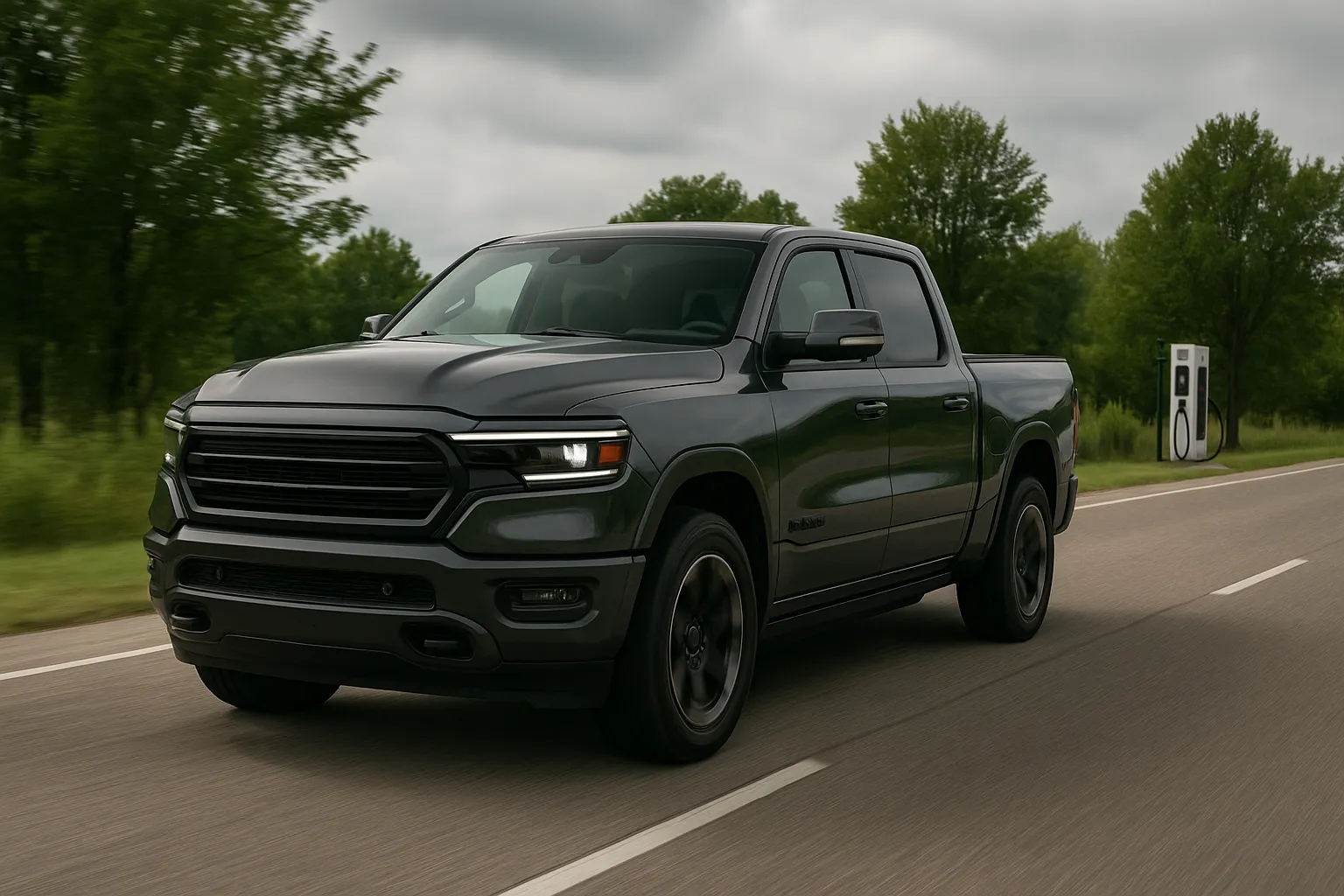
Stellantis is postponing the launch of planned range-extender models from its Jeep and Ram brands. Depending on the model and market, the delay may amount to up to nine months. This means vehicles that combine a large battery with a combustion engine as a power generator will reach the road later than originally planned.
For buyers, this is more than a schedule change in the product calendar. Jeep and Ram serve segments in which range, towing capacity, off-road capability, and everyday usability are weighted particularly heavily. Especially with large SUVs and pickups, a purely battery-electric solution is not equally convincing for all customers: High vehicle weights, long distances, heavy trailers, and rural use create special requirements. Range-extender concepts are intended to build a bridge here.
What a range extender at Jeep and Ram is intended to do
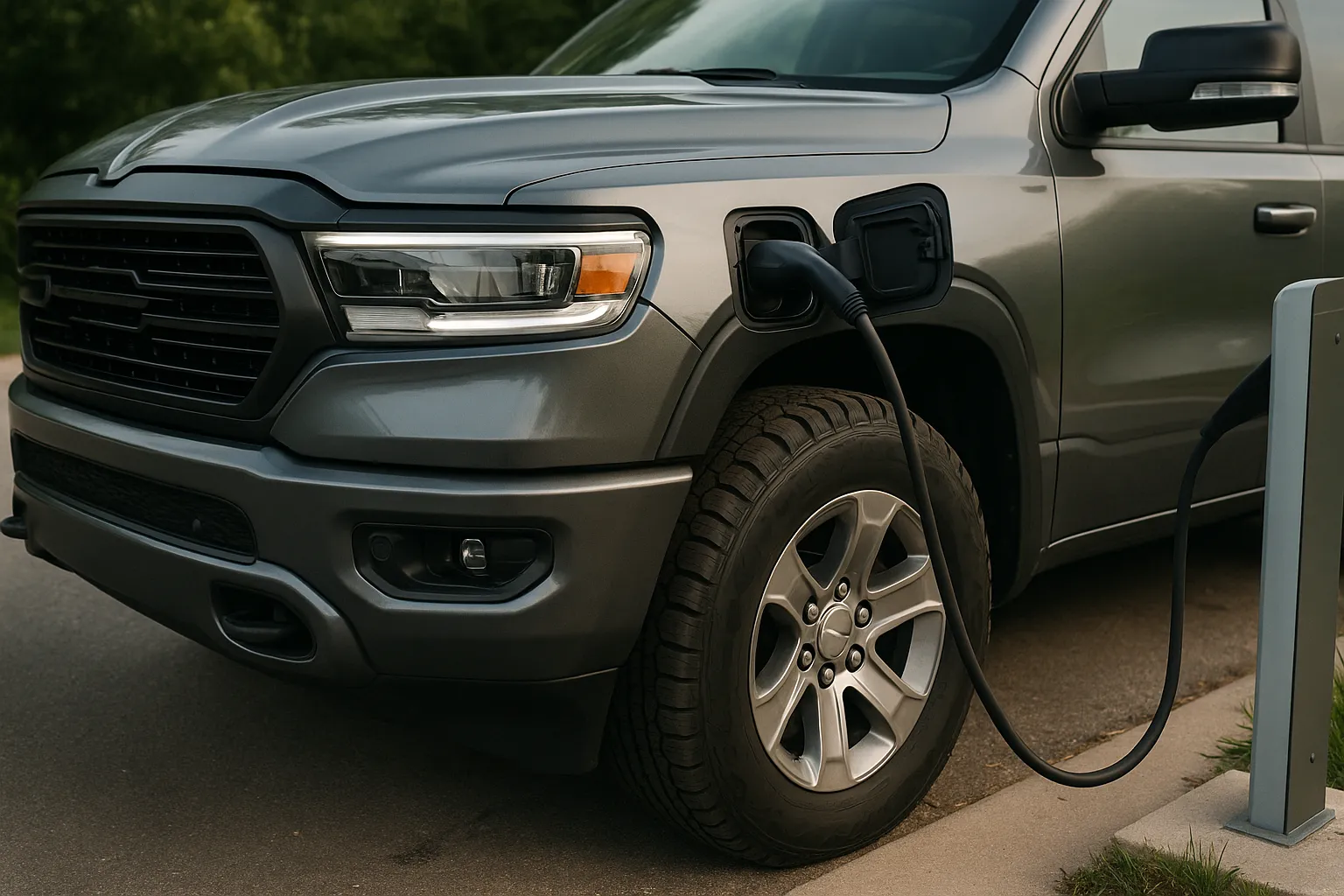
In a range-extender vehicle, an electric motor usually drives the wheels. A combustion engine is also on board, but it works primarily or exclusively as a generator. It recharges the battery or supplies power for the electric drive when the state of charge falls. This distinguishes such vehicles from conventional hybrids, in which the combustion engine and electric motor can both contribute mechanically to propulsion, depending on the system.
The advantage is obvious: In everyday use, many trips can be made electrically, while longer distances depend less heavily on charging stops. For pickup and SUV customers, this is particularly interesting because real-world ranges can drop significantly under load. Anyone who regularly tows a caravan, horse trailer, boat trailer, or work equipment knows the difference between standardized figures and practice.
Ram had already previewed such a concept with the Ram 1500 Ramcharger. The vehicle is emblematic of the strategy of combining electric driving characteristics with the backup of a gasoline generator. Jeep is also working on electrified models that, depending on the model series and market, are intended to occupy a larger role between plug-in hybrid and battery-electric vehicle.
Why a delay is plausible
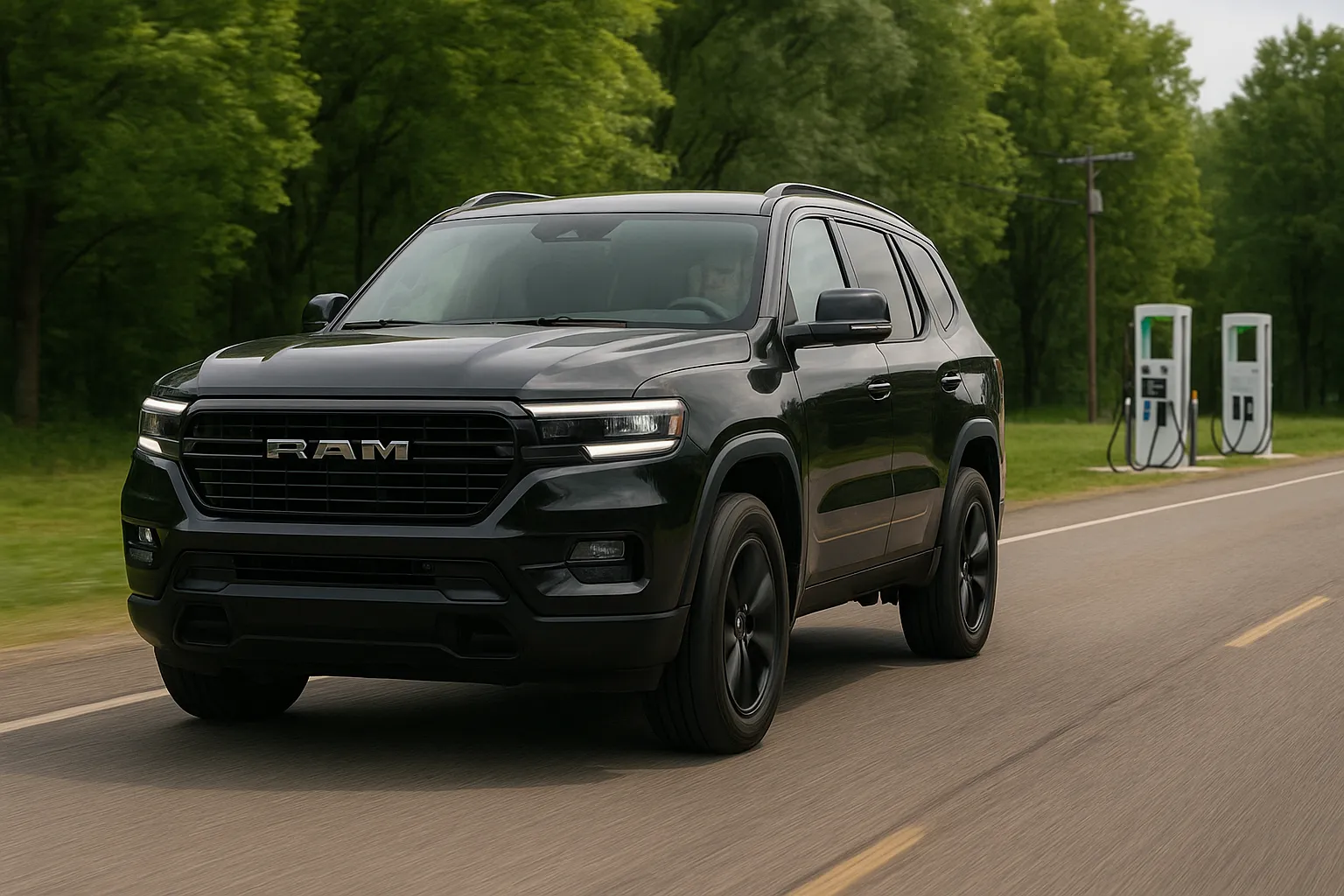
The additional development time is likely primarily intended for technical validation. A range-extender system is more complex than a pure electric car because the battery, electric motors, power electronics, combustion engine, generator, exhaust aftertreatment, cooling, and software have to work together cleanly. In heavy vehicles with high towing capacity, the requirements increase further.
What matters is not only that such a car works on the test bench. It must also operate reliably in heat, cold, long climbs, with high payload, fast charging, city traffic, and highway speeds. Noise and vibration behavior are also factors: Customers expect quiet, confident drive performance from an electrified vehicle. If a generator starts up under load, the driving experience must not feel unfinished.
Software also plays a central role. The vehicle has to decide when the battery is used, when electricity is generated, and how much power reserve is held back. In a pickup or large SUV, this logic is particularly demanding because driving profiles vary greatly: commuting, construction-site use, off-road sections, trailer operation, and long-distance trips place completely different demands on the vehicle.
Significance for buyers
Anyone waiting for a range extender from Jeep or Ram now has to prepare for a longer planning horizon. This can postpone purchase decisions, influence lease extensions, or lead customers to stick for the time being with a conventional gasoline engine, diesel, plug-in hybrid, or a battery-electric model.
For private buyers, the delay is especially relevant if the next vehicle was deliberately intended as a transition into electric mobility. A range extender promises less range anxiety than a pure electric car, but a higher proportion of electric driving than a conventional combustion vehicle. If exactly this profile is being sought, there are currently only limited alternatives in the large SUV and pickup segment.
For fleet customers, trade businesses, and outdoor users, predictability also counts. Vehicles in these segments are often calculated based on payload, towing capacity, operating costs, and downtime. A delay of several months can change procurement plans, especially if government incentives, residual values, or fuel costs are part of the calculation.
Significance for Stellantis and the market
For Stellantis, the delay is a double-edged step. On the one hand, the group loses time in a segment in which manufacturers are searching for the right mix of electrification and everyday usability. On the other hand, a later, better-validated market launch may be more valuable in the long term than an early launch with quality problems.
Jeep and Ram are image-defining brands, especially in North America. Their customers are often demanding, loyal, and at the same time skeptical of solutions that could limit practical utility. An electrified pickup or off-roader therefore has to deliver not only good technical data, but also convince in real-world use. A failed launch could cause more damage than a delay.
The decision also shows how difficult the electrification of large vehicles remains. Pure electric pickups do have strong performance figures and rapid acceleration, but their range can decrease significantly when towing heavy loads. Range extenders are intended to close this gap, but they are technically and regulatorily demanding. They have to comply with emissions regulations, work efficiently, and at the same time credibly deliver on the promise of electric driving.
No retreat from electrification
The postponement should not be understood as a move away from electrified drivetrains. Rather, it indicates that Stellantis wants to bring its products to market later, but in a more robust form. For the industry, this is a sign that the transition is not linear. Several interim solutions are emerging between the conventional combustion engine and the pure electric car, and their success depends heavily on price, reliability, and utility value.
For enthusiasts, the development remains exciting. Range-extender vehicles could play a special role in large Jeeps and Rams because they combine electric torque, potentially strong performance, and greater long-distance security. Whether this concept actually strikes a chord with customers, however, depends not only on range figures. Real-world consumption figures, charging speed, generator behavior, maintenance costs, towing capacity, and price will be decisive.
The most important point
The delay of up to nine months initially means patience for interested buyers. At the same time, the additional time can help tune the vehicles more closely to real-world use. In segments in which trust, durability, and utility value are decisive, that is no minor matter. With their range-extender models, Jeep and Ram must show not only that the technology works, but that it makes their customers' everyday lives better.