Hyundai Staria Cargo: Futuristic Electric Van with 1,040 kg Payload
Hyundai presents the Staria Cargo as a three-seat panel van with electric drive, 5.5 cubic meters of cargo space and a vehicle-to-load function. Prices, range and market launch are still open.
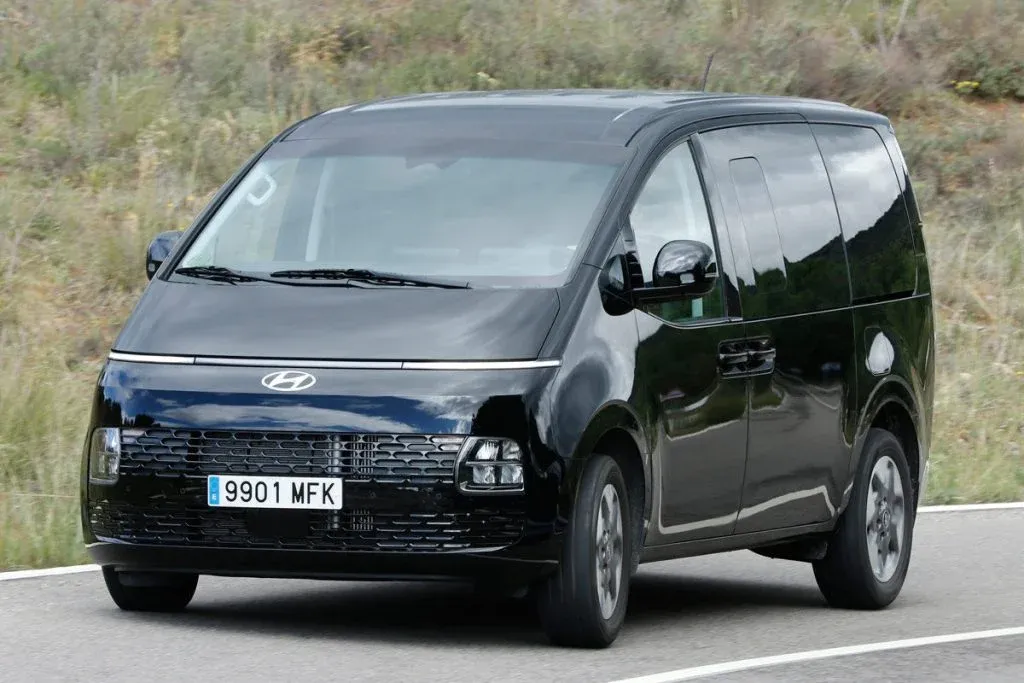
Hyundai is expanding the Staria family with a pure commercial vehicle variant: The new Staria Cargo is designed as a three-seat panel van and is intended to combine the Staria's striking van shape with the requirements of commercial users. The focus is on a large, rectangular cargo area, a payload of up to 1,040 kilograms and an electric architecture with vehicle-to-load function for tools or other consumers.
This moves Hyundai into a segment that is becoming increasingly important for trade businesses, delivery services and municipal fleets. Electric vans are no longer just an image product for big cities. Many companies are now making concrete calculations involving access regulations, operating costs, charging infrastructure and the question of whether an electric van can handle everyday use without compromise. This is exactly where the Staria Cargo aims to come in.
Panel van instead of shuttle: What defines the Staria Cargo
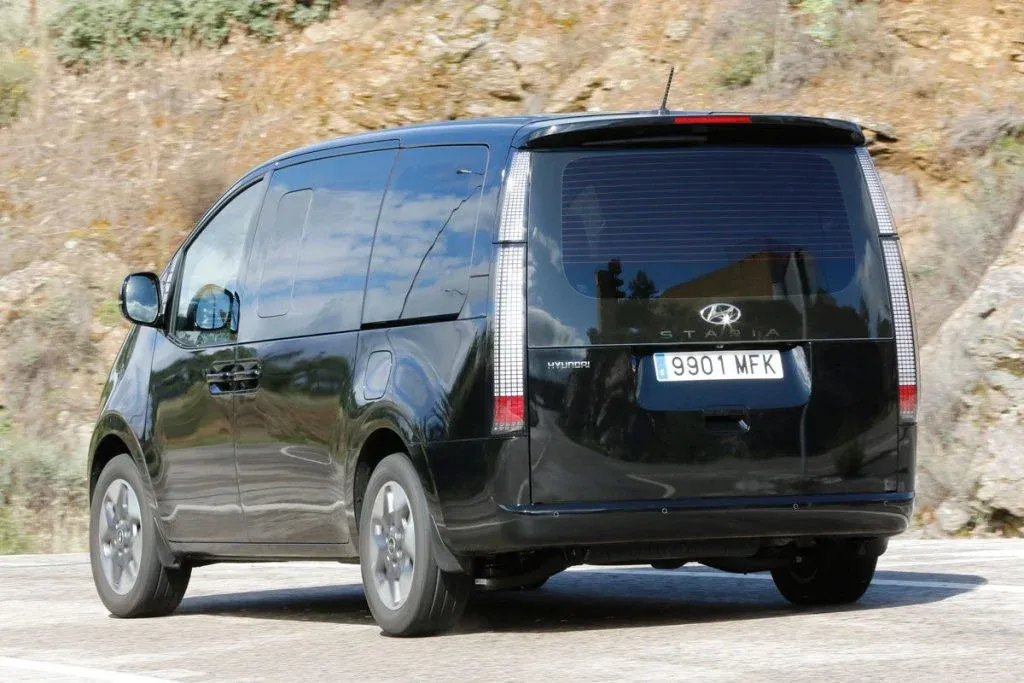
Visually, the Staria Cargo remains close to the familiar Staria design language. The smooth front, high beltline and monolithic body look markedly different from many classic vans. While the Staria as a passenger van, depending on the market, is aimed more at families, shuttle services or more upscale passenger transport, the Cargo is clearly designed for work.
Hyundai positions the model as a conventional mid-size panel van. This is important because the Staria name is not entirely self-explanatory in the Hyundai world: The manufacturer previously already had commercial variants in its lineup with a different technical and conceptual orientation, including chassis solutions for bodies such as box bodies or tippers. The Staria Cargo takes a different path. It is not merely a chassis for special bodies, but a closed panel van with a factory cargo area.
There are three seats in the cab. Next to the driver's seat is a double bench seat for passengers. Luxury equipment, as known from higher-grade Staria passenger versions, gives way to more robust materials. Nevertheless, the workplace is not intended to be spartan: A 12.3-inch touchscreen is on board and underscores that modern commercial vehicles are increasingly receiving car-like operating concepts.
Cargo area: 5.5 cubic meters and wide access points
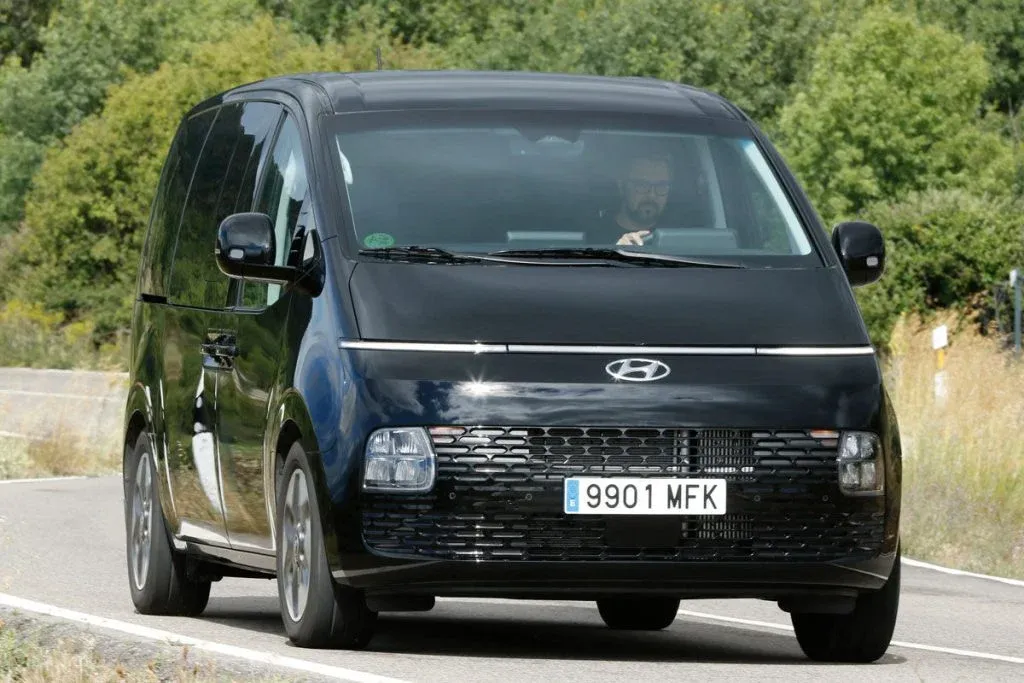
The cargo area measures 2,500 millimeters in length, 1,640 millimeters in width and 1,436 millimeters in height. This results in a load volume of 5.5 cubic meters. That puts the Staria Cargo in the range of mid-size electric vans, although in terms of volume it is slightly below the smallest versions of some established competitors such as the Ford E-Transit Custom.
In practice, however, it is not just the pure cubic-meter figure that matters. Hyundai uses two side sliding doors as well as rear doors in the classic hinged-door style. This makes access easier in city traffic, on tight construction sites or during parcel stops at the roadside. For drivers who frequently need to remove individual tools, boxes or deliveries, sliding doors on both sides are a relevant advantage.
The maximum payload of 1,040 kilograms is also a key figure. Many electric vans have to convince precisely here because of the battery weight if they are to replace combustion-engine models. For fleet customers, what matters in the end is less the futuristic design than the question of whether the van can travel legally and efficiently with full equipment, materials and crew.
Vehicle-to-load: Power source on wheels
A particularly practical detail is the vehicle-to-load function, V2L for short. There is a household socket in the cargo area through which electrical devices can be operated. Hyundai also provides for an additional power output on the outside of the vehicle.
For tradespeople, this can be more than a technical extra. Battery chargers, lighting, smaller machines or mobile work equipment can be operated directly from the vehicle. This can replace generators, make downtime more productive and help on construction sites without a fixed power connection. This function is also interesting for mobile service businesses, events or municipal operations.
How powerful the system is in detail, what continuous load is possible and how strongly V2L affects the range have not yet been published. These exact details will be important for commercial buyers before the Staria Cargo can be realistically calculated.
What is still missing: Price, battery, range and market launch
Hyundai has so far not yet stated key specifications. These include battery capacity, motor output, charging power, range, price and concrete delivery dates. The market launch has also not yet been fully clarified. Availability has not yet been confirmed for individual European markets; reliable information for Germany is likewise not available.
These open points are crucial. In everyday commercial use, an electric van stands or falls with charging times, actual range under load, warranty conditions and total costs. An attractive load volume alone is not enough if the vehicle loses range too quickly at motorway speeds or in winter. Conversely, a somewhat smaller cargo area can be acceptable if efficiency, service costs and charging planning are right.
Why the Staria Cargo is important
The Staria Cargo shows that the van segment is changing visually and technically. For a long time, boxy, purely functional panel vans with restrained design dominated. New electric vans such as the Volkswagen ID. Buzz Cargo, the Kia PV5 and now the Hyundai Staria Cargo deliberately appear more modern. This is not just style. For companies, the vehicle is increasingly becoming part of their brand presence, especially for delivery services, mobile service providers and urban fleets.
For buyers, this means more choice. Anyone looking for an electric van will in future not only have to choose between different payloads and ranges, but also between different operating concepts, body formats and energy functions. With the Staria Cargo, Hyundai is bringing a model into play that aims for everyday usability while at the same time offering a clearly distinctive design language.
For the industry, the step is also relevant. Hyundai and Kia are visibly expanding their electric commercial vehicle offering and are thus attacking a field in which traditional van manufacturers are strongly represented. The more providers push into this segment, the faster topics such as charging power, V2L, digital fleet functions and competitive prices are likely to develop.
The Hyundai Staria Cargo is not yet a fully assessable product because key technical data is missing. However, the information known so far shows a clear direction: a mid-size electric panel van with a decent payload, easily accessible cargo area and practical power output. If Hyundai coordinates range, charging power and price convincingly, the Staria Cargo could become interesting for businesses looking for an electric van with a distinctive appearance.