Hyundai shows the next Tucson with a significantly changed design
The upcoming Hyundai Tucson appears visibly more angular and self-confident. Technical data, prices and market launch dates remain open for now.
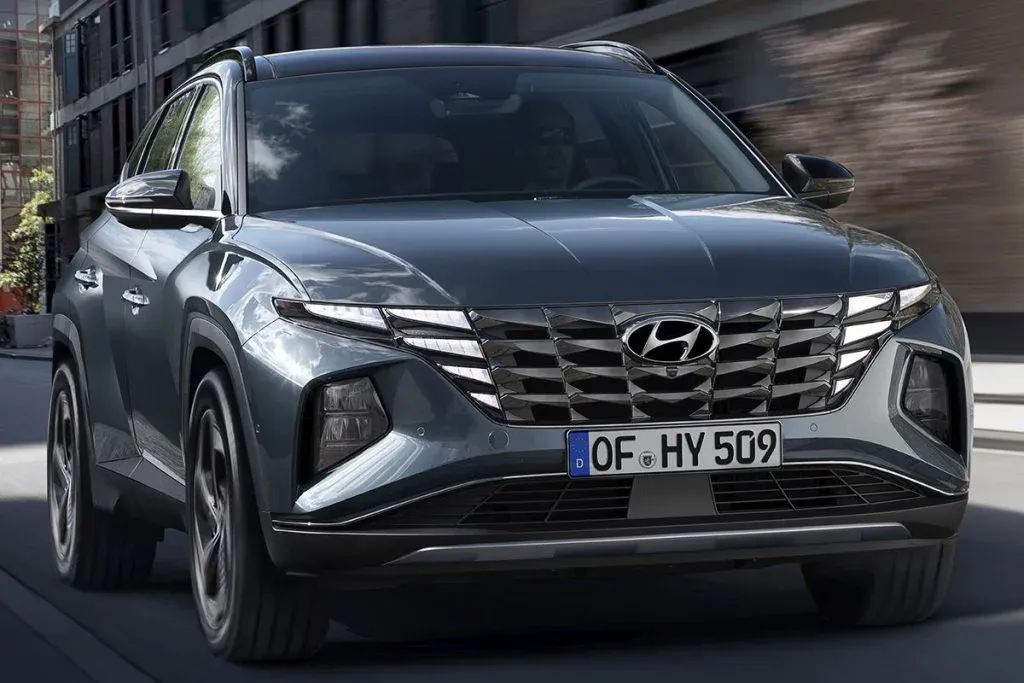
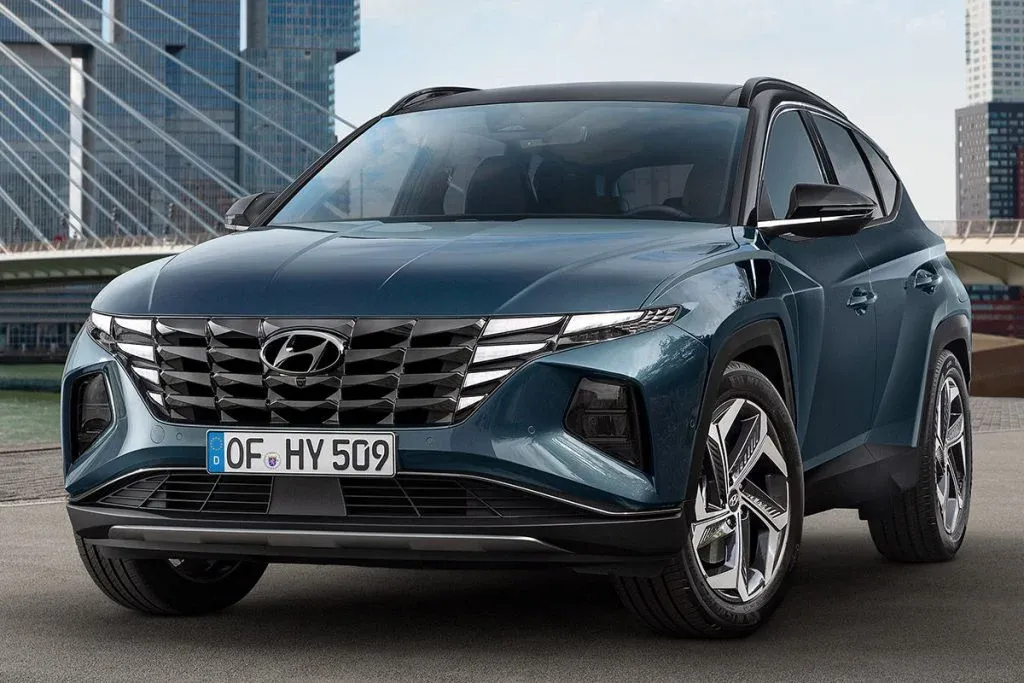
Hyundai has shown the next generation of the Tucson and is giving its important compact SUV a new visual basis. The new appearance is significantly different from the current model: instead of simply continuing the previous style, which was strongly defined by geometric lighting graphics and sharply drawn surfaces, Hyundai is visibly moving the Tucson in a more robust, more angular direction.
This gives one of the brand’s highest-volume models a new role in its design program. The Tucson is not a niche car, but a globally relevant SUV in one of the most fiercely contested segments of all. What Hyundai is changing here is therefore more than a mere styling exercise: the model has to appeal equally to families, commuters, fleet customers and technology enthusiasts — while also holding its own in a field where the Toyota RAV4, Honda CR-V, Kia Sportage, Volkswagen Tiguan, Mazda CX-5 and many other competitors are fighting for the same buyer groups.
A new look for a core model
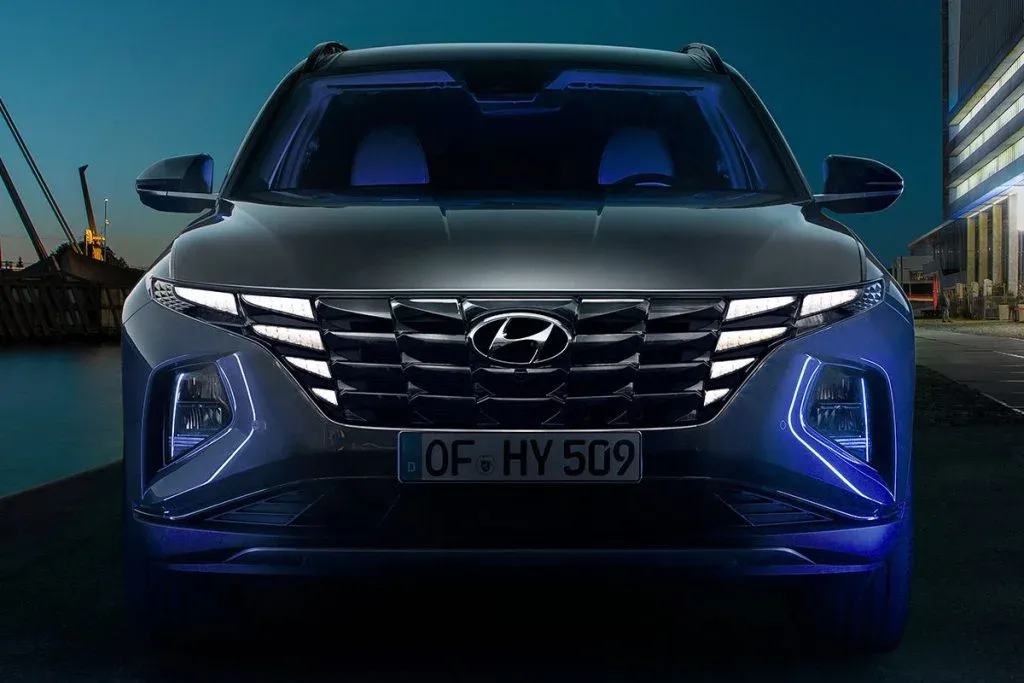
The most important news at first is the design language. Hyundai is positioning the next Tucson in a recognizably more self-confident way. The proportions and details appear more strongly geared toward SUV presence than before. That is an understandable step: many buyers in this segment are looking not only for everyday usability, but also for visual substance. A compact SUV should be practical, but not look interchangeable.
When it was introduced, the current Tucson was one of the bolder models in its class. Its front end with integrated light signatures and its pronounced body creases helped Hyundai set itself apart visually from more conservative rivals. With the new generation, Hyundai does not simply seem to want to add even more complexity, but rather to reorder the vehicle’s character. The message: the Tucson should appear more mature, more stable and more present.
For buyers, this is relevant because design in this segment often provides the first decisive impulse. Many technical characteristics of the compact SUV class are now closely matched: sufficient space, modern assistance systems, large displays, hybrid options and similar safety equipment are available from many manufacturers. A clear visual difference can therefore be decisive when a model ends up on the shopping list.
No complete technical data yet
As striking as the design change is, the remaining details must still be treated with caution. Specific information on engines, battery sizes, power outputs, interior dimensions, luggage compartment volume, prices or equipment grades is not yet fully available. The exact timing of the launch may also vary depending on the market. The designation as model year 2027 points to a launch in the context of the next model generation, but it does not replace a detailed market announcement for individual countries.
The powertrain question is particularly interesting with Hyundai. The previous Tucson was offered in many markets with combustion engines, hybrid technology and plug-in hybrid variants. Whether and how this range will be continued, expanded or regionally adapted for the new generation remains to be seen. For Europe, it would be especially important to see how Hyundai positions the Tucson between stricter emissions requirements, growing hybrid demand and increasing competition from all-electric SUVs.
A purely visual first appearance is therefore only part of the story for buyers. Anyone considering the Tucson as their next family car should pay attention to the following details: real-world efficiency, towing capacity, cargo space, rear-seat comfort, control concept, charging capability in plug-in versions, warranty conditions and price gap compared with similarly equipped competitors.
Why Hyundai has to be both cautious and bold with the Tucson
The Tucson is strategically important for Hyundai because it represents the brand in a central volume segment. A design that is too cautious could make it disappear into the crowd. An appearance that is too polarizing, on the other hand, could deter customers who are primarily looking for reliability and everyday usability in this class. The new generation therefore has to fulfill two tasks at the same time: it should stand out without appearing impractical or short-lived.
In recent years, Hyundai has shown that the brand deliberately uses different design identities for different model lines. An Ioniq 5 looks different from a Santa Fe, a Kona different from an Elantra. The Tucson now appears to be repositioning itself. That can be an advantage for the brand because it is not dependent on a single, uniform front-end design. But it also brings the challenge of keeping recognizability and model character in balance.
For enthusiasts, the new Tucson is interesting less because of possible driving-dynamics records and more because of the question of how far Hyundai can push design in the mass market. Compact SUVs are normally not experimental fields because they have to deliver high unit numbers. When a manufacturer visibly changes course here, it says a lot about the design language it believes its mainstream customers will accept.
Effects on current Tucson owners
Owners of the current Tucson do not need to act immediately because of the unveiling. A new design does not make the existing model worse. On the contrary: depending on the market phase, outgoing generations can become financially attractive because dealers offer vehicles from stock or well-equipped variants with discounts. Anyone who is satisfied with the previous look and is looking for a predictable offer should continue to consider the current Tucson.
Anyone who, by contrast, values the latest appearance, possibly updated assistance systems and a modernized interior architecture will likely want to wait for further information on the new generation. It is important not to react solely to early images. Only a seating test, visibility check, luggage compartment check and test drive will show whether the new car really fits better in everyday life.
Resale value can also play a role. New generations often change the perception of the predecessor. A significantly different design can make the old model look older more quickly, but it does not automatically have to lead to weaker residual values. Condition, mileage, powertrain, equipment and demand for certain variants remain decisive.
What becomes important next
After the design unveiling, the decisive part now follows: Hyundai has to provide the technical and practical data. Three points in particular will be important for the market. First, the powertrain range: if the Tucson remains broadly positioned, it can continue to serve many customer groups. Second, price positioning: in the compact SUV class, buyers are price-sensitive, especially if hybrid or plug-in models become significantly more expensive. Third, interior and control quality: a distinctive exterior is of little help if ergonomics, material impression or software fail to convince.
The new Tucson generation already shows that Hyundai is not merely carefully revising the model, but is giving it a new emphasis. For the industry, this is a signal of how serious competition in the compact SUV segment has become. For buyers, it is a reason to put the upcoming Tucson on the comparison list — but also a reason to wait for the still-missing facts before making a purchase decision.