Aston Martin postpones its first electric car and sticks with V8 and V12
Aston Martin now plans its first purely electric car only for the 2033 to 2035 period. At the same time, V8 and V12 models are to continue until 2035, provided they meet the respective regulations.

Aston Martin slows down on the electric car – and extends the combustion-engine era
Aston Martin is realigning its product planning: The brand's first all-electric model is no longer set to appear in the second half of this decade, but only in a window from 2033 to 2035. At the same time, the British sports car manufacturer wants to keep V8 and V12 engines in its lineup until 2035, as long as they meet the emissions and approval regulations in force at the time.
With this, Aston Martin is sending a clear signal at a time when many luxury and sports car brands are reassessing their electrification plans. The decision does not mean that electrification is off the table at Aston Martin. But it shifts the focus: Instead of bringing a fully electric production model to market in the short term, the brand wants to use its classic powertrains for longer and apparently introduce an electric car only when technology, demand and regulation are better aligned.
First electric Aston Martin model: now 2033 to 2035

The most important point is the new timeframe. A first all-electric production model is now being placed in 2033 to 2035. That is significantly later than many observers had expected just a few years ago. For a brand like Aston Martin, this step is particularly relevant because an electric car here is not just another powertrain. It would have to credibly transfer the brand's core values: luxurious long-distance capability, high performance, emotional design and a driving experience that stands apart from large volume models.
That is precisely where the challenge lies. An electric Aston Martin must not only accelerate quickly. It must feel like an Aston Martin, sound like one – or at least develop its own form of emotional appeal – while also meeting the expectations of affluent customers. In this segment, range, charging performance, weight, battery durability and exclusivity are crucial. A premature model with compromises could do more harm than good.
The new schedule suggests that Aston Martin would rather wait until battery technology, platforms and market demand have matured further. The timeframe is also interesting from a regulatory perspective: In Europe and the United Kingdom, political requirements for new combustion-engine vehicles are moving toward the mid-2030s. For small manufacturers and niche brands, however, special rules, transition periods or market-dependent solutions can play a role. Which markets Aston Martin will specifically serve with which powertrains by 2035 has not yet been definitively defined.
V8 and V12 remain part of the brand identity
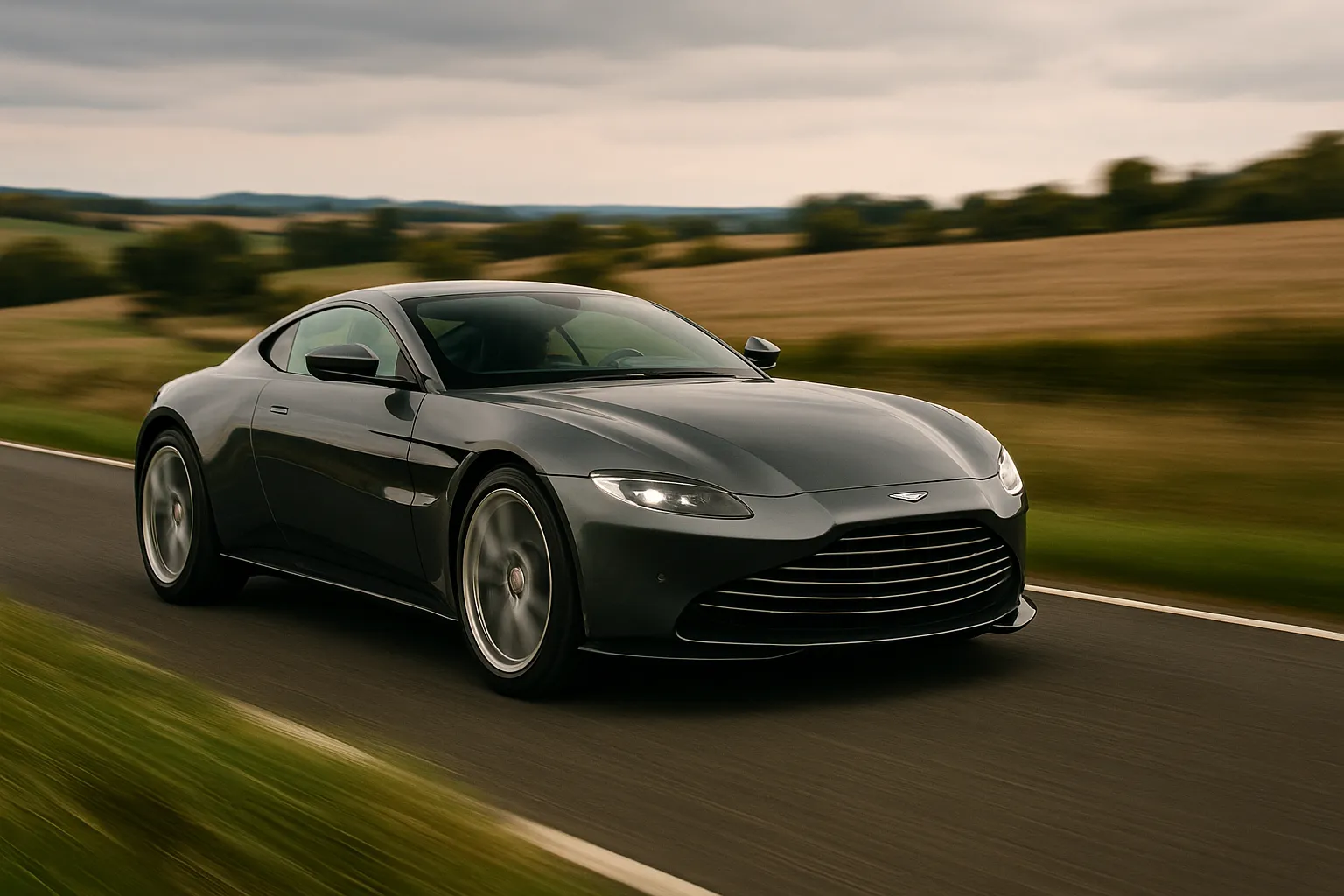
In parallel with the delay of the electric car, Aston Martin is extending the outlook for its combustion engines. V8 and V12 powerplants are to continue being offered until 2035, provided they remain legally compliant. This is an important point for buyers and enthusiasts, because these engines are a central part of the brand image.
The V8 has played a key role at Aston Martin for years, including in sporty front-engine models and in the DBX SUV. The V12, in turn, represents the classic pinnacle of the brand: great power, confident power delivery and a sound character that many customers associate with Aston Martin. Especially in the luxury segment, interested buyers are not just buying acceleration figures, but character, history and exclusivity.
The fact that Aston Martin is not giving up these engines prematurely is likely to reassure existing customers and collectors above all. It increases the likelihood that there will also be new special models, high-performance derivatives or limited variants with conventional powertrains in the coming years. At the same time, it remains open how extensively these engines will have to be technically adapted in order to meet upcoming emissions rules. Further efficiency measures, exhaust aftertreatment, mild-hybrid technology or more heavily hybridized solutions are conceivable, provided they suit the respective model.
Why this change of course is important for buyers
For potential buyers, the new strategy has several practical consequences. First, the time window for buying a new Aston Martin with a classic combustion engine is growing. Anyone who sees a V8 or V12 as part of the driving experience is likely to have a wider choice for longer than previously expected.
Second, residual value development could look different. If new combustion-engine cars remain available for longer, the market will not be abruptly switched over to purely electric models. At the same time, particularly sought-after V12 or limited V8 versions could gain collector interest if it becomes foreseeable that such vehicles will become rarer toward the end of the combustion-engine era.
Third, the question of charging infrastructure and electric everyday use is being pushed further back for Aston Martin customers. Anyone ordering a new model today or in the next few years does not have to assume that the brand will switch completely to battery power in the short term. That can be important for buyers who use their vehicles on long journeys, on weekend drives or in regions with weaker charging infrastructure.
For customers waiting for an electric luxury coupe or an electric supercar from Aston Martin, however, the news is sobering. They will have to be patient for longer or turn to offerings from other manufacturers. In this field, significantly more electric high-performance models are expected to be available by the early 2030s.
A sign of the changed mood in the luxury segment
The decision fits into a broader trend: The transition to electric mobility is progressing less straightforwardly in the luxury and sports car world than was assumed just a few years ago. High vehicle prices alone do not solve all problems. Particularly heavy batteries can affect the driving feel, and the emotional attachment to combustion engines is stronger in this segment than in many everyday cars.
For manufacturers with small volumes, developing their own electric platforms is also expensive. The investments have to be spread across comparatively few vehicles. At the same time, customers expect state-of-the-art technology, long ranges, high charging speeds and a design that does not look like a compromise. Partnerships can help, but they do not replace the task of developing a vehicle typical of the brand.
Aston Martin therefore has to manage a difficult balancing act. The brand must not lose touch with electric mobility, but it also cannot switch over at will without risking its identity. The new schedule apparently prioritizes profitability, product maturity and customer demand over an early symbolic launch date.
What remains open
Many details are still unknown. It is unclear what body style the first purely electric car will have, which platform will be used, what performance data is planned and in which markets the model will launch first. The exact role of plug-in hybrid or hybrid powertrains in the meantime also remains a key point.
The regulatory situation is equally important. The statement about offering V8 and V12 until 2035 is tied to compliance with applicable regulations. That means: The plan may look different depending on the market. A model that remains eligible for registration in one region may fail due to stricter rules in another or be sold only in limited numbers.
A pragmatic but risky path
Aston Martin's new line is pragmatic: The brand continues to use what makes it special for many customers and shifts the electric car to a later, possibly technically better point in time. For enthusiasts, this is good news because V8 and V12 are not disappearing in the short term. For the industry, however, it also shows how difficult the electrification of high-priced niche brands remains.
The risk is that Aston Martin could arrive too late with the electric car if competitors establish convincing electric luxury sports cars by then. The advantage is that the brand gains time to develop an EV model that is not only necessary from a regulatory standpoint, but also convincing emotionally and technically.
For buyers, this primarily means planning certainty: In the coming years, Aston Martin will stick with the classic high-performance combustion engine more strongly than many expected. The brand's first true electric car, by contrast, is moving into the next decade – and will then have to prove all the more that electrification and Aston Martin character go together.