Hyundai N plans seven new models and a rear-wheel-drive flagship
Hyundai's performance division is set to grow significantly: seven new N models are planned, along with a new offering between N Line and full N, plus a front-engined rear-wheel-drive model as the sporty flagship.
Hyundai N prepares for the next growth push
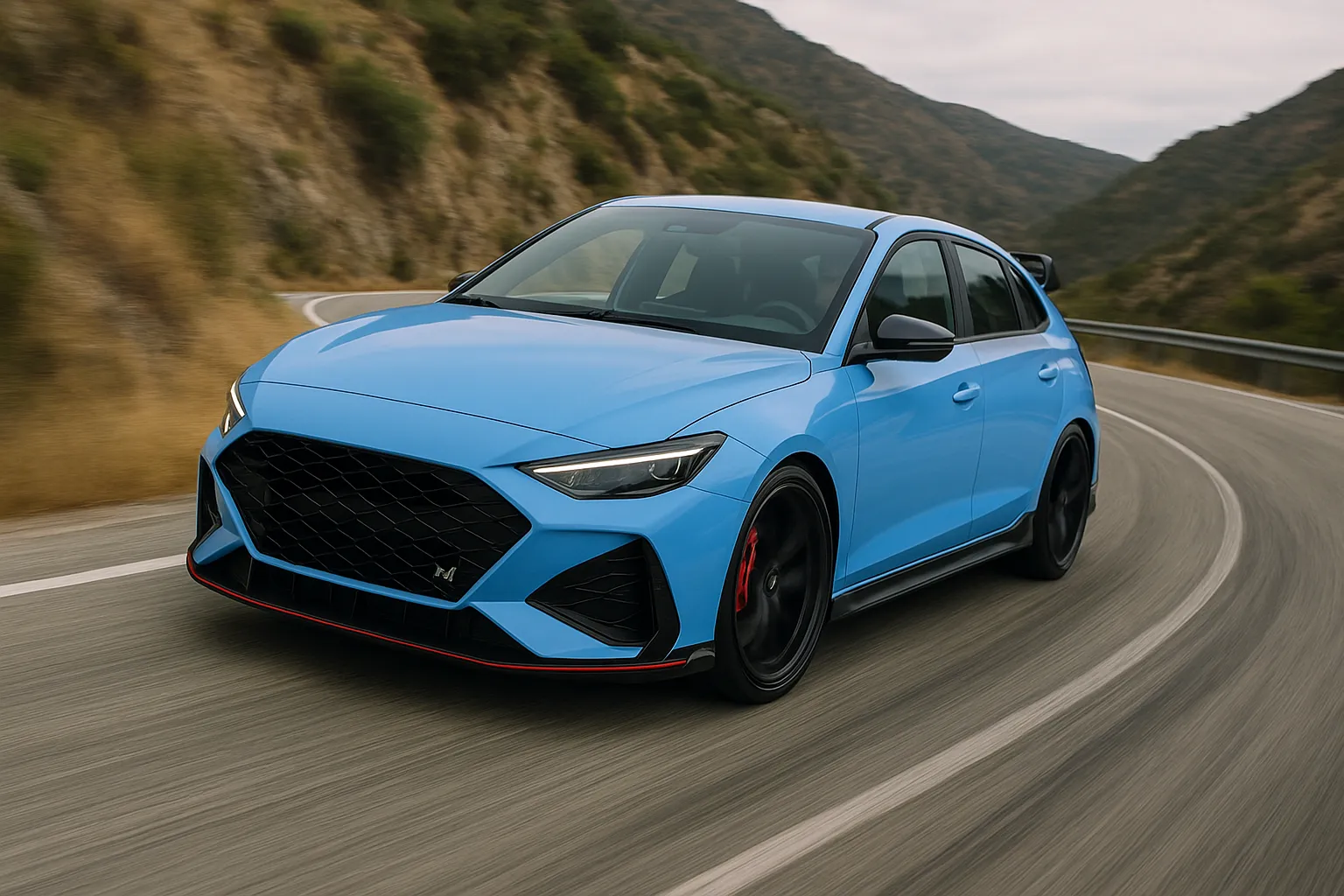
Hyundai wants to position its N performance brand much more broadly. In the coming years, seven new N models are planned, which are to be based on four technical basic layouts. At the same time, the brand is setting itself an ambitious target: around 100,000 N vehicles per year are to be sold worldwide in the future.
The most important news for enthusiasts is a planned front-engined model with rear-wheel drive. It is intended to serve as the new sporty figurehead of the N division and bring Hyundai into a segment in which the brand has so far had little presence. The final body style has not yet been confirmed. A classic two-door sports car would be conceivable, but according to the current state of information, a four-door sedan or a fastback with a sporty orientation appears more likely.
This would mean Hyundai N would not only appeal to existing buyers of faster compact models and performance SUVs, but also to drivers looking for a more balanced layout with rear-wheel drive. For a brand that has historically defined many of its sporty production models through front- or all-wheel drive, that would be a significant step.
Seven new N models, four technical approaches

Hyundai is not naming the planned seven new models in detail. The four technical layouts have also not yet been fully described. What matters, however, is the direction: N is not to remain a small niche within the group, but is to be expanded into a global model family with several drive and vehicle concepts.
This is also relevant because performance brands today have to deliver more than they used to. A fast compact car alone is no longer enough. Buyers now expect a choice of combustion engines, hybrids, electric cars, all-wheel-drive and rear-wheel-drive solutions, as well as different body styles. At the same time, manufacturers have to meet stricter CO2 requirements and spread costs over larger volumes.
For Hyundai, a broader N range can fulfill several tasks. It strengthens the brand image, brings technology from motorsport and high-performance development closer to production cars, and creates emotional models in a market increasingly shaped by efficiency, software and electrification. Precisely for that reason, a rear-wheel-drive flagship is more than just another niche car: it would be a signal that Hyundai is not reducing its performance division to sporty equipment packages.
New level between N Line and full N

In addition to the pure N models, Hyundai is apparently also planning an additional performance level between the familiar N Line variants and the fully fledged N vehicles. These models are intended to offer everyday-friendly performance and thus close a gap that many manufacturers are now deliberately targeting.
Today, N Line primarily stands for a sportier look, adapted equipment and, depending on the model, smaller technical changes. Fully fledged N models go significantly further: more powerful engines or drive systems, sharpened chassis, more capable brakes, adapted cooling, drive modes and an overall more uncompromising setup.
An intermediate level could be interesting for buyers who want more dynamics but do not need either the price or the firmness of a fully fledged N model. Such variants could be more comfortable in everyday use, cheaper to maintain and more widely available. That would also make sense for dealers, because performance looks alone do not convince every customer, while an uncompromising track-oriented N is too specialized for many.
Why a rear-wheel-drive model would be important
A front-engined car with rear-wheel drive has a special status in the performance world. This construction offers a clear separation between steering and drive forces, which can bring advantages in sporty driving. It also allows handling that many enthusiasts associate with classic sport sedans and coupes: precise turn-in, good balance and a rear axle that actively contributes to the dynamics.
For Hyundai N, such a model would also be an image project. The brand has made a name for itself with driver-focused compact models and, most recently, with electrified high-performance vehicles. A rear-wheel-drive model would extend this expertise in another direction. It could show that Hyundai does not merely serve existing segments, but wants to develop independent performance products.
It remains open which drive system will be used. The information known so far does not indicate whether the new flagship will come with a combustion engine, hybrid technology, purely electric drive or another solution. Since Hyundai speaks of several technical layouts, an electrified role within the future N family is obvious, but it has not yet been confirmed for the rear-wheel-drive model itself.
Global strategy with regional adaptation
Hyundai wants to roll out N more strongly globally in the future. At the same time, the vehicles are to be adapted depending on the market. This is important because performance buyers in Europe, North America and Asia sometimes have different expectations. In Europe, compactness, efficiency, chassis tuning and everyday usability often count. In North America, power, body size and long-distance comfort often play a greater role. In other markets, tax classes, charging infrastructure or local emissions regulations can be decisive.
A globally conceived N strategy can bring economies of scale, but it also requires fine-tuning. Chassis that are too firm, prices that are too high or unsuitable body styles can quickly become a problem in individual regions. Hyundai therefore appears to be planning not only new models, but also a finer gradation within the performance range.
What buyers get from it
For car buyers, the new N direction primarily means more choice. Anyone who previously had to choose between visually sporty N Line and uncompromising full N could in future find a more suitable intermediate solution. Enthusiasts can hope for a genuine driving-dynamics flagship that takes Hyundai into new competitive fields. And owners of current N models can assume that Hyundai will continue to nurture the sub-brand over the long term, instead of letting it fade out in the era of electrification.
For the industry, the plan is also noteworthy. Many manufacturers are reducing emotional niche models or shifting performance almost entirely into expensive electric SUVs. Hyundai, by contrast, is apparently pursuing a broader strategy: several technical concepts, several price and performance levels and a clear volume target.
Until the individual models are presented, key questions remain open: body styles, drive systems, market launches, prices and technical data are not yet fully known. What is already clear, however, is that Hyundai N is set to play a significantly larger role within the group in the coming years. If the implementation succeeds, the brand could become much more relevant than before for buyers of sporty production cars.