Hyundai and Genesis cut IONNA charging costs by 20 percent
Owners of electric cars from the Hyundai and Genesis brands will automatically receive a 20 percent discount at IONNA fast-charging stations in the USA in the future. This improves the everyday usability of the models and shows how important charging prices are becoming in the competition.
20 percent less for fast charging
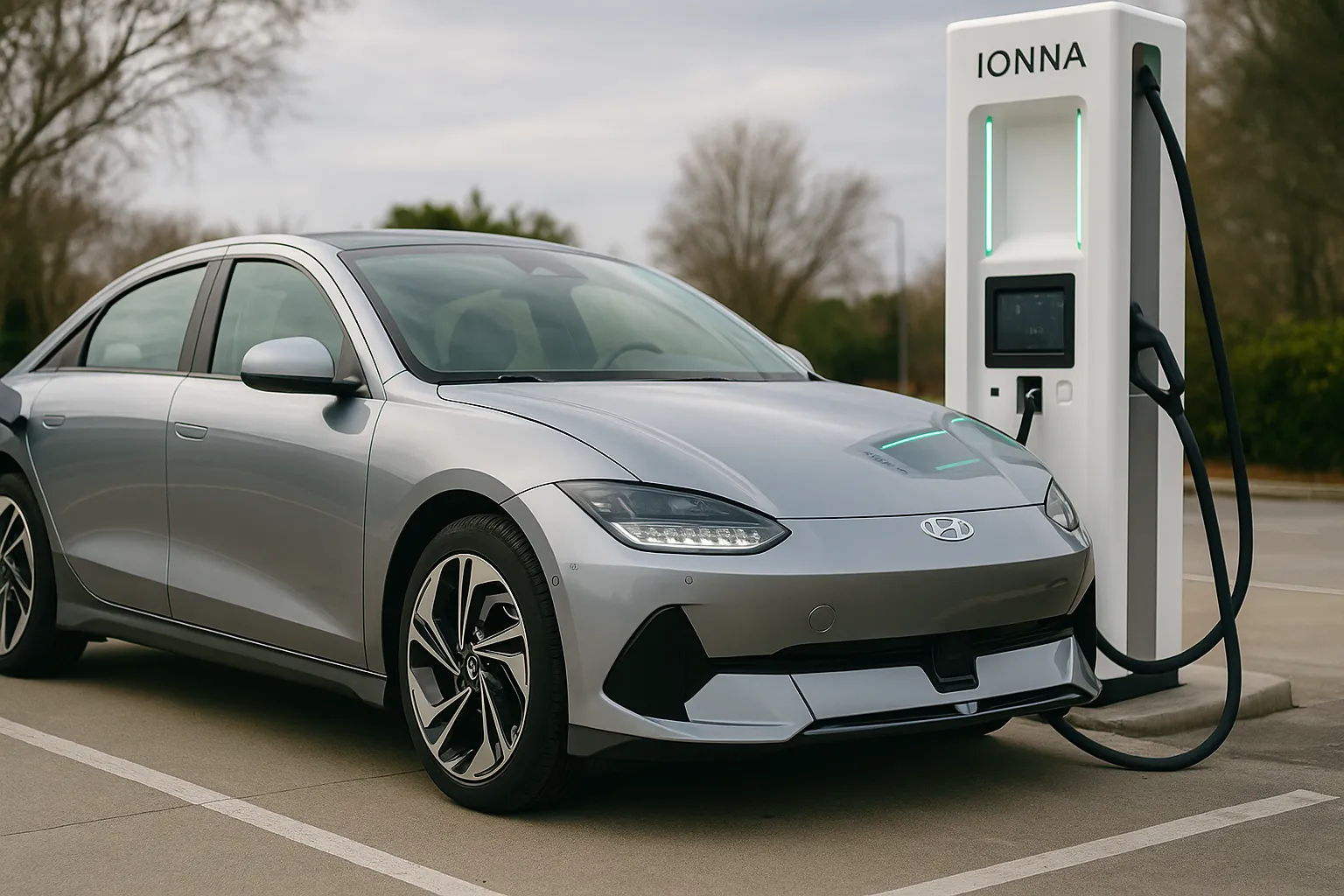
Hyundai and Genesis drivers with electric cars will automatically receive a 20 percent discount at IONNA fast-charging stations in the USA in the future. The discount applies permanently and is intended to work without separate manual discount codes. For owners of corresponding models, this can noticeably reduce running costs, especially if they regularly use public fast charging instead of charging mainly at home at a wallbox.
The measure affects the electric cars of the two group brands, including models such as the Hyundai Ioniq 5, Ioniq 6 and Kona Electric as well as the Genesis GV60, Electrified GV70 and Electrified G80. What matters is not only the nominal price reduction, but also the context: public fast charging is significantly more expensive than household electricity in many markets. A flat-rate discount can therefore be particularly relevant for long-distance drivers, city residents without their own parking space and commercial users.
Why the discount is important for drivers

When it comes to electric cars, range, charging power and battery capacity are often discussed. In everyday use, however, what the kilowatt-hour costs on the road and how easy access to the infrastructure is count at least as much. Those who can charge at home usually drive particularly cheaply. Those who depend on fast chargers, on the other hand, often pay significantly more and experience different tariffs, start fees or variable prices depending on the provider.
A discount of 20 percent does not change the basic structure of the market, but it can improve the calculation per journey. As an example: the higher the local fast-charging price, the stronger the absolute benefit. On long motorway stages, holiday trips or regular top-ups in urban areas, the discount can become noticeable over months. For buyers comparing several electric cars, this makes not only a model's technical charging performance relevant, but also the ecosystem behind it.
IONNA is more than just another charging provider

IONNA is a North American fast-charging network backed by several major car manufacturers. The company is intended to create an alternative and complement to existing networks and focus on high charging power, convenient locations and broader vehicle compatibility. A network with thousands of charging points in North America is planned, with the stations intended to support both current and future connector standards.
For Hyundai and Genesis, the partnership is strategically interesting. In recent years, both brands have strongly emphasized electric cars with 800-volt technology. Models on the E-GMP platform can charge very quickly under suitable conditions. But this capability only brings customers real benefit if suitable fast chargers are available, reliable and acceptably priced. A discount program links vehicle sales, customer loyalty and infrastructure more closely together.
No direct Europe deal
Important for German readers: the new price advantage relates to IONNA stations in the USA. It should not be equated with European charging networks such as Ionity, even if the names sound similar. For customers in Germany, Austria or Switzerland, this specific announcement initially changes nothing about local charging tariffs.
Nevertheless, the development is also interesting from a European perspective. It shows where the market may be heading: manufacturers are increasingly trying not only to sell the car, but also to offer cheaper or more convenient access to charging infrastructure. Tesla demonstrated this principle early on with the Supercharger network. Other manufacturers are now responding with partnerships, their own network stakes, roaming agreements and brand-specific benefits.
Competition is shifting toward operating costs
Electric cars are not decided solely by list prices. Leasing rate, energy price, charging access, maintenance and residual value are playing an ever greater role. A manufacturer that enables its customers to lower public charging costs can thereby improve total operating costs. This is particularly important because purchase incentives have been reduced or ended in many markets and buyers are paying closer attention to monthly costs.
For Hyundai and Genesis, the move is also a signal to potential customers who are still skeptical about public charging infrastructure. The discount does not solve problems such as occupied charging points, defective columns or regional supply gaps. But it does lower one clear hurdle: the price. In a market where fast charging can be expensive depending on the location, an automatic discount is less complicated than time-limited vouchers or hard-to-understand tariff packages.
What owners should keep in mind
For drivers, the key question is how recognition works in everyday use. If the discount is actually applied automatically, it is more convenient than an additional membership with complicated steps. Nevertheless, owners should check whether their vehicle, user account or the charging app used are correctly stored. With public charging networks, discounts often depend on vehicle identity, payment method and app account being properly linked to one another.
In addition, the final price remains location-dependent. A 20 percent discount does not mean that IONNA is the cheapest provider everywhere. Drivers should continue to compare if several fast chargers are available nearby. Factors such as charging power, availability, waiting time, price per kilowatt-hour and possible blocking fees can influence the practical advantage.
Significance for the industry
The move fits into a larger trend: car manufacturers want to have more say in charging. For a long time, public infrastructure was seen primarily as the responsibility of energy companies, specialized charging network operators or government-funded programs. Manufacturers now recognize that the charging experience and charging costs directly affect the perception of their vehicles.
If a customer can charge an electric car reliably and more cheaply, that strengthens brand loyalty. If charging is expensive, slow or complicated, however, the frustration often reflects back on the vehicle, even if the car is not technically responsible. That is why discounts, plug-and-charge functions, integrated route planning and exclusive tariffs are becoming important sales arguments.
A small discount with a larger signal effect
The 20 percent discount at IONNA is not a substitute for comprehensive charging infrastructure and no guarantee of low total costs in every driving situation. But it is a concrete advantage for Hyundai and Genesis EV drivers in the USA and an indication of how the electric car market is continuing to develop. In the future, it will not only matter how quickly a car can theoretically charge, but also where it can charge, how reliable the stations are and what the kilowatt-hour costs.
For buyers, this means: when comparing new electric cars, it is worth looking beyond range and acceleration. Charging partnerships, tariff advantages and the quality of the network can be just as important in everyday use as technical data in the brochure.