Geely Monjaro: large hybrid SUV set to come to Great Britain
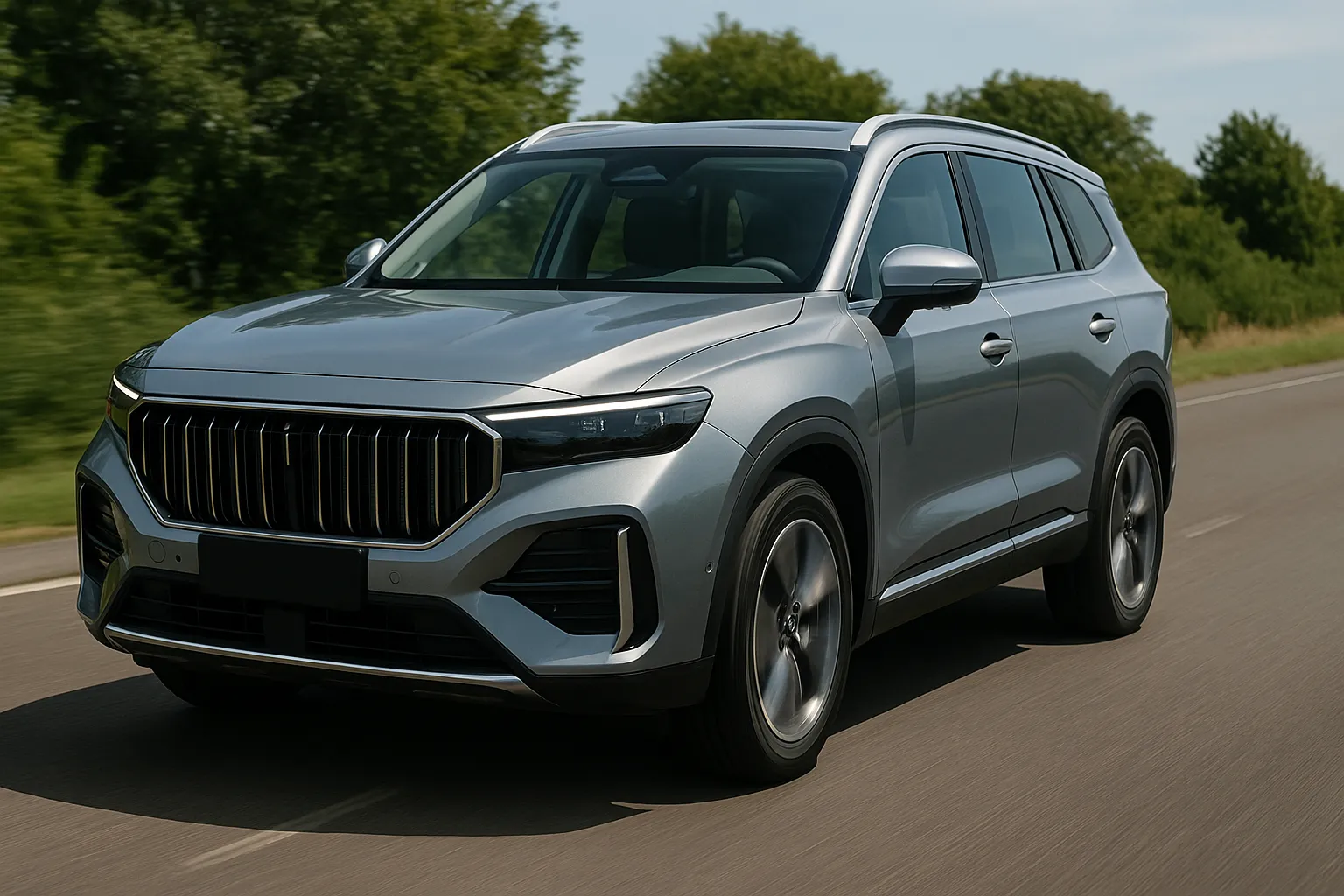
Geely is preparing the Monjaro for the British market. The almost 4.8-meter-long SUV is set to compete as an updated hybrid model against the Hyundai Santa Fe, VW Tayron and other family SUVs.
Geely expands its SUV plans in Great Britain
Geely is preparing the Monjaro for a launch in Great Britain. The large SUV is not an entirely new model, but has already been known in other markets since 2021. For the British market, however, an updated version is planned, which is set to compete with a hybrid powertrain and thus fit much better with current European requirements for fuel consumption, CO2 emissions and company-car taxation.
An exact launch date has not yet been set. But one thing is clear: the Monjaro would be an important building block for Geely's growing presence in a fiercely contested market segment. At just under 4.8 meters long, it targets buyers who are looking for plenty of space, SUV looks and family-friendly everyday usability, but do not necessarily want to switch to a purely electric car.
Positioning: large, practical, but not purely electric
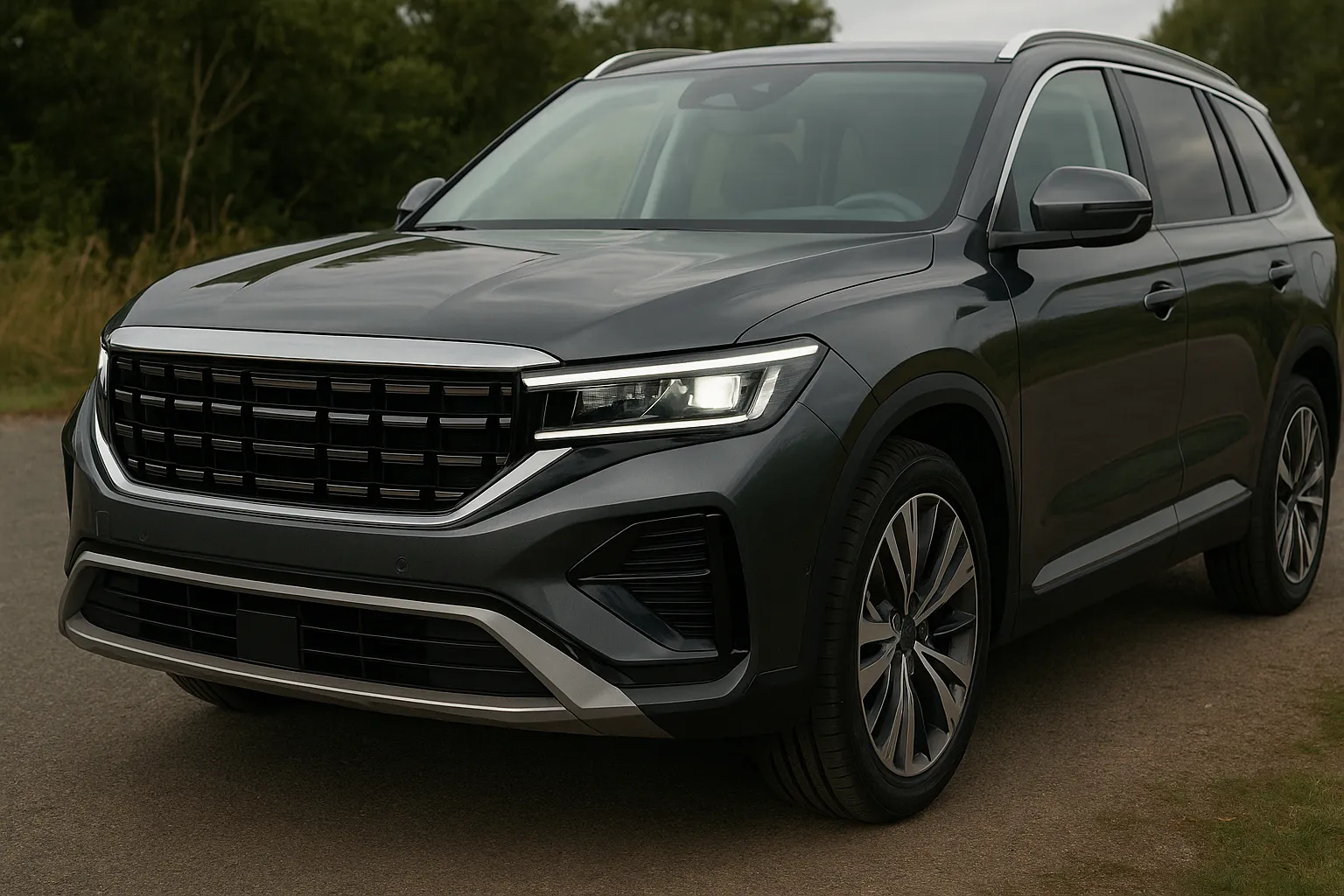
The Monjaro competes in a class in which established models such as the Hyundai Santa Fe and Volkswagen Tayron vie for private family customers, company-car drivers and fleet customers. Chinese brands are also increasingly putting pressure on this area, for example with models such as the Chery Tiggo 8 or BYD Seal U.
For Geely, the segment is strategically interesting. Large SUVs offer higher margins than small cars, continue to be in strong demand in Europe and are suitable as showcases for technology, interior quality and assistance systems. At the same time, the market is demanding: buyers expect not only lots of equipment for the money, but also solid safety ratings, a convincing dealer network, good warranty terms and realistic fuel-consumption figures.
The Monjaro is therefore likely to be sold less through radical styling than through an overall package. The model's existing design appears more restrained than experimental. That can be an advantage in Europe, because many SUV customers prefer a matter-of-fact, high-quality appearance over conspicuous styling exercises.
Platform with group links to Volvo and Zeekr
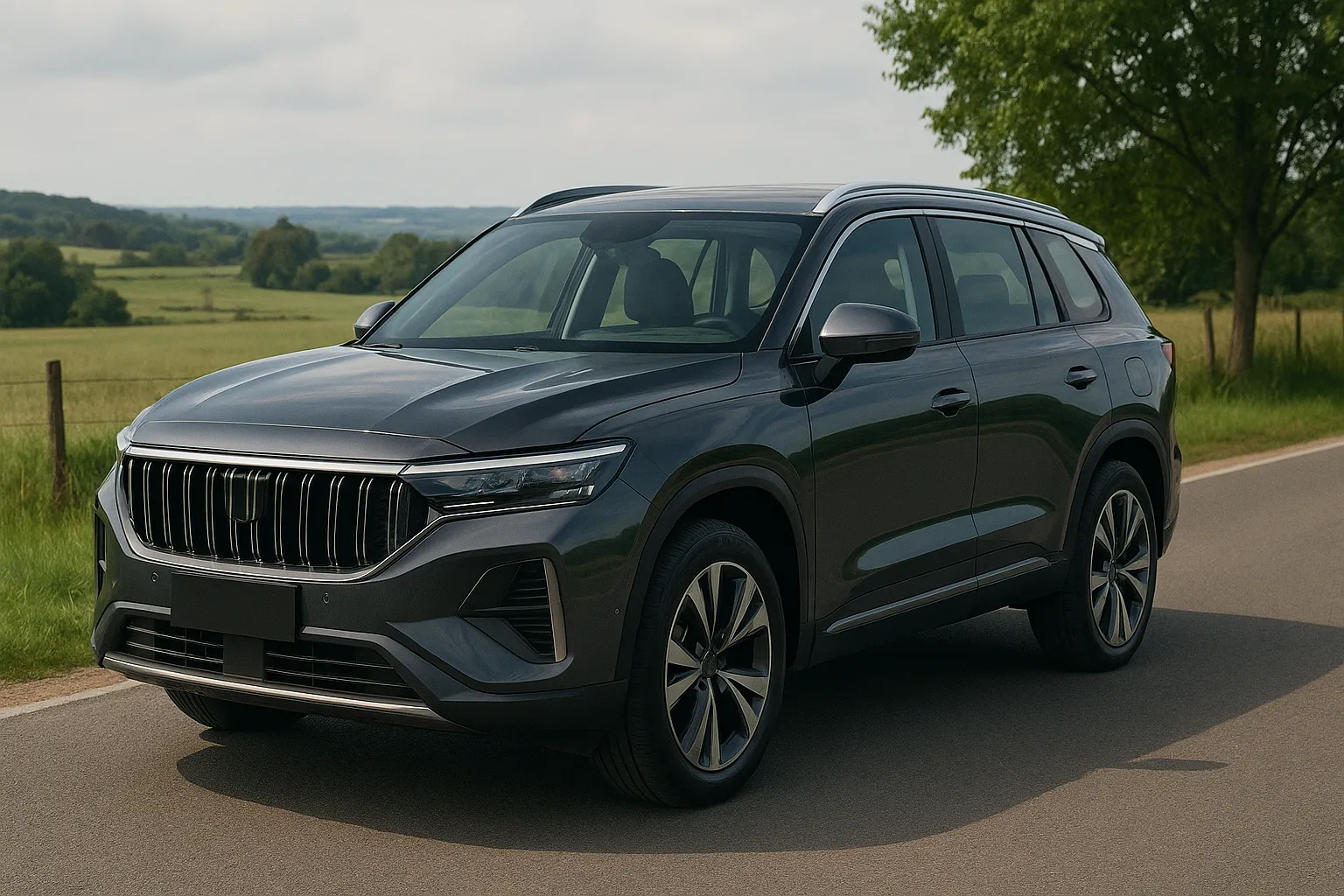
Technically, the Monjaro is based on a modified architecture that within the Geely Group is also connected with models from Volvo and Zeekr. This is relevant for European buyers because Geely is not appearing as an isolated newcomer, but can draw on a large corporate group with experience in platforms, safety technology and electrified powertrains.
In other markets, the Monjaro was offered with a turbocharged four-cylinder petrol engine that shows technical proximity to Volvo applications. For Great Britain, however, a different focus is planned: the SUV is set to come with Geely's EM-i hybrid technology. Specific power, consumption or CO2 figures have not yet been published, so it remains open how strongly the Monjaro will perform in direct comparison with established hybrid and plug-in hybrid SUVs.
The classification is important: a hybrid powertrain is not automatically a miracle of efficiency. Much depends on whether it is a classic full hybrid, a more strongly electrically assisted powertrain or a variant with a larger battery. The information known so far generally refers to a petrol-electric system to reduce fuel consumption and emissions. Reliable figures for electric driving shares, towing capacity, system output or range are not yet available.
Front-wheel drive as the basis, e-AWD as a new option
The Monjaro is basically designed predominantly for front-wheel drive. For the updated version, however, a new e-AWD system is planned. The rear axle is likely to be electrically assisted in order to provide additional traction without having to use a conventional mechanical propshaft.
For buyers in Great Britain, that can be particularly interesting. Anyone who regularly drives on wet country roads, in hilly regions or with a fully loaded vehicle appreciates additional traction. At the same time, an electric all-wheel-drive system can be packaged more efficiently than a conventional all-wheel-drive system. In the end, however, tuning, response speed and costs will be decisive.
The exact design is also important for towing suitability. Large family SUVs are often used for caravans, bicycle carriers or boat trailers. So far, there are still no confirmed figures for the Monjaro's maximum towing capacity in British specification. This is a point that many potential buyers will check carefully before placing an order.
Why the Monjaro is relevant for buyers
The British car market is currently experiencing a strong expansion of supply from Chinese manufacturers. For customers, this means more choice, often more standard equipment and stronger price competition. The Monjaro could further accelerate this development in the large SUV segment.
A model like the Monjaro primarily appeals to buyers who are looking for a spacious car but do not yet want to switch completely to battery-electric drive. There are many reasons for this: no charging option at home, frequent long-distance journeys, uncertainty about residual values or the desire for a more familiar user experience. An efficient hybrid can be a pragmatic solution in this transition.
For existing customers of established brands, Geely's entry increases the pressure on Hyundai, Volkswagen and other manufacturers. If Geely positions the Monjaro with extensive equipment, a competitive warranty and an attractive price, established providers will have to justify their added value more clearly. This may be reflected in better financing offers, higher standard equipment or faster model-update cycles.
The open questions remain decisive
Several key data points are still missing. In addition to the market launch, price, equipment lines, consumption figures, CO2 classification, battery size and possible delivery times are especially still open. The precise role of the Monjaro within the British Geely range is also not yet fully clear.
The dealer and service network is equally important. A competitive car alone is not enough if test drives, maintenance, spare-parts supply and warranty handling are inconvenient for customers. Especially with new or less well-known brands, trust plays a central role. Buyers of a large family SUV want to be sure that the car can be reliably looked after over several years.
For enthusiasts, the Monjaro is also an example of how quickly the brand landscape is changing. Geely is not just another manufacturer from China, but a group with links to several well-known brands and platforms. The British market could therefore become an important testing ground for how well Chinese hybrid SUVs can hold their own against European, Korean and Japanese competition.
Outlook
In Great Britain, the Geely Monjaro is not expected to stand out through a single spectacular feature, but through its combination of size, hybrid technology, possible electric all-wheel drive and group technology. It is precisely this mix that makes it relevant: it meets a market in which many families do not yet want to drive fully electric, but expect lower operating costs and modern technology.
Until the final technical data are published, a definitive assessment is not possible. However, if Geely manages to coordinate price, efficiency and equipment convincingly, the Monjaro could become a serious new name among large hybrid SUVs.