BYD Sealion 8 launches in Australia: large plug-in hybrid SUV with seven seats
BYD is launching the Sealion 8 in Australia. The seven-seat plug-in hybrid SUV combines family practicality with up to 481 bhp and could also become interesting for Europe in the future.
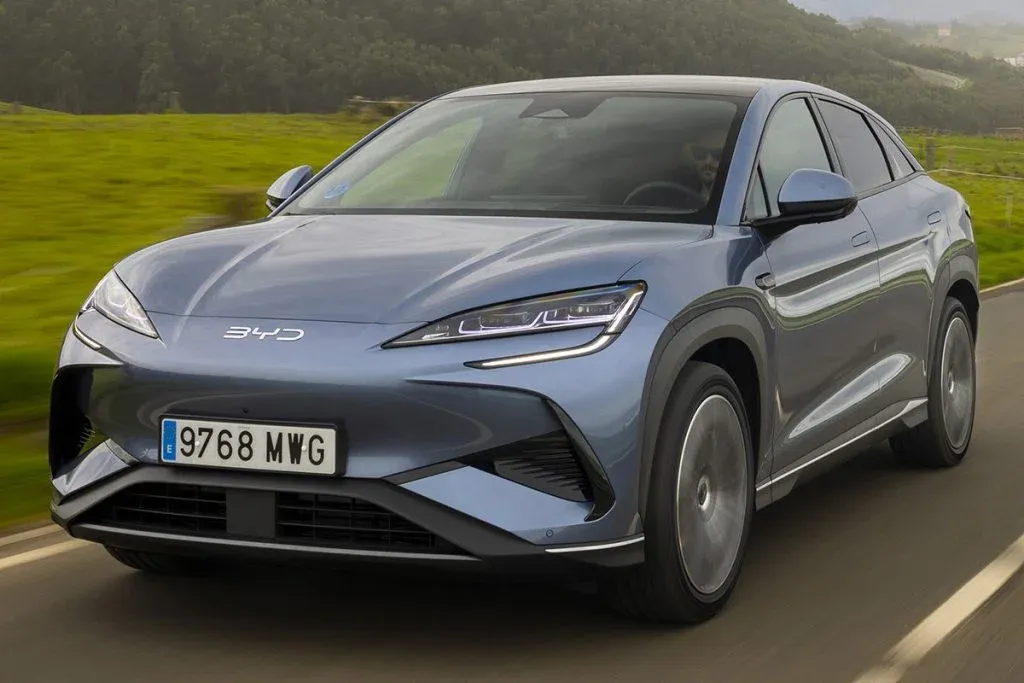
BYD expands its SUV range upwards
BYD has put the Sealion 8 on sale in Australia, adding another model to its rapidly growing international SUV lineup. The large off-roader is designed as a seven-seat plug-in hybrid and is aimed at buyers who need plenty of space but do not want to switch completely to a purely battery-electric car.
For Australia, the market launch is particularly fitting: Large SUVs with three rows of seats are in strong demand there, and long distances as well as towing or leisure use play a greater role for many buyers than in densely populated European cities. At the same time, interest is growing in electrified powertrains that can drive locally on electric power in everyday use but are not exclusively dependent on charging infrastructure on long journeys.
What the Sealion 8 offers technically
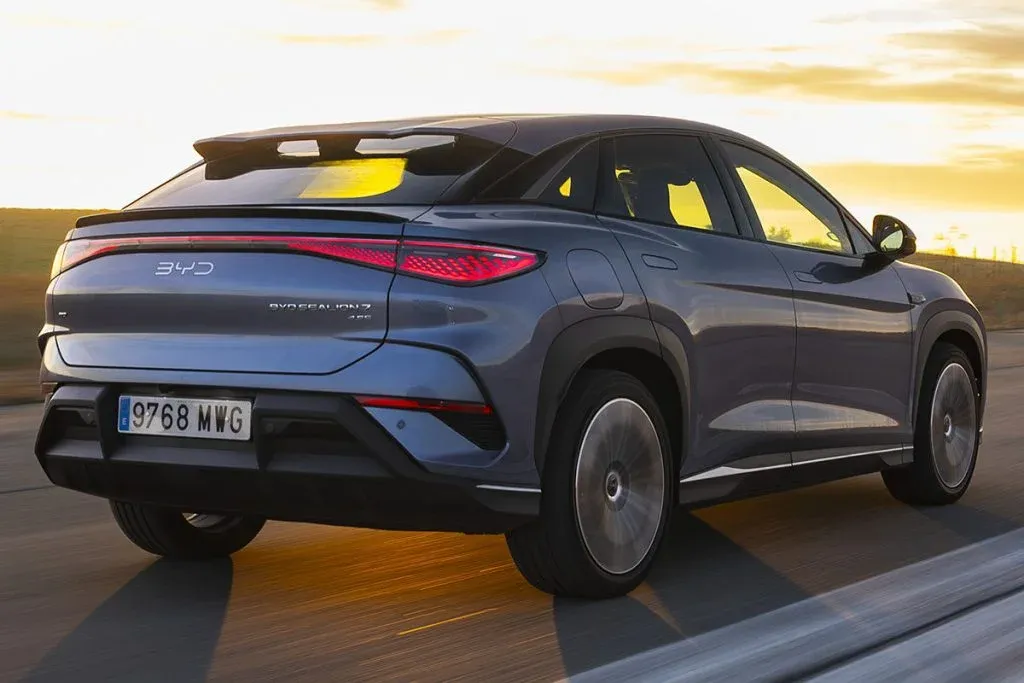
The Sealion 8 uses a plug-in hybrid powertrain with a 1.5-liter turbocharged petrol engine and electric assistance. Depending on the version, there is one electric motor or, in all-wheel-drive models, a second electric motor. The most powerful version reaches a system output of 481 bhp, equivalent to around 488 PS. This puts the large SUV significantly above what many buyers would expect from a classic family seven-seater in terms of performance.
For the top version, acceleration from 0 to 62 mph, in other words approximately 0 to 100 km/h, is quoted at 4.9 seconds. That is a strikingly sporty figure for a vehicle whose most important selling point will probably be space, versatility and everyday usability. Such performance data show how strongly electrified powertrains are shifting expectations in this segment: A large family SUV today can achieve acceleration figures that only a few years ago were more likely to be reserved for sporty sedans.
For most customers, however, the combination of electric short-distance use and petrol range is likely to be more important than the sprint figure. Specific electric ranges, consumption figures and charging data for individual markets must be considered depending on homologation. Especially with plug-in hybrids, official figures can depend heavily on how regularly the vehicle is charged and what driving profile is involved.
Seven seats as the central argument
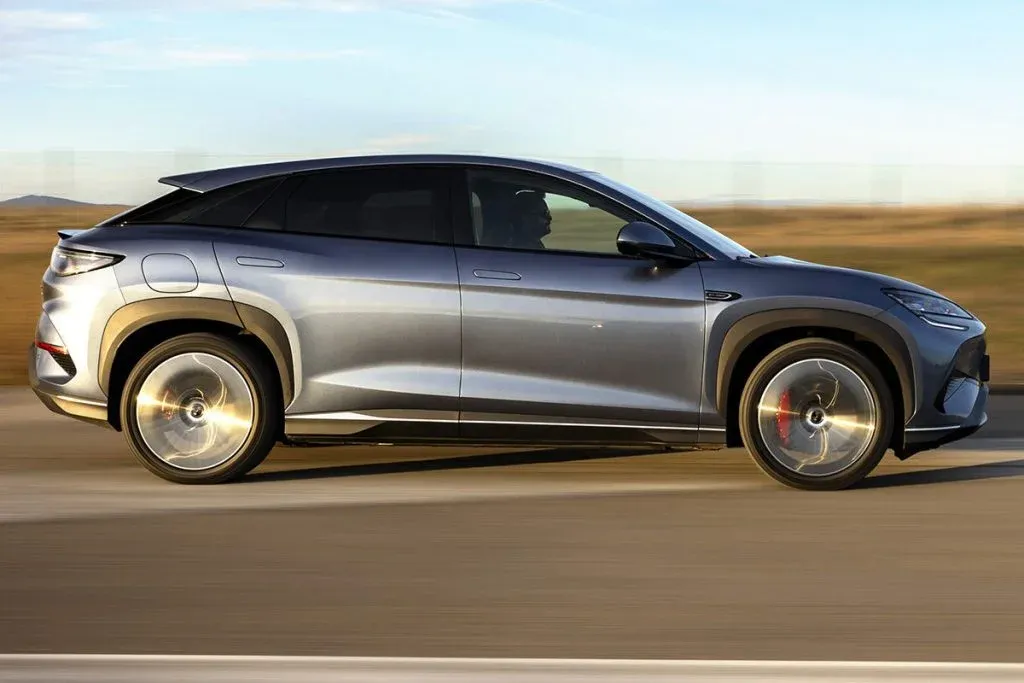
The Sealion 8 is positioned as a vehicle for families and high-mileage drivers who need more than five seats. This makes it a direct candidate for buyers who would previously have opted for large combustion-engine SUVs or established hybrid models. Three rows of seats are a decisive criterion in many markets because they offer flexibility for children, large families, carpooling or holiday trips.
BYD is currently expanding its model range strongly internationally. The Sealion 8 fits into this strategy because it occupies a segment that is attractive for volume manufacturers: large SUVs with electrified drivetrains, but without the range and charging concerns that some customers still have with pure electric cars. This is also relevant for the manufacturer because plug-in hybrids can function as a bridging technology in many countries.
Is the Sealion 8 also coming to Europe?
A market launch in Europe or the United Kingdom has not yet been officially confirmed. Nevertheless, the Sealion 8 is an obvious candidate for further right-hand-drive and export markets, because BYD is rapidly expanding its presence outside China. For the United Kingdom, a large plug-in hybrid SUV with seven seats would be particularly interesting, as BYD wants to significantly expand its model coverage there.
If the Sealion 8 were to come to the United Kingdom, it would find itself in a growing field of Chinese and international family SUVs. Models such as the Jaecoo 8 or the Chery Tiggo 9 show that Chinese brands are increasingly bringing larger, better-equipped vehicles to Western markets too, and do not want to be perceived only through affordable small cars or compact electric cars.
Positioning in terms of price would be decisive. In the United Kingdom, the all-electric BYD Sealion 7 as a higher-positioned SUV coupé is already in a range above many mainstream family cars. In addition, with the Ti7, BYD has placed another large seven-seat plug-in hybrid in the brand’s sphere. If the Sealion 8 is also offered, BYD would have to clearly differentiate it from the Ti7 – either through price, equipment, body character or target group.
Why this matters for buyers
For car buyers, the Sealion 8 is interesting for three reasons. First, it expands the choice among large seven-seaters with electrified powertrains. Many families do want lower running costs and electric driving in everyday life, but are not willing to be completely dependent on fast chargers for holiday trips or towing. A plug-in hybrid can be a pragmatic compromise here if it is charged consistently.
Second, BYD is increasing competitive pressure. The more providers push into the segment of large plug-in hybrid SUVs, the more established brands have to improve on price, equipment, warranty, efficiency and software. For buyers, this can mean better standard equipment or more attractive financing offers.
Third, the Sealion 8 shows how the image of Chinese manufacturers is changing. BYD no longer appears only as a provider of affordable electric cars, but is increasingly bringing models into core segments in which traditional manufacturers have long dominated. A large, powerful family SUV is a prestige product in many markets – and therefore also a signal to dealers, fleet customers and private buyers.
Plug-in hybrid still needs explanation
Despite the attractive performance figures, usage remains decisive with every PHEV. Those who charge regularly and drive many short distances can keep the electric share high and save fuel. Those who mainly drive the vehicle with an empty battery carry additional weight around and give away part of the efficiency advantage. For interested buyers, therefore, in addition to price and equipment, real electric range, charging power, boot volume with three rows of seats in use and towing capacity would be especially important.
The software and assistance systems will also play a role. In large family cars, acceleration and screen size are not the only things that count, but also ease of operation, reliable route planning, stable smartphone integration and well-calibrated driver assistance. In export markets, BYD must prove here that the vehicles are convincing not only on paper, but also in European or Australian everyday use.
Another building block in BYD’s global expansion
The Australian sales launch of the BYD Sealion 8 is more than just a regional model novelty. It shows that BYD is broadening its international product range and increasingly attacking segments in which high margins and large volumes are possible. Whether the Sealion 8 will come to Europe remains open. What is clear, however, is that large electrified SUVs are becoming an important arena in the competition between established manufacturers and emerging Chinese brands.
For buyers, this means more choice – and for the industry, more pressure to make large family cars more efficient, better equipped and more competitive in price.