Volvo makes Skoda boss Klaus Zellmer its new CEO
Volvo is getting a new chief executive: Klaus Zellmer is to move from Skoda to Gothenburg by the end of October 2027 at the latest. For the brand, the leadership change comes at a decisive phase with new models, an electric course, and growing competitive pressure.
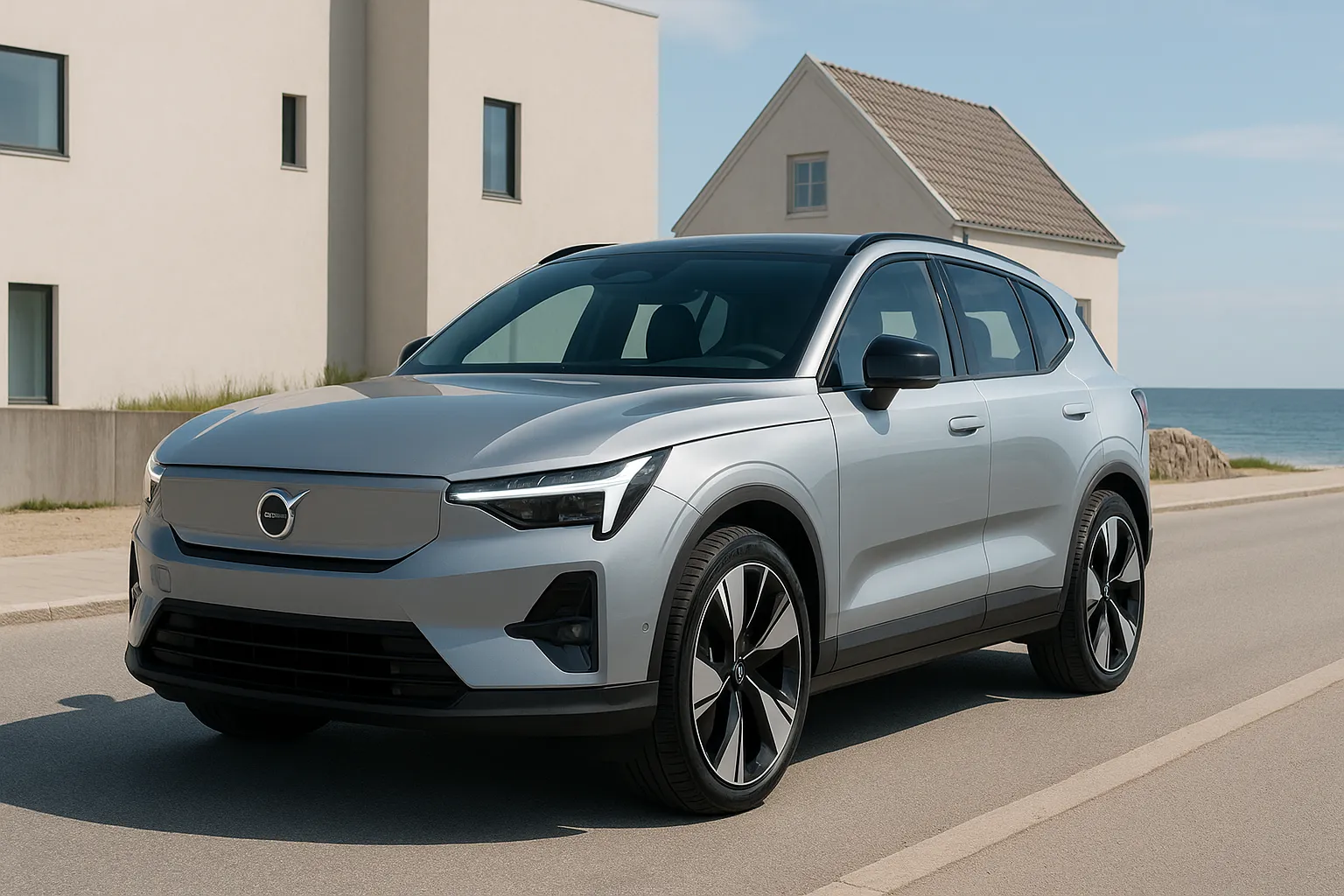
Volvo Cars has settled the succession at the top of the company: Klaus Zellmer, currently chief executive of Skoda, will become the new president and CEO of the Swedish brand. The move is to be completed by October 31, 2027 at the latest. Until then, Håkan Samuelsson will remain at the helm; after his return to operational leadership, he was considered a transitional solution from the outset.
For Volvo, the appointment is more than a normal management change. The brand is entering a phase in which new models, electromobility, software issues, and cost discipline all have to be managed at the same time. Zellmer comes from a corporate environment in which economies of scale, platform strategy, and high price sensitivity are part of day-to-day business. That is precisely the mix Volvo is likely to need in the coming years.
An experienced manager from the Volkswagen cosmos
Zellmer brings more than three decades of experience from the Volkswagen Group. Since 2022 he has led Skoda, a brand that plays a special role within the group: it has to appeal to broad customer groups, achieve solid margins, and still offer good value for money. In recent years, Skoda has also moved more strongly toward electromobility, digital services, and international markets.
This is relevant for Volvo because the Swedes also have to resolve several conflicting goals. The brand wants to hold its own in the premium environment, but it is not only up against traditional competitors from Germany, Japan, and South Korea, but also against new Chinese manufacturers and pure electric car providers. At the same time, models such as the EX30, EX40, EC40, and EX90 have to convince buyers who now pay much closer attention to range, charging performance, software quality, leasing rates, and residual values than they did just a few years ago.
Zellmer’s task will therefore not consist solely of bringing new cars to market. He has to position Volvo so that the brand does not lose its edge between established premium aspirations and growing price competition.
Samuelsson remains until the handover
Håkan Samuelsson is no stranger at Volvo. He already led the company from 2012 to 2022 and was a defining figure in the brand’s modern era. Under his earlier leadership, Volvo developed more clearly toward safety, Scandinavian design, electrification, and international expansion. After Jim Rowan’s departure, Samuelsson returned once again in 2025, though not as a long-term solution.
The appointment of Zellmer that has now been announced creates planning certainty, even though the exact day he will take office has not yet been set. Only the latest deadline of the end of October 2027 is fixed. An earlier move therefore remains possible, but depends on transitional agreements and the succession at Skoda.
This clarity is important for employees, dealers, and investors. Volvo is not in a phase in which the brand could withstand a prolonged leadership vacuum. Decisions on product planning, plants, battery partnerships, software architecture, and market priorities have an impact over many years. A CEO change must therefore be prepared in good time.
13 new models as a major test
Volvo is planning a broad product offensive with 13 new models over the next four years. This figure shows how extensive the transformation of the model range is intended to be. For customers, that can mean more choice, but also a more confusing transition phase: familiar model lines will be further developed, new electric vehicles will be added, and in some markets hybrid powertrains will remain important for the time being.
At Volvo in particular, the question of the right powertrain mix is central. The brand committed strongly to electromobility early on, but had to adapt its strategy to real market conditions. In Europe, the electric share continues to grow, but not everywhere at the same pace. In the USA, purchasing decisions depend more heavily on charging infrastructure, tax benefits, and model prices. In China, competition is especially tough because local brands exert enormous pressure in software, costs, and development speed.
Zellmer is therefore not taking over a simple growth story, but a complex transformation task. New models have to be technically convincing, built profitably, and fit the brand identity. A more affordable entry-level model can bring volume, but must not pull Volvo too strongly toward the mass market. A large premium SUV can deliver high margins, but has to launch with few faults in software, assistance systems, and quality.
Why this matters for buyers
For car buyers, a CEO change is not just news from the executive floor. Leadership helps determine which models are given priority, how consistently software problems are solved, which equipment is offered as standard, and how aggressively prices or leasing rates are calculated.
If Zellmer brings in his experience from value-oriented brand management, Volvo models could in future be more strongly geared toward clear packages, transparent pricing structures, and better cost control. That would be particularly interesting for private customers and fleet operators who want premium quality but do not want to pay high surcharges for every technological leap.
Owners of current Volvo models should also keep an eye on developments. Software updates, service quality, spare parts supply, and residual values depend indirectly on the stability of the brand. A successful model offensive can strengthen the perception of Volvo and thus also support used-car values. Conversely, delayed product launches or quality problems can put trust under strain.
A signal in industrial policy terms
The move also shows how closely intertwined the European automotive industry has become. Volvo is shaped by Sweden, but belongs to the Chinese Geely environment and competes globally. Zellmer comes from the Volkswagen Group, one of Europe’s largest automotive groups. The task in Gothenburg therefore requires not only brand leadership, but also dealing with different markets, supply chains, and regulatory requirements.
The balance between China, Europe, and North America will be especially important. Volvo has to decide which vehicles are developed, built, and sold where. Trade conflicts, tariffs, local subsidy programs, and CO2 rules can quickly change model strategies. A CEO with international experience can help here, even if structural market problems do not disappear through a personnel change alone.
Safety remains the brand core
Zellmer will not have to reinvent Volvo. The brand has a clear core: safety, restrained design, practical family cars, and increasingly electric powertrains. The challenge is to transfer these values into an era in which customers also expect digital operation, fast charging planning, advanced assistance systems, and seamless smartphone integration.
Volvo cannot simply point to tradition here. Today, a safety image is also created through reliable software, good sensors, understandable assistance functions, and consistent troubleshooting after purchase. This is exactly where it will be decided whether Volvo can carry its credibility into the next generation of vehicles.
A change with a long lead time
The appointment of Klaus Zellmer is not an abrupt break, but a planned transition. That gives Volvo time to hand over leadership cleanly and continue the product strategy. At the same time, the long lead time raises expectations: when the new CEO officially takes over, customers and dealers will already want to see progress in the model offensive.
For the industry, the appointment is an indication that Volvo wants to focus more strongly on operational efficiency, clear product planning, and global competitiveness. For buyers, however, what ultimately matters less is the name at the top of the group than the result in the showroom: convincing new models, reliable technology, understandable prices, and an electric course that works in everyday use.