New Nissan Skyline Launches in December with V6 and Manual Transmission
Nissan is preparing the next Skyline generation as a sporty sedan. The announced V6 and manual transmission send a clear signal to enthusiasts.
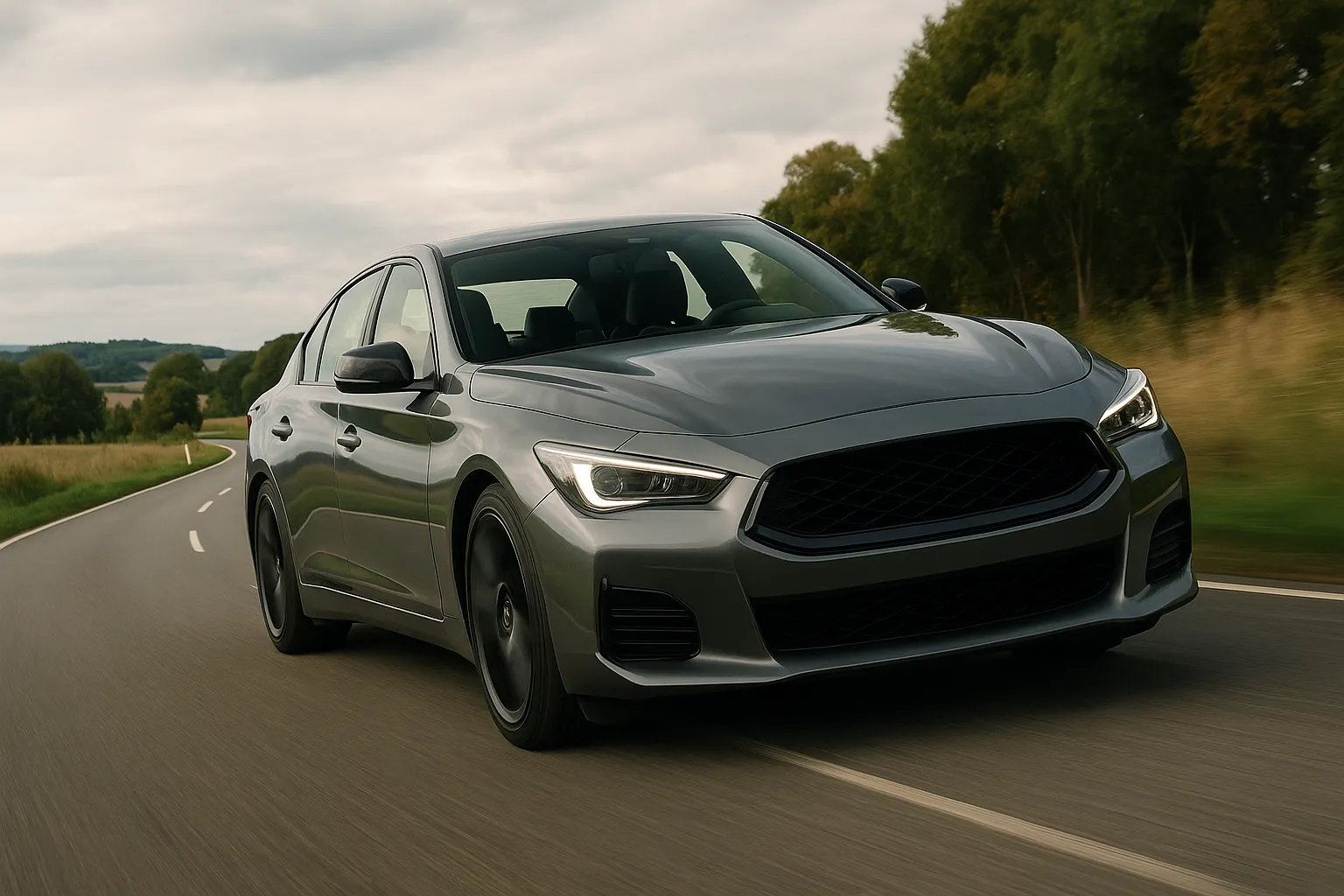
Nissan Focuses on Driver Engagement Again with the Skyline
The next Nissan Skyline is set to debut in December and brings two features that have become rare in the modern midsize sports sedan: a V6 engine and a manual transmission. With this, Nissan is positioning the model not just as another entry in a tradition-rich model line, but as a deliberately driver-oriented car in a market increasingly shaped by hybridization, electric drivetrains and automatic transmissions.
The December debut should initially be understood as the presentation of the vehicle. Important details such as market launch, prices, performance figures, body variants, exact powertrain and the countries in which the model will be sold remain open. It has also not yet been confirmed whether and when a closely related Infiniti version will follow. Based on recent model history, such a derivative would be plausible, but it is not officially secured at present.
Why the V6 Matters

A V6 in the new Skyline is more than a technical footnote. Nissan has a long history of sporty six-cylinder engines, and the Skyline name in particular is closely linked to this expectation. While many competitors are switching their sporty sedans to smaller turbocharged four-cylinders, electrified drivetrains or purely electric platforms, Nissan is apparently holding on to a classic performance concept.
For buyers, that potentially means a more direct, more emotional driving experience. A V6 usually offers a different refinement and sound character than a turbocharged four-cylinder. Depending on its configuration, it can also deliver a broad spread of power that suits a sporty sedan well. However, it is not yet known whether Nissan will use a newly developed engine or rely on a further-developed version of an existing unit.
It will also be crucial how the drivetrain fits into the current emissions and efficiency landscape. A modern V6 can be combined with turbocharging, variable valve timing and efficient thermal management. Nevertheless, such a concept is under greater regulatory pressure than smaller or electrified drivetrains. Nissan will therefore have to show how performance, consumption and homologation requirements can be reconciled.
The Manual Transmission Is the Real Signal

Even more remarkable than the V6 is the announced manual transmission. In many segments, the manual gearbox has almost disappeared, even in sporty models. Automatic transmissions and dual-clutch systems are faster, more comfortable and can be more easily combined with assistance systems and electrified drivetrains.
The fact that Nissan is nevertheless planning a manual transmission addresses a clear target group: drivers who seek not only quick acceleration, but active control. A manual changes the character of a car. It makes accelerating, slowing down and cornering more deliberate and demands more involvement. For enthusiasts, that can be exactly what makes the difference between a fast car and a truly memorable driver’s car.
This decision is also interesting for the market. It shows that manufacturers still see opportunities in niches in 2026 if a model has a strong identity. The Skyline name has this radiance. A V6 with a manual transmission could set the car apart from many technically competent but more interchangeable-feeling sports sedans.
Skyline: a Name with High Expectations
The Skyline is one of Nissan’s best-known model lines of all. For decades, the name stood for technical innovation, sporting ambition and a close connection to Japanese performance culture. Especially outside Japan, Skyline is often immediately associated with the legendary GT-R models, even though the GT-R was later continued as a separate model line.
The current Skyline sedan is historically closely based on the Infiniti Q50 family. The Skyline remained present in Japan, while Infiniti went its own way in many markets. This connection explains why an Infiniti version of the new generation seems obvious. For North America, that would be especially relevant because Infiniti has a gap in its sporty sedan offering after the Q50 sedan was discontinued.
Whether Nissan actually fills this gap again remains to be seen. If an Infiniti derivative follows, it could become interesting for buyers looking for an alternative to German premium sports sedans and who value a powertrain with strong character. At the same time, Infiniti would have to position the model clearly: as a classic sports sedan, as a premium grand tourer or as a technology carrier for a new model phase.
What Is Still Unclear
Despite the important announcement, many questions remain open. It is not known whether the Skyline will be offered with rear-wheel drive, all-wheel drive or both layouts. For a sporty sedan, rear-wheel drive would traditionally be appealing, while all-wheel drive could provide better traction depending on the market and performance level.
There are also no confirmed figures yet regarding output. A V6 can be configured very differently in this segment: from refined and suitable for long distances to clearly performance-oriented. It also remains open whether Nissan will offer the manual transmission for all versions or only for a special equipment or performance variant.
It also remains unclear what role electrification will play. A pure combustion engine with a manual transmission would be particularly purist from an enthusiast’s perspective, but could be more difficult to homologate in some markets. Mild hybridization would be technically possible, but would make the integration of a manual gearbox more complex. Until the presentation in December, these points are likely to be the focus of interest.
Significance for Buyers and Fans
For potential buyers, the news is relevant above all because the selection of sporty sedans with manual transmissions has become very small. Anyone looking for a new car with four doors, everyday usability, classic combustion-engine character and independent control has only a few options left. The new Skyline could move exactly into this gap.
For owners of older Skyline or Infiniti models, the new car could also be interesting. It promises continuity without seeming merely nostalgic. The decisive factor will be whether Nissan strikes the balance between modern safety, contemporary connectivity, high build quality and mechanical driving enjoyment.
For enthusiasts, Nissan is sending a clear signal: Not every performance car necessarily has to be electric, highly automated or optimized exclusively for lap times. A V6 and a manual transmission address the emotional side of driving. That is not decisive for every buyer, but it can be very valuable for brand loyalty.
Significance for the Industry
From an industry perspective, the new Skyline is an interesting counterproposal to the general trend. Many manufacturers are reducing their sedan offerings, focusing on SUVs or investing heavily in electric platforms. With the Skyline, Nissan appears to be deliberately developing a car that puts tradition, driving pleasure and a clear technical identity in the foreground.
That is not a contradiction to electrification, but it shows that transition phases are more varied than is often assumed. As long as demand exists and regulatory conditions allow it, emotionally charged combustion-engine models can play a role. They serve not only sales, but also brand image.
December will therefore bring more than the unveiling of a new sedan. It will then become clear whether Nissan sees the Skyline as a globally relevant performance model or primarily as a special offering for selected markets. The key data points of V6 and manual transmission are already enough to create attention. The decisive question now is whether the overall package meets the high expectations associated with the Skyline name.