Volkswagen and Audi recall over 200,000 SUVs due to steering bolts
Affected are certain production periods of the Volkswagen Atlas, Volkswagen Tiguan and Audi Q3. A corroding bolt on the steering gear can break; the repair will be carried out free of charge at the dealer.

Volkswagen and Audi are launching an extensive recall for more than 200,000 SUV models. Affected are certain production periods of the Volkswagen Atlas, the Volkswagen Tiguan and the Audi Q3. The reason lies in the steering area: A bolt on the steering gear can corrode and, in an unfavorable case, break. The planned remedy will be carried out through the authorized workshop and is free of charge for owners.
For owners, this is not an issue that should be put off. The steering is one of the most safety-relevant assemblies in a vehicle. Even small mechanical changes can affect steering feel, directional stability and controllability. A broken fastening bolt does not automatically mean that every affected vehicle is immediately dangerous. But it describes a risk that the manufacturer wants to eliminate with a workshop measure.
Which models are affected?
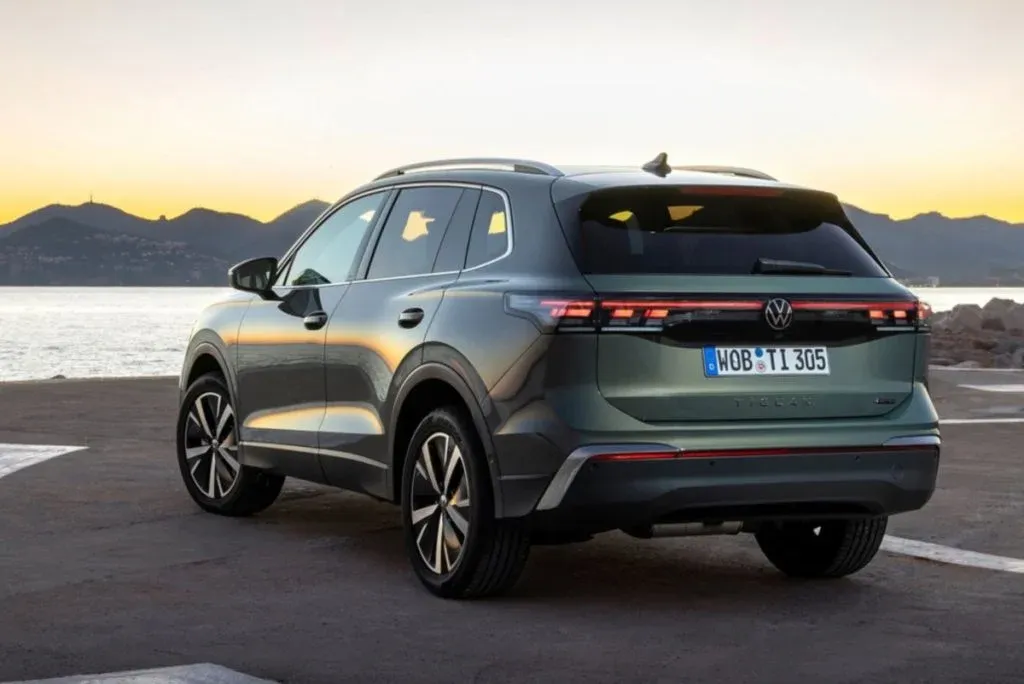
Three SUV model series from the Volkswagen Group are named:
- Volkswagen Atlas
- Volkswagen Tiguan
- Audi Q3
What matters is not only the model name, but the respective production or build period. Recalls are usually narrowed down by vehicle identification numbers because not every example of a model series was built with identical parts, from the same batch or in the same period. Anyone who drives an Atlas, Tiguan or Q3 should therefore not judge solely by the model name, but have their own vehicle identification number checked.
The exact narrowing down is done via owner notification, dealer databases or official recall checks. This is particularly important for used cars: Vehicles can change owners before a notification arrives or before an earlier action has actually been carried out.
What is the technical problem?
The focus is on a bolt on the steering gear. The steering gear transmits the movement of the steering wheel to the front wheels and is firmly connected to the vehicle structure. This fastening must permanently absorb high forces: when maneuvering, during quick steering movements, on poor roads and during evasive maneuvers.
The recall describes corrosion as the cause. Rust can reduce the strength of a component, especially when a fastening element is mechanically loaded. If such a bolt is weakened and eventually breaks, the position or stability of the steering gear can change. This can impair the precision of the steering and, in an extreme case, make vehicle control more difficult.
The classification is important: A recall does not mean that all affected vehicles already have damage. It means that a safety-relevant risk has been identified in a defined vehicle group and must now be remedied preventively or correctively.
What changes for owners?
Owners of affected vehicles must schedule a workshop appointment. The repair is free of charge. In practice, dealers check the affected components during such actions and carry out the measure specified by the manufacturer. Depending on the technical instruction, this may include replacing the affected bolt, additional parts, an inspection of adjacent components or defined rework.
How long the workshop stay takes depends on parts availability, dealer workload and the specific scope of repair. Owners should ask when making the appointment whether the vehicle will be ready the same day and whether a replacement vehicle is available. This is particularly relevant for commuters, families and commercial users who depend on their SUV every day.
Until the repair is carried out, drivers should watch for unusual symptoms. These can include a changed steering feel, rattling or cracking noises from the front end, vague feedback or an offset when steering. Such signs do not automatically prove the described fault, but they should be taken seriously and checked promptly.
Why the recall is important for buyers
For new-car buyers, the case is an indication of how important recall management remains after purchase. Modern vehicles are complex, and safety-relevant corrections can occur even years after production starts. What matters then is not only the defect itself, but how quickly and clearly manufacturers, dealers and service partners respond.
For used-car buyers, the recall is particularly relevant. A well-maintained service booklet is no substitute for a recall check. Before buying a used Volkswagen Atlas, Tiguan or Audi Q3, the vehicle identification number should be checked. Reputable sellers can prove whether open actions exist or have already been completed. If such proof is missing, the check should be carried out before the contract is concluded.
This also plays a role for lease returns and fleet vehicles. SUVs such as the Tiguan and Q3 are common company cars, family cars or business vehicles. An open recall can delay handover, affect remarketing or cause additional coordination effort. Since the repair is free of charge, the real problem lies less in the costs than in appointment planning and documentation.
Context for the industry
Recalls of this magnitude show how heavily the automotive industry depends on supply chains, component batches and production windows. A single fastening element can be enough to bring hundreds of thousands of vehicles into workshops if it is located at a safety-critical point. This is not a phenomenon specific to one manufacturer, but part of today's quality and safety management.
At the same time, it becomes clear why corrosion protection remains a central development topic. Even in times of software updates, driver assistance systems and electric drives, classic mechanical components remain decisive for safety. Steering, suspension, brakes and body structure must function over many years – in heat, cold, road salt, moisture and on poor road surfaces.
For enthusiasts, the case is also a reminder that driving feel and safety are directly connected. Precise steering is not only a comfort feature, but part of active safety. If a manufacturer makes improvements in the area of the steering gear, this should be taken correspondingly seriously.
What owners should do now
Anyone who drives a Volkswagen Atlas, Volkswagen Tiguan or Audi Q3 from a possibly affected production period should have the vehicle identification number ready and have it checked at the dealer or via an official recall check. If there is an open action, making an appointment promptly is recommended. Anyone who has already received a notification should take it with them to the service appointment.
Until the repair, the rule is: drive attentively, do not ignore unusual steering noises or changes, and have the vehicle checked if in doubt. The decisive point for owners, however, is reassuring: The remedy will be carried out at no cost to them. That makes the recall above all an organizational task – but one that is safety-relevant because the steering is affected.